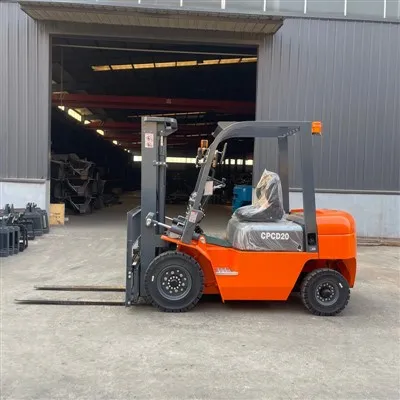
Diesel forklifts have long been a staple in various industries, known for their power and durability. As a forklift supplier with extensive experience in the market, I’ve witnessed firsthand the widespread use of diesel forklifts. However, it’s important to also highlight their disadvantages to help potential customers make more informed decisions. Forklift
Environmental Impact
One of the most significant drawbacks of diesel forklifts is their environmental footprint. Diesel engines emit a variety of pollutants, including particulate matter (PM), nitrogen oxides (NOx), and carbon monoxide (CO). Particulate matter consists of tiny particles that can be inhaled deep into the lungs, causing respiratory problems such as asthma, bronchitis, and even lung cancer. Nitrogen oxides contribute to the formation of smog and acid rain, which can have detrimental effects on the environment and human health. Carbon monoxide is a toxic gas that can reduce the amount of oxygen carried by the blood, leading to headaches, dizziness, and in severe cases, death.
In addition to these pollutants, diesel engines also emit greenhouse gases (GHGs), such as carbon dioxide (CO2), which contribute to climate change. The transportation sector, including forklifts, is a major source of GHG emissions, and diesel forklifts are no exception. As the world becomes more environmentally conscious, many companies are looking for ways to reduce their carbon footprint, and diesel forklifts may not be the most sustainable option.
Noise Pollution
Diesel forklifts are notoriously noisy. The combustion process in a diesel engine produces a loud, rumbling noise that can be a nuisance in a warehouse or other indoor environment. Prolonged exposure to high levels of noise can cause hearing loss, stress, and other health problems for workers. In addition, the noise can also interfere with communication and productivity, making it difficult for workers to hear each other and carry out their tasks effectively.
Maintenance and Operating Costs
Diesel forklifts require regular maintenance to keep them running smoothly. This includes oil changes, filter replacements, and other routine inspections. The cost of maintenance can add up over time, especially for larger fleets of forklifts. In addition, diesel fuel is more expensive than some other types of fuel, such as electricity or propane. This means that the operating costs of diesel forklifts can be higher than those of other types of forklifts.
Another factor to consider is the cost of repairs. Diesel engines are more complex than some other types of engines, and repairs can be more expensive and time-consuming. If a diesel forklift breaks down, it may need to be taken out of service for several days or even weeks while it is being repaired, which can disrupt operations and lead to lost productivity.
Indoor Use Limitations
Diesel forklifts are not well-suited for indoor use. The exhaust fumes from diesel engines can be harmful to human health, and in an enclosed space, these fumes can quickly build up to dangerous levels. This means that diesel forklifts can only be used in well-ventilated areas, such as outdoor yards or warehouses with large ventilation systems. In addition, the noise and vibration from diesel forklifts can also be a problem in indoor environments, making them less suitable for use in areas where noise levels need to be kept to a minimum.
Initial Purchase Price
Diesel forklifts are generally more expensive to purchase than some other types of forklifts, such as electric or propane forklifts. This is because diesel engines are more complex and require more expensive components. The higher initial purchase price can be a significant barrier for some companies, especially those on a tight budget.
Safety Concerns
Diesel forklifts pose several safety concerns. The exhaust fumes from diesel engines can be toxic, and workers who are exposed to these fumes for extended periods of time can suffer from a variety of health problems. In addition, diesel fuel is flammable, and there is a risk of fire or explosion if the fuel is not handled properly. Diesel forklifts also have a higher center of gravity than some other types of forklifts, which makes them more prone to tipping over. This can be a serious safety hazard, especially for workers who are operating the forklift or working in the vicinity.
Limited Maneuverability
Diesel forklifts are typically larger and heavier than some other types of forklifts, which can make them less maneuverable in tight spaces. This can be a problem in warehouses or other facilities where space is limited, as it can make it difficult to navigate the forklift around obstacles and through narrow aisles. In addition, the larger size and weight of diesel forklifts can also make them more difficult to park and store.
Conclusion
While diesel forklifts have their advantages, such as power and durability, they also have several disadvantages that need to be considered. The environmental impact, noise pollution, maintenance and operating costs, indoor use limitations, initial purchase price, safety concerns, and limited maneuverability are all factors that can make diesel forklifts less suitable for some applications.
As a forklift supplier, I understand that every customer has unique needs and requirements. That’s why I’m committed to providing my customers with the information they need to make the right decision. If you’re considering purchasing a forklift, I encourage you to weigh the advantages and disadvantages of diesel forklifts against your specific needs and circumstances. I’m also happy to discuss other types of forklifts, such as electric or propane forklifts, which may be a better fit for your operation.
Diesel Forklift If you have any questions or would like to learn more about our forklift products and services, please don’t hesitate to contact me. I’m here to help you find the right forklift solution for your business.
References
- "Diesel Forklift Trucks: Advantages and Disadvantages." Forklift Access, 2019.
- "The Environmental Impact of Diesel Forklifts." GreenFleet, 2020.
- "Safety Considerations for Diesel Forklifts." Occupational Safety and Health Administration (OSHA), 2021.
Jining Sunsail Machinery Co., Ltd.
With abundant experience, we are one of the most professional forklift manufacturers and suppliers in China. We warmly welcome you to buy high-grade forklift made in China here from our factory. For price consultation, contact us.
Address: Room 410, Digital Industry Building, Rencheng District, Jining City, Shandong Province,China
E-mail: Sunsail_machinery@163.com
WebSite: https://www.sunsailmachine.com/
