Complying with industry standards for cable trays is crucial for any cable tray supplier. As someone in this business, I’ve learned a thing or two about how to make sure our products meet all the necessary requirements. In this blog, I’ll share some tips on how we can all comply with these standards and why it matters. Cable Tray

First off, let’s talk about why complying with industry standards is so important. For one, it ensures the safety of the people using the cable trays. When cable trays are made to the right standards, they’re less likely to fail, which can prevent electrical fires and other hazards. It also helps with the functionality of the cables. Cables need to be installed in a way that allows for proper ventilation and support, and industry – standard cable trays provide just that.
Another big reason is legal compliance. If your cable trays don’t meet the standards, you could face some serious legal issues. Companies that use non – compliant products might be liable in case of an accident, and as a supplier, you can be held accountable too. Also, many clients will only work with suppliers who can prove their products meet the required standards. So, it’s not just about doing the right thing; it’s also good for business.
Now, let’s get into the nitty – gritty of how to comply with these standards.
1. Know the Standards
The first step is, of course, to know what the standards are. There are several organizations that set standards for cable trays, like the National Electrical Manufacturers Association (NEMA) and the International Electrotechnical Commission (IEC). These standards cover everything from the materials used to make the cable trays to the way they’re installed.
We need to stay up – to – date with the latest versions of these standards. They can change over time as new technologies emerge and safety requirements are updated. I make it a point to subscribe to the newsletters and updates from these organizations. That way, I’m always in the loop about any changes that could affect our products.
For example, NEMA has standards for the load – carrying capacity of cable trays. We need to make sure our cable trays can handle the weight of the cables they’ll be holding. This means testing the trays in our factory to ensure they meet or exceed these load – bearing requirements.
2. Use the Right Materials
The materials we use to make cable trays play a huge role in meeting industry standards. Most standards specify the type of metal or other materials that can be used. For example, galvanized steel is a popular choice because it’s strong and resistant to corrosion.
We source our materials from reliable suppliers. I’ve built relationships with a few suppliers over the years, and I trust them to provide high – quality materials. We also have a quality control process in place to check the materials when they arrive at our factory. We look for things like the thickness of the metal, the quality of the coating (if it’s a coated material), and any signs of damage.
If we use a new material or a different supplier, we make sure to test the cable trays made from these materials. We’ll do things like corrosion tests to see how well the new material stands up over time. Just because a material seems to be a good fit on paper doesn’t mean it will actually meet the standards in real – world conditions.
3. Manufacturing Processes
Our manufacturing processes need to be right on point to comply with industry standards. We have to make sure that every cable tray we produce is made the same way, with the same level of quality.
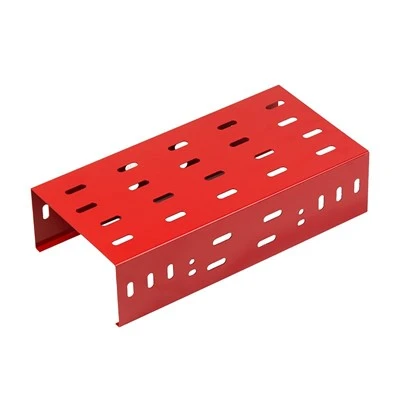
We use precision machinery to cut, shape, and assemble the cable trays. This helps us maintain consistency in the dimensions and the overall quality of the product. For example, the slots in the cable tray need to be the right size and spacing to allow for proper cable installation.
We also have quality control checks at every stage of the manufacturing process. Workers on the production line are trained to spot any issues early on. If a cable tray doesn’t meet the standards at any point, it gets pulled from the line and either fixed or scrapped.
We document all our manufacturing processes. This is important for two reasons. First, it helps us ensure that we’re following the same procedures every time. Second, it provides evidence that we’re manufacturing our cable trays in a way that meets the industry standards. If a client asks for proof of compliance, we can show them our documentation.
4. Testing and Certification
Testing is a key part of complying with industry standards. We test our cable trays in different ways to make sure they meet all the requirements.
One of the most important tests is the load – testing. We put weights on the cable trays to see how much they can hold without breaking or deforming. This is crucial because in real – world applications, the cable trays need to support the weight of the cables and any other equipment that might be attached to them.
We also do corrosion testing. We expose the cable trays to different environmental conditions to see how well they resist rust and other forms of corrosion. This is especially important if the cable trays are going to be used outdoors or in a harsh industrial environment.
Once we’ve done all the testing and we’re confident that our cable trays meet the standards, we get them certified. There are independent testing labs that can issue certifications for our products. Having these certifications is a big selling point for our customers. It gives them peace of mind knowing that the cable trays they’re buying are safe and reliable.
5. Installation and Training
Complying with industry standards doesn’t stop at manufacturing. The way the cable trays are installed also matters. We provide installation guidelines to our customers based on the industry standards.
Sometimes, we even offer training to the installers. This helps ensure that the cable trays are installed correctly. For example, the cable trays need to be properly grounded to prevent electrical hazards. We teach the installers how to do this correctly.
We also follow up with our customers after the installation. We want to make sure that everything is working as it should and that the cable trays are being used in a way that complies with the standards. If there are any issues, we’re there to help solve them.
6. Customer Feedback and Continuous Improvement
Listening to our customers is really important when it comes to complying with industry standards. They’re the ones using our cable trays in the real world, and they might have valuable feedback.
If a customer reports an issue with a cable tray, we take it seriously. We investigate the problem and see if it’s related to a non – compliance issue. If it is, we make the necessary changes to our manufacturing processes or materials.
We also look for ways to continuously improve our products. Just because we’re meeting the current standards doesn’t mean we can’t do better. We keep an eye on new technologies and industry trends that could help us make our cable trays even safer and more efficient.
In conclusion, complying with industry standards for cable trays is a multi – step process. It involves knowing the standards, using the right materials, having proper manufacturing processes, testing and certifying our products, ensuring correct installation, and listening to our customers. By doing all these things, we can provide high – quality cable trays that are not only safe and reliable but also meet the needs of our customers.
If you’re in the market for cable trays and want products that comply with industry standards, don’t hesitate to reach out. We’re here to help you find the right cable trays for your project. Whether you’re working on a small commercial building or a large industrial complex, we’ve got the expertise and the products to meet your requirements. Let’s start a conversation and see how we can work together!
Light Duty Cable Tray References
- National Electrical Manufacturers Association (NEMA) standards publications
- International Electrotechnical Commission (IEC) standards for cable management systems
Hebei Jinglang Industrial Co., Ltd.
As one of the most professional cable tray manufacturers and suppliers in China, we also support customized service. We warmly welcome you to wholesale high quality cable tray in stock here from our factory. If you have any enquiry about quotation, please feel free to email us.
Address: Nanxinzhuang Village, Daweihe Hui and Manchu Township, Wen’an County, Langfang City, Hebei Province
E-mail: 18231629992@163.com
WebSite: https://www.jinglangcabletray.com/
