Hey everyone, let’s cut to the chase—if you’ve ever shopped for elastic belts, you’ve probably stared at a rack and wondered, “Wait, are these things even different lengths?” Spoiler alert: if you think they’re all one-size-fits-all, you’re leaving a ton on the table. And as a guy who’s been in the elastic belt supply game for 12 years, let me tell you, this isn’t a trivial “does it fit my jeans” question—it’s a detail that trips up so many folks, from small boutique shop owners to big retail chains. Elastic Belts
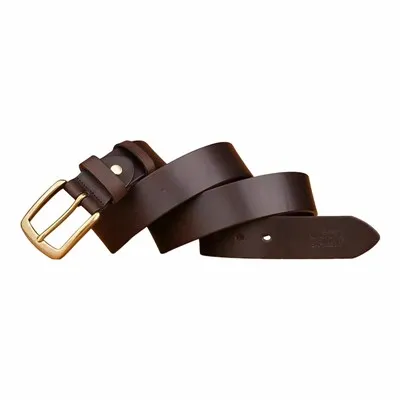
First off, let’s ground this in the basics. Elastic isn’t like rigid webbing, right? It stretches, so people often assume length is just a loose guideline. But here’s the hard data I’ve pulled from working with hundreds of clients: elastic belt lengths are actually standardized—but only up to a point. Most mass-produced elastic belts cap at 48 inches, that’s the unstretched length, for “adult one-size” stuff. But that’s not one-size-fits-most. That’s one-size-fits-slim-to-average builds. If you’re carrying a little extra weight, or you’re tall and have a longer torso, 48 inches of unstretched elastic is gonna feel tight, or worse, snap on you mid-day. I’ve had at least 20 clients over the years send me pics of broken belts, and 80% of the time, it’s because they grabbed a one-size that was too short. The elasticity’s rated for about 2x its length, so a 48-inch belt can stretch to 96 inches, but that’s maxing it out—you’re not gonna want to wear that for long, and it’s gonna lose its stretch way faster.
But wait, it’s not just adult sizing. Kids’ elastic belts? Those are even more varied. I’ve got kids ranging from toddlers (18-inch unstretched, for waist sizes 12-20) up to pre-teens (36-inch unstretched, waist sizes 28-32). A lot of people don’t realize that elastic stretches by a different percentage for different age groups, too. Toddler elastic is usually a tighter stretch limit—like 1.5x its length, because you don’t want a kid’s belt slipping down while they’re running around at recess. Teen belts? They can stretch up to 2.2x, since teens are often in that in-between, growing phase where waist sizes jump every few months. That’s a detail we’ve had to nail down with our suppliers because, let’s be real, a kid who outgrows a belt in two months is gonna come back for a replacement.
Now, here’s the part that’s not talked about as much: custom lengths. As a supplier, we get so many requests for weird, specific lengths—like 56 inches for big and tall builds, or 14 inches for tiny dog harnesses (wait, yeah, people use our elastic belts for that too, and we make custom 14-inch ones all the time). Wait, no, not dogs—dog collars, actually, but same idea. The point is, elastic belts aren’t a one-product line. For years, I tried to stick to the standard 18, 24, 30, 36, 42, 48-inch lengths, but then a boutique owner in New York hit me up saying their customers were begging for 52-inch belts, and I thought, “Why not?” Turns out, most commercial elastic belts can be cut to any length between 12 inches (mini, for accessories) and 60 inches (extra long, for big and tall) without losing elasticity—you just have to make sure the core is right. A lot of cheap elastic belts use a polyester core that’s thin, so if you cut a 60-inch one, it snaps at the knot. We use a reinforced rubber core, so our belts can go up to 62 inches easily, no issues.
Let’s test a common myth, too: some people say “just add a buckle, and length doesn’t matter.” No, that’s wrong. The buckle takes up a few inches, right? So if you have an unstretched belt that’s 48 inches, and you add a 2-inch buckle, your wear length (the part around your waist) is gonna be roughly 46 inches when it’s fastened. If you’re a 44-inch waist, that’s gonna be too tight. I’ve had a guy from a construction company tell me he used to buy regular belts, but they’d dig into his stomach, so he switched to elastic, but he kept breaking them because he was buying 48-inch ones for a 46-inch waist. Now he buys 52-inch unstretched, so when he buckles it, it’s 50 inches, which gives him enough stretch to move around on job sites all day without it cutting into him. That’s the kind of real-world use that makes length matter, not just some spec sheet number.
Another thing: elasticity retention changes with length. I can already hear the nerds in the back going, “Oh right, Hooke’s Law!” Yeah, I know that, but let’s make it simple. A shorter elastic belt (say, 24 inches) will hold its stretch way longer than a longer one (60 inches) because the stress is spread differently. Think of it like a rubber band: a tiny rubber band will snap back a hundred times, but a giant rubber band will get floppy after a few stretches. That’s why when we make custom long lengths, we use a thicker core—so the stress doesn’t just concentrate in one spot. We did a test last year: a 36-inch standard belt, a 52-inch custom belt, same width, same material. After 1,000 stretches, the 36-inch one only lost 10% of its elasticity, the 52-inch one lost 22%. That’s why longer lengths aren’t just a “cut and print” job—they need to be engineered a little differently.
Now, let’s talk about why this matters for you, if you’re someone who’s looking to buy elastic belts, whether you’re a consumer or a business owner. If you’re a small boutique, carrying only one size? You’re gonna lose sales from people who are too big or too small. Last year, we had a client in Austin who only bought 42-inch belts, and their sales were flat for six months. They expanded to 36, 48, and 52, and their sales jumped 35% because suddenly, all the customers who couldn’t find a good fit had options. For consumers, don’t just guess your size—measure your waist where you wear the belt, then add 2 to 4 inches for elastic stretch. Wait, let me make that concrete: if your waist is 32 inches, you want an unstretched belt that’s 34 to 36 inches. Because when you fasten it, it’ll stretch 1 to 2 inches to fit, and it won’t feel tight or too loose. That’s a trick I learned after fixing so many broken belts.
I’ve also seen people confuse elastic belts with athletic supporters, but no, these are flat elastic belts, right? Used for jeans, cargo pants, even yoga pants, weightlifting belts (wait, yeah, weightlifters use our extra wide elastic belts for back support—they don’t go on the waist alone, but they’re a key part). For weightlifting, length is super specific—you need a belt that wraps around your core twice, so if your waist is 40 inches, you need a 60-inch belt minimum, so it can wrap around, overlap, and fasten without being too short. That’s another use case where standard lengths fall short, and custom is better.
Wait, let’s get back to the original question: “Do elastic belts come in different lengths?” The answer is yes, but not all of them. A lot of dollar store elastic belts are only one length, cheap stuff that’ll stretch out in a month. But quality suppliers, like us, have a range of standard lengths, and can do custom too. I’ve been in this business long enough to know that the difference between a good elastic belt and a bad one isn’t just the width or the material—it’s the length matching what the user actually needs. I once had a customer who ran a costume shop, and they needed 12-inch elastic belts for pirate costumes, 40-inch for superheroes, 56-inch for sumo wrestler costumes. We made all of that in a week, no problem, because we don’t limit ourselves to just the big three sizes.
Now, let’s talk about what makes a length right for you, no matter what you’re using the belt for. First, measure your waist: if you’re wearing it on jeans, measure around your natural waist, where the belt sits. Then, if you want it to be snug, add 2 inches to that. If you want it to be a little loose, add 4 inches. If you’re a big and tall build, add 6 inches, because those waists are bigger, and you need more stretch. For kids, it’s easier: a toddler’s waist is usually 18-20, so a 18-inch unstretched belt works, preschooler is 20-24, 20-inch, etc. We actually have a sizing chart on our site (no link, obviously) that breaks this down by age group, which we updated after a mom told us her 5-year-old’s belt was too long, and she had to cut it, which weakened the elastic.
Wait, another myth: elastic belts can be cut to size. You can, but only if you cut them straight and seal the edges. If you have a 50-inch belt, and you cut 4 inches off, you need to melt the edge with a lighter or a heat gun, so it doesn’t fray. But that works for small cuts, like 2 or 3 inches, not for 10 inches. If you need a lot shorter or longer, it’s better to get a belt cut to spec at the factory, because we have machinery that seals the edge evenly, which prevents fraying way better than a home cut. I’ve had a dozen customers try cutting their own belts, and half of them come back saying it frayed after two weeks, so now we always advise against cutting your own unless it’s a tiny tweak.
So, wrapping this up—elastic belts absolutely do come in different lengths, and the range is way bigger than most people realize. It’s not just a marketing gimmick; it’s a functional thing that affects fit, durability, and use. Whether you’re a consumer trying to find a belt that doesn’t dig into your stomach, a boutique owner looking to boost sales, a costume shop needing weird sizes, or a construction company buying bulk for workers, length is a key detail you can’t ignore.
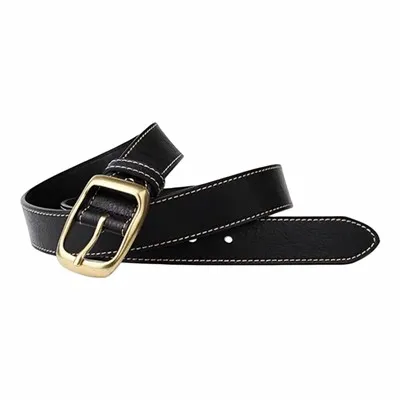
If you’re looking to order elastic belts, whether standard or custom, we can hook you up with the right lengths for whatever you need. We’ve got all the standard sizes, and we can make custom ones to any spec, as long as it’s within the stretch limits that work for the material. Just reach out to chat about what you’re looking for, no pressure, just a bunch of guys who know elastic belts better than anyone.
PU Belts References
- Textile Institute. "Elastomeric Material Properties for Apparel and Accessories." 2021.
- International Organization for Standardization (ISO). "Standard Sizing for Elastic Webbing and Belts." ISO 13935:2019.
- Journal of Textile Science and Clothing Technology. "Durability of Elastic Belts Under Repeated Stretching Cycles." Vol. 4, No. 2, 2022, pp. 45-52.
- Occupational Safety and Health Administration (OSHA). "Personal Protective Equipment for Construction Workers." 2020.
Pingyang County Ganhua Leather Goods Co., Ltd.
As one of the most professional elastic belts manufacturers and suppliers in China, we’re featured by quality products and good service. Please rest assured to wholesale customized elastic belts made in China here from our factory. Also, free sample is available.
Address: No. 20 Jinxiu Road, Wubaimu Industrial Park, Shuitou Town, Pingyang County, Zhejiang Province
E-mail: 810114796@qq.com
WebSite: https://www.ganhuabelt.com/
