Hey there! As a switching diode supplier, I often get asked if a switching diode can be used in an audio – amplifier circuit. It’s a pretty interesting question, and today, I’m gonna break it down for you. Switching Diode
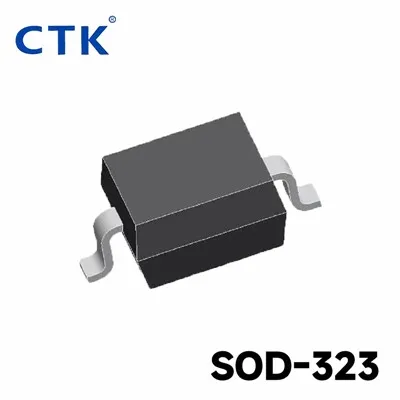
First off, let’s talk a bit about what switching diodes are. A switching diode is a semiconductor device that’s designed to quickly switch between conducting and non – conducting states. They’re super useful in digital circuits, where they can turn signals on and off rapidly. You’ll commonly find them in things like signal switching, voltage clamping, and high – speed rectification. They’re known for their fast response times, which can be in the nanosecond range. This makes them ideal for applications where you need to handle short pulses or high – frequency signals.
Now, onto audio – amplifier circuits. An audio – amplifier circuit’s main job is to take a weak audio signal and boost its power so that it can drive speakers and produce sound. These circuits are all about accurately reproducing the audio signal without adding too much distortion or noise. The audio signal frequency typically ranges from 20 Hz to 20 kHz, which is the range of human hearing.
So, can a switching diode be used in an audio – amplifier circuit? The short answer is yes, but it depends on the specific application within the audio – amplifier circuit.
Possible Applications in Audio – Amplifier Circuits
1. Protection Circuits
One common use of switching diodes in audio – amplifier circuits is in protection circuits. Audio amplifiers can sometimes be exposed to over – voltage or reverse – voltage conditions. For example, if there’s a sudden power spike or a short – circuit in the speaker system, it can cause a large voltage to be applied to the amplifier in the wrong direction. A switching diode can be used as a voltage – clamping device to protect the sensitive components in the amplifier.
When the voltage exceeds a certain level, the switching diode starts to conduct and diverts the excess current away from the amplifier. This helps prevent damage to the amplifier’s transistors, integrated circuits, and other components. Since switching diodes can respond quickly to voltage changes, they’re well – suited for this kind of protection role.
2. Signal Switching
In some audio – amplifier circuits, you might need to switch between different audio sources or different gain settings. This is where switching diodes come in handy. You can use them to create a signal – switching network.
For example, let’s say you have an audio amplifier that can accept input from both a CD player and a smartphone. You can use a couple of switching diodes to route the audio signal from the appropriate source to the amplifier. When the CD player is selected, the diodes can be configured to connect the CD player’s output to the amplifier’s input, and vice versa for the smartphone. The fast switching speed of the diodes ensures that there’s minimal interruption in the audio signal during the switching process.
Limitations of Using Switching Diodes in Audio – Amplifier Circuits
1. Non – linearity
One of the biggest drawbacks of using switching diodes in audio – amplifier circuits is their non – linearity. Diodes have a non – linear relationship between the voltage across them and the current flowing through them. This non – linearity can introduce distortion into the audio signal.
In an audio – amplifier circuit, the goal is to reproduce the audio signal as accurately as possible. Any distortion can make the sound quality worse, causing things like harmonic distortion, which can add unwanted frequencies to the audio signal. This is especially a problem when dealing with low – level audio signals, where even a small amount of distortion can be noticeable.
2. Noise
Switching diodes can also generate noise. The rapid switching action can create electrical noise that can be picked up by the audio – amplifier circuit. This noise can then be amplified along with the audio signal, resulting in a hissing or crackling sound in the speakers.
The noise level can depend on various factors, such as the quality of the switching diode, the operating conditions, and the circuit design. In high – end audio systems, where low noise levels are crucial, this noise can be a significant issue.
Choosing the Right Switching Diode for Audio – Amplifier Circuits
If you’ve decided that a switching diode is appropriate for your audio – amplifier circuit, there are a few things to consider when choosing the right one.
1. Forward Voltage Drop
The forward voltage drop of a diode is the voltage across it when it’s conducting current. In an audio – amplifier circuit, you want a switching diode with a low forward voltage drop. A low voltage drop means that less power is dissipated in the diode, which can help reduce heat generation and improve the overall efficiency of the circuit.
2. Reverse Recovery Time
As mentioned earlier, the reverse recovery time is the time it takes for a diode to switch from the conducting state to the non – conducting state. In audio – amplifier circuits where fast switching is required, such as in signal – switching applications, you want a diode with a short reverse recovery time. This ensures that the switching process is as fast and smooth as possible.
3. Leakage Current
Leakage current is the small amount of current that flows through a diode when it’s supposed to be in the non – conducting state. A low leakage current is desirable in audio – amplifier circuits, as it helps prevent unwanted noise and power consumption.
Tips for Using Switching Diodes in Audio – Amplifier Circuits
1. Circuit Design
Proper circuit design is crucial when using switching diodes in audio – amplifier circuits. You need to carefully consider the placement of the diodes, the impedance matching, and the overall layout of the circuit. This can help minimize the effects of non – linearity and noise.
2. Filtering
Using filtering components, such as capacitors and inductors, can help reduce the noise and distortion introduced by the switching diodes. For example, you can place a capacitor across the diode to filter out high – frequency noise.
So, if you’re working on an audio – amplifier circuit and think a switching diode might be useful, give it a shot. But keep in mind its limitations and make sure to choose the right diode for your specific application.
Digital Transistors If you’re interested in purchasing high – quality switching diodes for your audio – amplifier circuits or any other projects, feel free to reach out. We’ve got a wide range of switching diodes that can meet your needs. Whether you’re dealing with protection circuits or signal – switching applications, we can provide you with the right components. Just drop us a message, and we can start a conversation about your requirements.
References
- Horowitz, P., & Hill, W. (1989). The Art of Electronics. Cambridge University Press.
- Boylestad, R. L., & Nashelsky, L. (2002). Electronic Devices and Circuit Theory. Prentice Hall.
Tongke Electronic Co., Ltd
Tongke Electronic Co., Ltd. is one of the most experienced switching diode manufacturers and suppliers in China, featured by quality products and low price. Please rest assured to wholesale advanced switching diode made in China here from our factory. Contact us for pricelist.
Address: No.3,Chayuan Rd, Street 3, AilingKan, Dalingshan, Dongguan, Guangdong, China.
E-mail: jack@ctk-elec.com
WebSite: https://www.ctkchip.com/
