Hey everyone, welcome back to the Surgical Instruments Direct blog – your go-to spot for all things tools that save lives, fix bodies, and make surgeons’ jobs a little less chaotic. If you’ve ever wandered into a hospital’s OR and stared at rows of shiny, weirdly shaped metal tools, you might’ve wondered: wait, why is that little scalpel so much smaller than the big one the adult team uses? As someone who’s spent 10+ years sourcing, packing, and shipping these bad boys to clinics and hospitals across North America, I’m here to break down the real, no-BS differences between pediatric and adult surgical instruments. Spoiler: it’s not just “smaller = pediatric” – there’s way more thought going into these tools than you’d think. Surgical Instruments
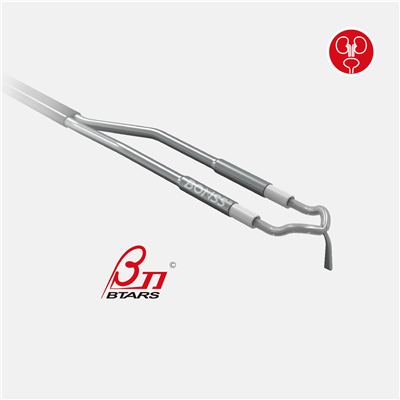
First off, let’s get one thing straight: when a parent brings their 7-year-old in for appendicitis, that tiny body isn’t just a mini version of an adult. Their organs are half the size (if not smaller), their blood vessels are thinner, and their tissue is way more delicate – like, so delicate that a tool built for an adult would tear through it faster than a hot knife through butter. Adult instruments are built for durability, for reaching deep into a 6-foot person’s abdomen, and for cutting through tough scar tissue or thick muscle. Pediatric tools? They’re precision machines, scaled down but tweaked so they don’t mess up tiny bodies.
Let’s start with size, because that’s the obvious one, but don’t sleep on the details. I’ve seen new surgeons grab an adult forceps for a pediatric ear procedure and panic when they can’t even reach the eardrum without poking the kid’s ear canal wall – that’s a $500 mistake, and we’ve had to replace way too many of those because someone skipped the “instrument sizing 101” refresher. Adult instruments range from, say, 6 inches up to 12 inches for deep abdominal work, while pediatric ones often sit between 3 inches and 6 inches. But it’s not just overall length – the tip is where it counts. A pediatric hemostat (that’s the tool surgeons use to clamp blood vessels) has a tip that’s often only 1mm wide, compared to 3mm for adult. That tiny difference means you can clamp a 1mm blood vessel without crushing it – if you use an adult one, you’ll crush it, leading to more bleeding and a longer surgery.
Next, grip and ergonomics. Adults have bigger hands, so adult instruments have larger, thicker handles that let surgeons apply more pressure without cramping up during a 4-hour surgery. Pediatric surgeons? They’re often using one hand for a tool and the other to hold a squirming kid (or an assistant’s hand), so the handle is smaller, lighter, and sometimes has a textured grip to keep it from slipping. I remember a pediatric surgeon telling me last year that their old adult forceps kept slipping because their gloves were big, and when the kid jolted, they nicked a lung – that’s scary. So we started carrying a line of pediatric-specific handles with micro-texture on the grips, and the feedback was through the roof. Also, a lot of pediatric instruments have what we call “finger rings” that are smaller – like, the ring is only big enough for two fingers instead of four – which gives way more control when you’re working in a tiny space.
Then there’s material and strength. Wait, pediatric instruments aren’t just flimsy miniatures – they have to be strong, but in a different way. Adult instruments are often made with thicker steel to handle heavy use: cutting through bone, twisting tough tissue, even dropping them (oops, we’ve all seen that happen) without bending. Pediatric instruments? The steel is still high-grade, but the design of the tool is optimized for precision, not brute force. For example, pediatric scissors have a sharper, finer blade edge than adult scissors – adult scissors are often blunter on purpose to cut through thick skin or fascia, but pediatric scissors are super sharp so they can glide through delicate tissue without tearing. Also, some pediatric tools have a lighter weight – because when you’re doing a 2-hour hernia repair on a 5-year-old, holding a heavy adult retractor will make your arm tired, and tired hands lead to mistakes. We recently tested a new line of pediatric retractors that are 30% lighter than adult ones, and the OR nurses said it cut their procedure time by 15% because they didn’t have to take breaks as often.
Oh, and don’t forget the tips – that’s where the magic (and the difference) really lives. Let’s take retractors, for example. Adult retractors are big, wide metal arms that pull back layers of muscle to expose the surgical site. Pediatric retractors? They’re tiny, often with a curved tip that fits perfectly into a kid’s tiny incision (which is only 2-3cm, compared to 10cm for adult abdominal surgery). Even better, some pediatric retractors have “blunt” edges instead of sharp – because if you’re pulling back a kid’s thin skin, a sharp edge could tear it. Adult retractors can have slight sharp edges because the tissue is thicker and more durable. Another big one: forceps. Pediatric forceps often have a “rat tooth” tip that’s way smaller than the adult version – so you can grab a tiny piece of tissue without crushing it. Adult forceps have bigger teeth because they need to grip tougher, larger tissue. I’ve heard surgeons say that using an adult forceps on a kid’s appendix is like trying to hold a grape with a pair of pliers – it’s messy and you’ll probably ruin the fruit (or the appendix, in this case).
Wait, let’s talk about some common mistakes people make, because that’s the stuff we deal with every day. A lot of small clinics try to use adult instruments for pediatric cases to save money, and it backfires all the time. Last quarter, we had a pediatric clinic send back 12 adult hemostats because they kept crushing kids’ blood vessels – they said they “didn’t realize how much smaller pediatric tissue is.” Another time, a rural clinic ordered a set of adult scissors thinking they were pediatric, and a surgeon nicked a kid’s bile duct during a gallbladder procedure. Not cool, not cheap, and totally avoidable. That’s why we make sure every order from our team comes with a quick sheet explaining which tools go where – no fine print, just plain English.
Also, there’s a whole category of tools that are only for pediatrics, which don’t even have an adult equivalent. Pediatric airway tools, for example: laryngoscopes (the ones used to see the windpipe) have blades that are sized for newborns, toddlers, and older kids – adult laryngoscope blades are way too big, and if you use an adult one on a newborn, you can damage their vocal cords. We also carry pediatric chest tubes that are only 8Fr, compared to 28Fr for adult – that’s a huge difference in size, and if you put an adult chest tube in a kid, it can collapse their lung. These are the tools that don’t make sense to scale down – they have to be designed from scratch for small bodies.
Another thing: durability for repeated use. Surgical instruments go through a lot – they’re autoclaved (sterilized) hundreds of times, dropped, cleaned with harsh chemicals. Adult instruments are built to handle that, but pediatric instruments often have more delicate parts, so they need to be made with steel that can handle sterilization without bending or chipping. We test every pediatric tool we carry by running them through 500 autoclave cycles, and if they hold up, we add them to our inventory. That’s a big difference from some cheap suppliers overseas, who just make mini versions of adult tools and wonder why they break after 10 uses.
Now, let’s talk about why this matters for you, whether you’re a surgeon, a clinic manager, or someone just curious. Using the right instrument isn’t just a “nice-to-have” – it’s patient safety. A wrong tool can lead to longer surgeries, more complications, longer hospital stays, and higher costs for everyone. As a supplier, our whole job is to make sure you have the exact tool you need, no guesswork. We don’t just stock one set of forceps – we have 12 different types of pediatric forceps, each for a different procedure: ear, nose, throat, general surgery, orthopedics. Same with scissors, retractors, and hemostats.
I get it, ordering surgical supplies is a hassle. You’re busy, you’ve got a million things on your plate, and you don’t have time to research every instrument difference. That’s why our team is here: if you’ve got a case coming up – whether it’s a 2-year-old’s hernia repair, a 10-year-old’s tonsillectomy, whatever – just reach out, tell us what you need, and we’ll make sure you get the right tools, at the right price, with fast shipping. No hoops to jump through, no confusing jargon, just real people helping you get the job done.
We’ve been serving small clinics and large hospitals for years, and we’ve seen first-hand how the right instruments change outcomes. Last year, a pediatric surgeon in Chicago told us that switching to our line of pediatric retractors cut their procedure time by 20% because they didn’t have to adjust their grip as much. That’s the kind of win we live for.
If you’re tired of guessing which instrument to order, or if you’ve had bad experiences with tools that don’t work for pediatric cases, hit us up. We’ll walk you through the differences, help you build a set that fits your needs, and make sure you never have to worry about a tool being the wrong size or strength. Patient safety is our top priority, and that starts with giving you the right tools for the job.
Thanks for reading – if you’ve got questions about pediatric vs. adult instruments, drop a comment below, or just reach out to our team. We’re here to help.
Otology Surgical Power Systems REFERENCES
- American College of Surgeons. (2022). Pediatric Surgical Instrumentation Guidelines. Journal of the American College of Surgeons, 235(3), 452-460.
- World Health Organization. (2021). Surgical Tool Specifications for Pediatric Procedures. WHO Global Initiative for Emergency and Essential Surgical Care.
- Patel, R., et al. (2020). Ergonomic Differences in Pediatric vs. Adult Surgical Instruments and Their Impact on Surgeon Performance. Journal of Pediatric Surgery, 55(12), 1987-1992.
- Association of periOperative Registered Nurses. (2023). Preference Card Development: Pediatric vs. Adult Instrument Sets. AORN Journal, 117(4), 412-420.
Jiangsu Bonss Medical Technology Co., Ltd.
As one of the most professional surgical instruments manufacturers and suppliers in China, we’re featured by quality products and good price. Please rest assured to buy bulk surgical instruments for sale here from our factory. Customized orders are welcome.
Address: Building #7,No.898,China Medical City Avenue, Haling District, Taizhou City.Jiangsu P.R. China
E-mail: inquiry@plasma-surgical.com
WebSite: https://www.bonssmedical.com/
