As a supplier of warehouse equipment, I get asked this question at least once a week by new clients, warehouse managers, and even first-time warehouse owners who’ve never had to move a pallet jack or forklift before. It makes sense—most people focus on what the equipment does, not how to get it to their loading dock. But transportation for warehouse equipment isn’t just “load it on a truck and go.” Cut corners here, and you’re looking at scratched forks, bent mast sections, or worse, a piece of machinery that’s unsafe to operate when it arrives. Over the last 12 years in this business, I’ve seen every mistake imaginable, and today I want to break down the real, practical transportation requirements that protect your equipment, save you money, and keep your warehouse running. WarehouseEquipments

First, let’s start with the basics: not all warehouse equipment is the same, so transportation rules change depending on what you’re moving. A hand pallet jack, for example, is tiny—weighing 100 to 200 pounds, with dimensions under 4 feet long and 2 feet wide. A small ride-on pallet stacker is a bit bigger, maybe 500 pounds and 6 feet long. Then there’s the big stuff: electric forklifts, reach trucks, order pickers, even automated guided vehicles (AGVs) that can weigh 10,000 pounds or more and stretch 12 feet long. Each of these has different requirements, and skipping even one can cause damage.
For light, manual equipment like hand pallet jacks or pallet trucks, the first rule is unitizing to protect them during transit. I’ve had a client tell me he “stacked 10 pallet jacks on a 4×8 pallet and strapped them down” only to arrive at his warehouse and find three forks bent, one handle broken, and a hydraulic hose crimped so bad it leaked. The problem? When you stack pallet jacks, their metal forks (which are sharp and rigid) rub against each other during transport. Even a bumpy local delivery is enough to cause that. The right way here is to crate each piece individually, or at the very least, place foam or cardboard between the forks of adjacent units. For bulk orders—say, 20 hand pallet jacks for a new warehouse—we use custom cardboard dividers that fit between each jack, so they don’t shift and bang into each other. Also, don’t forget the hydraulic components. Hand pallet jacks rely on a hydraulic cylinder to lift loads, and if that cylinder jostles back and forth, the seal can break, leading to fluid leaks. We always recommend securing the hydraulic lever in the “down” position during transport, and adding a small piece of tape to hold it there—this prevents the lever from swinging and damaging the cylinder.
Moving to medium equipment, like electric pallet stackers or small counterbalance forklifts (those under 5,000 pounds), the requirements get stricter. First, weight and dimensions matter for truck selection. A small electric forklift, for example, is 3,000 pounds and 8 feet long—you can’t put that on a standard 16-foot box truck that’s meant for moving couches. The weight capacity of the truck’s floor isn’t just a suggestion; it’s a safety requirement. If a truck’s floor can only hold 2,500 pounds, putting a 3,000-pound forklift on it can cause the floor to warp, which means no one can safely drive the forklift off the truck when it arrives. We always ask clients to confirm their truck’s weight rating, but most of the time, we arrange the truck ourselves—we partner with local carriers that specialize in industrial equipment, so they already have the right trucks. Another thing with medium equipment: removing detachable parts before transport. A lot of electric forklifts have removable forks, battery covers, or even side mirrors. If you leave these on during a long-haul delivery, they can fall off. I once had a client in Chicago who ordered a small forklift from us in Detroit, and he left the side mirrors on. The truck hit a pothole on I-94, the mirrors snapped off, and he had to pay $200 to replace them once it arrived. It’s a small step, but it saves a lot of hassle. Also, for medium equipment, you need to consider the way it’s loaded. Forklifts are heavy, so you can’t just roll them up a ramp and hope they stay. We use heavy-duty wheel chocks on the truck’s ramp, even when driving on to the truck—this keeps the wheels from rolling back if the driver takes a break mid-load. Once inside the truck, we secure the equipment with two heavy-duty straps: one around the mast, and one around the base. We never strap to the forks, because the forks are designed to lift loads, not hold the weight of a forklift in transit. That’s a mistake we saw years ago, and it bent the mast of a $15,000 forklift. We don’t do that anymore.
Now, the big stuff: heavy industrial warehouse equipment, like large electric forklifts, reach trucks, or AGVs that weigh over 5,000 pounds. This is where transportation can get complicated, and it’s not just about securing the equipment—it’s about route planning, permits, and even bridge weight limits. For example, a 10,000-pound forklift on a 12-foot flatbed truck isn’t just a load—it’s a commercial vehicle that has to follow state and federal weight laws. Some states allow trucks with total weight (truck plus load) up to 80,000 pounds on interstates, but local roads might have a 50,000-pound limit. If your route goes through a small town, you might need a special permit to move that equipment. We handle all of that for our clients, but it’s a requirement that a lot of first-time buyers don’t know about. Another thing with heavy equipment: disassembly, when needed. Large forklifts can sometimes be disassembled into smaller parts to make transport easier. For example, the mast on a 15,000-pound forklift can be removed, cutting the total height from 12 feet to 7 feet. That means you don’t have to worry about low overpasses during transport, which is a huge relief. We always assess whether disassembly is worth it for heavy equipment—if the cost of disassembly is less than the cost of a special overpass permit, we do it. Also, for AGVs, which are often custom-built, you have to make sure that the transport truck has a flat, non-slip floor. AGVs rely on sensors to navigate, and if the floor is uneven, the equipment can shift, damaging the sensors. We use anti-slip mats on the truck’s floor for AGVs, which keeps them in place and protects the navigation systems.
Wait, I should also talk about electrical considerations for equipment that needs power during transport. A lot of electric warehouse equipment, like forklifts, has lead-acid batteries that need to be kept at a certain temperature. If it’s winter, transporting a forklift battery in a closed truck that’s exposed to cold can cause the battery’s acid to freeze, which ruins the battery. If it’s summer, the heat can overheat the battery, leading to fluid loss. We always recommend climate-controlled transport for electric equipment, especially long-haul deliveries. For short local deliveries, it’s not as critical, but we still keep a close eye on the battery. Another electrical point: when you’re loading an electric forklift, you need to make sure that the truck’s electrical system doesn’t interfere with the forklift’s. Some older box trucks have old wiring that can send a surge of electricity to the forklift’s control panel, which can fry the computer. We test the truck’s electrical system before loading any electric equipment, and if it’s not up to par, we use a generator to power the forklift during loading instead.
I know this sounds like a lot, but the good news is that as a warehouse equipment supplier, we handle most of this for our clients. But it’s important that clients understand these requirements too, because if something goes wrong during transport, it’s often a collaboration between the supplier and the buyer. For example, if a client tells us “I don’t want you to disassemble the forklift because it’ll take too long,” we have to adjust the transport plan—maybe get a special permit for the mast height, or pick a different route that doesn’t have low overpasses. That’s why communication is key.
A lot of people ask if there are any common mistakes they should avoid when preparing for transport. Let me list a few that I see all the time. First, not measuring the equipment correctly. A lot of clients say “my forklift is 10 feet long,” but they forget to include the forks, which add another 2 feet. That makes the total length 12 feet, which might not fit on a standard box truck. Second, not emptying the equipment. If a forklift has pallet loads of product on the forks during transport, that adds extra weight, and it’s also a hazard—those pallets can fall off the forks and damage the equipment or the truck. Third, not insuring the equipment during transport. A lot of people think that the carrier’s insurance covers damage, but most carrier insurance only covers up to a certain amount, and it doesn’t cover damage that’s caused by improper loading. We always recommend that clients add a separate transportation insurance policy for their warehouse equipment, just to be safe.
At the end of the day, transportation requirements for warehouse equipment are all about protecting your investment. A pallet jack costs a few hundred dollars, a forklift costs $10,000, and an AGV can be $50,000 or more. You don’t want to spend all that money on equipment only to have it arrive damaged. That’s why we take transportation so seriously—we don’t just load and go; we plan, we check, we adjust, and we make sure every piece of equipment is ready to work as soon as it’s unloaded.
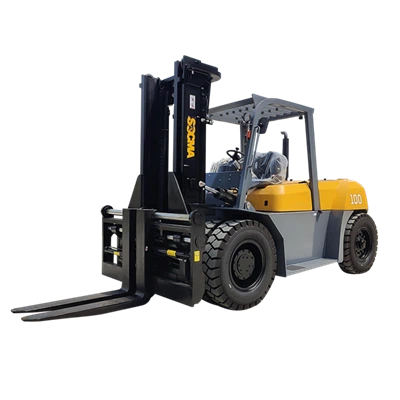
If you’re in the market for new warehouse equipment, or you have questions about transporting the equipment you already have, don’t hesitate to reach out to us. We’re here to walk you through every step, from choosing the right equipment to making sure it arrives safely at your warehouse. We’ve been in this business long enough to know what works, and we’re happy to share that knowledge with you.
Telescopic Forklift References:
- Material Handling Industry of America. (2021). Transportation Best Practices for Industrial Warehouse Equipment. MHIA Press.
- National Highway Traffic Safety Administration. (2020). Commercial Vehicle Weight and Dimension Regulations for Industrial Loads. NHTSA Technical Report.
- Warehouse Equipment Supply Association. (2022). Guide to Safe Transportation of Electric Warehouse Machinery. WESA Safety Publications.
Fujian SOCMA Machinery Manufacture Co., Ltd.
Fujian SOCMA Machinery Manufacture Co., Ltd. is one of the most professional warehouseequipments manufacturers and suppliers in China. We warmly welcome you to buy customized warehouseequipments made in China here from our factory. If you have any enquiry about cooperation, please feel free to email us.
Address: Taiwanese Investment Area, Quanzhou, Fujian, China
E-mail: marketing@socmamarketing.com
WebSite: https://www.socma-forklift.com/
