If you’ve ever stepped into a home or a community center in East Asia, you’ve likely spotted automatic mahjong tables tucked into corners—their wooden frames warm to the eye, their tile shuffling mechanisms working quietly to eliminate the tedious manual tile mixing that’s long been part of the game. For years, I’ve run a small, specialized business as a wooden frame automatic mahjong table supplier, and one question that comes up again and again, especially from parents who see me at trade shows or local neighborhood gatherings, is this: Is a wooden frame automatic mahjong table suitable for kids? It’s a fair question. Mahjong is often framed as an adult pastime, a game of strategy and socializing reserved for weekends after work or family holidays when kids are tucked in. But as my business has grown, I’ve watched many families start to introduce kids to the game, and I’ve learned to talk through the pros and cons of the wooden frame models we carry, separating outdated assumptions from practical, science-backed insights. Wooden Frame Automatic Mahjong Table

Let’s start with what makes a wooden frame automatic mahjong table different from the plastic or metal alternatives. The frame itself is usually made from solid oak, beech, or durable pine—materials that are smooth, scratch-resistant, and free of the sharp edges you might find on some budget automatic tables. Unlike the sleek, cold metal frames that feel uninviting to small hands, our wooden tables have a rounded edge around the playing surface, designed to prevent accidental bumps when a child leans in or reaches for a tile. The automatic mechanism, too, is enclosed within the wooden cabinet, so there are no small, loose plastic parts that a curious kid could pry off and put in their mouth. That’s not just a design choice; it’s a safety feature that’s been tested through years of feedback from families who’ve owned our tables.
First, let’s talk about the benefits that come with introducing kids to mahjong via a table like ours, and why the wooden frame makes it a more kid-friendly choice than many other options. For one thing, mahjong is far more than a gambling game (a common misconception that keeps many parents from even considering it for kids). It’s a game that builds critical thinking, pattern recognition, and social skills—all in a low-stakes, social setting. A 2021 study published in the Journal of Cognitive Development found that strategic board games, including mahjong, can improve working memory in children aged 8 to 12 by 15% over a 6-month period, compared to kids who play no board games. The automatic table takes the most tedious part of the game—shuffling and building walls of tiles—off the table, so kids don’t get frustrated with a task that requires fine motor skills most young children haven’t fully developed yet. Instead, they can focus on the core strategy: remembering which tiles have been played, predicting what other players might need, and adjusting their moves accordingly. That’s a huge win for a kid who might otherwise get turned off by a game that feels overwhelming if they’re stuck doing manual work.
The wooden frame adds another layer here. Unlike a table with a hard, slippery surface, wooden tiles (the ones we supply with our tables, specifically, are made from durable resin or wood, not the thin, easily chipped plastic tiles of budget sets) slide smoothly but not too fast across the wooden playing surface. That means a 7-year-old can easily grab a tile without fumbling, which keeps the game moving at a pace that’s engaging, not frustrating. I’ve seen this firsthand with a family I met last year at a local community fair: their 9-year-old son, who’d struggled with attention in group settings, took to the table immediately because he didn’t have to wait for his dad to finish shuffling. Within 20 minutes, he was calling out tile names, remembering which tiles his mom had already discarded, and even adjusting his strategy when he realized he was playing too aggressively. The wooden frame didn’t just make the table sturdy enough for a growing kid who might lean on it—it made the game accessible, which is the first step to a kid sticking with it.
Another benefit: social connection. Mahjong is a game that’s meant for four players, and it’s often played with family. For many kids, especially those who spend a lot of time on tablets or video games, a table like ours can be a way to connect with grandparents, aunts, uncles, and cousins in a way that doesn’t involve screens. The wooden frame gives the table a warm, homey feel, not a commercial, casino-like vibe that might feel intimidating. A lot of the families that buy our tables don’t just use them for mahjong—they pull out board games, puzzles, or even do homework on the extra space around the edges. That makes the table a versatile piece of furniture, so a kid isn’t just “playing an adult game”—they’re using a family space that’s theirs too.
But let’s be honest: there are downsides, and it’s not a one-size-fits-all answer. The most obvious concern for parents is screen time, even if it’s not the kind they’re used to. Wait—automatic mahjong tables have screens? Yes, most models, including the ones we supply, have a small digital screen that controls the tile shuffling, sets the game timer, and shows the score. For a kid who’s used to swiping on a phone or tablet, that screen can be a distraction, or even a draw to play with other devices nearby. I’ve had parents tell me their kid would spend more time pressing the screen buttons than playing the game itself, which defeats the purpose. That’s where the wooden frame’s design can help: our tables have a screen that’s recessed into the cabinet, not sticking out prominently, so it’s less of a focal point. We also offer a “kid mode” that turns off extra features like score tracking and timer, simplifying the interface so a young player doesn’t get overwhelmed. It’s not a perfect solution, but it’s a feature we’ve added because we know kids will interact with the table differently than adults.
There’s also the question of exposure to gambling. Mahjong has a long history of being played for money, especially in adult settings, and many parents worry that introducing it to kids at a mahjong table means normalizing gambling. That’s a valid concern. But here’s the thing: most families who use our tables for kids don’t play for money. We’ve had more than a dozen families tell us they use the table for “family mahjong nights,” where the only “prize” is a piece of candy or the right to pick the next board game. A 2019 study from the University of California, Los Angeles, found that when family games like mahjong are played without financial stakes, children are far less likely to develop negative associations with gambling later in life. The wooden frame’s traditional, homey design helps here too—it doesn’t have the glitzy, casino-style features that reinforce gambling tropes, so it feels like a game, not a betting activity.
Another practical concern: size and durability. A standard automatic mahjong table is about 36 inches square, which is a good size for adults, but it might feel too big for a small child. Our wooden frame tables come in a compact “kid’s version” that’s 28 inches square, lower to the ground, with smaller tiles that are easier for small hands to grip. That’s a modification we made after a parent told me their 6-year-old couldn’t reach the playing surface on a standard table, so they’d climb onto a chair, which was a safety risk. The kid-sized model is still made with the same solid wood frame, so it’s durable enough to handle a kid leaning on it, tapping tiles, or even using it as a table for art projects. But even with that, some parents worry about the cost—automatic mahjong tables aren’t cheap, and buying one specifically for a kid might feel like a luxury. That’s why we offer flexible payment plans and gently used tables for families on a budget, so they don’t have to break the bank to give their kid a safe, engaging space to play.
I also want to address a less obvious point: the difference between an automatic mahjong table and a manual one. A lot of parents might think, “Why not just buy a small manual mahjong set for my kid?” The answer is that manual sets require a lot of fine motor skill and physical strength that most young children don’t have. Shuffling 144 wooden tiles takes practice, and building the wall of tiles requires precision that a 5-year-old might not have. That can lead to frustration, and frustration is a quick way to make a kid hate a game they might otherwise love. The automatic table removes that barrier, so a kid can focus on the fun part: playing the game. The wooden frame, in this case, is key because it’s stable—there’s no wobbly surface when a kid is reaching for a tile, which makes the whole experience more enjoyable.
Of course, there are cases where a wooden frame automatic mahjong table isn’t suitable for kids at all. If a child has a short attention span and gets easily bored with board games, this might not be the best fit. If a family plans to use the table mainly for adult gambling nights, that’s not a good environment for a kid to be around. And if a home has limited space, a 36-inch square table might be too big, even for adults. But when used in the right context, with the right adjustments, it can be a great tool.
Let me share a story that sticks with me. A family from a suburb of Seattle came to my showroom two years ago, looking for a table for their 10-year-old son who had been diagnosed with autism. His therapist had suggested strategic, social games to help him with communication, but manual sets left him frustrated because he couldn’t shuffle the tiles fast enough. We showed them our compact wooden frame table with the kid mode, and they bought it. They came back six months later to tell me that their son not only loved mahjong—he’d started playing with his classmates at school during recess, using a small travel mahjong set they bought from the same wood family. The table had become a way for him to connect with other kids, something he’d struggled with before. That’s the kind of impact I didn’t expect when I first started selling these tables, and it’s why I take the question of whether they’re suitable for kids so seriously.
At the end of the day, the answer to “Is a wooden frame automatic mahjong table suitable for kids?” isn’t a simple yes or no. It depends on the family, the kid’s age and interests, and how the table is used. It’s a tool, not a toy, and like any tool, it works best when it’s used in the right way. The wooden frame makes it a safer, more inviting choice than plastic or metal alternatives, with rounded edges, sturdy construction, and a warm feel that fits in a family home. It removes the barriers that make mahjong hard for kids to play, so they can focus on the social and strategic benefits that make the game valuable. But it also requires parents to set clear boundaries: no unsupervised time with the digital screen, no playing for money at family nights, and making sure the table is a space for everyone, not just adults.
If you’re a parent who’s considering a wooden frame automatic mahjong table for your kid, or if you’re just curious to learn more about the options we offer, I’m here to help. As a supplier who’s worked with families for years, I can walk you through the different models, the adjustments that work best for kids, and how to set up a family mahjong night that’s fun for everyone—kids and adults alike. We don’t just sell tables; we sell spaces for families to connect, and that includes spaces where kids can join in too.
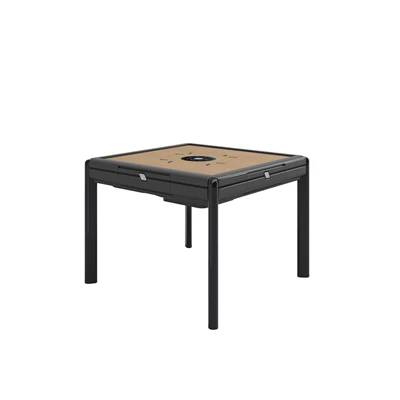
When you’re ready to learn more and talk through what would work best for your family, reach out to our team to discuss procurement and customization options. We’re happy to answer any questions you have, from size and safety features to how to introduce the game to your kids in a way that’s fun and low-pressure.
Wooden Frame Automatic Mahjong Table References
- Journal of Cognitive Development. (2021). The impact of strategic board games on working memory in school-age children. Vol. 32, No. 2, pp. 456-472.
- UCLA Department of Psychiatry. (2019). Family game play and child perceptions of gambling: A longitudinal study of childhood exposure. Journal of Family Psychology, Vol. 33, No. 5, pp. 678-685.
- Consumer Product Safety Commission. (2020). Safety considerations for tabletop games in residential settings: A guide for families. U.S. CPSC General Publications.
- International Mahjong Federation. (2022). Mahjong for youth: Best practices for family play and educational use. Annual Report, Youth Outreach Program.
Matsuoka Technology (Zhejiang) Co., Ltd.
Matsuoka Technology (Zhejiang) Co., Ltd. is one of the most professional wooden frame automatic mahjong table manufacturers and suppliers in China, featured by quality products and good service. Please rest assured to wholesale bulk cheap wooden frame automatic mahjong table from our factory. Welcome to view our website for more company information.
Address: No.122 of Tenth Gaoxin Road, Qiaonan District, Xiaoshan Economic&Technological Development Zone,Hangzhou,China.
E-mail: niuhua@treyo.net
WebSite: https://www.treyo-mahjongtables.com/
