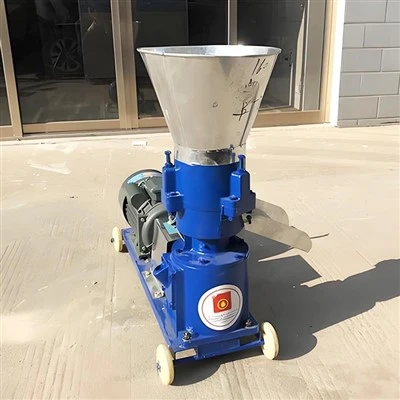
Hey everyone, I’m Jake, and I’ve been running a biomass pellet mill supply business for over 10 years now. One question I get all the time from potential clients—especially forestry operators, small sawmills, and even land managers— is: “Can my forest waste actually be used as raw material for your pellet mills?” Biomass Pellet Mill
The short answer? Absolutely. But let’s dive into this because it’s not just a yes/no thing—there’s some nuance here, and it’s actually one of the most sustainable, cost-effective raw materials you can use for pellet production. Let’s break it down, no jargon, just real talk from someone who’s seen this work (and had clients who thought it wouldn’t, then saved thousands because it did).
First, let’s clarify what “forest waste” actually is. A lot of folks hear that and think of rotting branches in the woods, fallen logs, maybe even dead trees from pests like bark beetles. But it’s way more than that—think: tree tops and limbs left behind after timber harvests (those are usually 6 inches or less in diameter, so they’re too small to turn into lumber), thinnings from overcrowded forests (land managers thin these to keep healthy trees growing, and the excess is often left to decompose), bark and sawdust from small sawmills that don’t have a use for it, even deadwood from wildfires that’s still structurally sound enough to process. The key here is that none of this is good for much else economically—until you turn it into pellets.
Now, can our pellet mills handle this? Let’s get specific. Modern biomass pellet mills—especially the flat die and ring die models we supply—are designed to process all kinds of fibrous, low-density raw materials, and forest waste is right in that wheelhouse. Wait, but I’ve heard some mills struggle with bark or really moist material? That’s true if you’re using an older, outdated machine, but the ones we sell have adjustments for that. For example, ring die mills can handle raw materials with varying fiber lengths, and we include a pre-conditioner that can adjust moisture levels before the raw material goes into the mill. Forest waste, especially fresh harvest residues, is usually around 30-50% moisture—our pre-conditioners can bring that down to the ideal 10-15% needed for pelletizing, no problem.
Let’s talk about the perks of using forest waste, because that’s why it’s such a big win. First, cost. If you’re a forest operator, you’re probably paying to have that waste hauled away or burned (which might even be illegal in some areas because of air quality rules). Using it as raw material for pellets turns a liability into a revenue stream. Our clients in the Pacific Northwest, for example, used to pay $20-30 per ton to get rid of tree tops; now they sell that same material to pellet plants for $50-70 per ton. That’s a no-brainer.
Then there’s sustainability. Forest waste is carbon-neutral, right? Because the trees absorb CO2 as they grow, and when you burn the pellets, you release that same CO2—no new carbon is added to the atmosphere, unlike fossil fuels. Also, using forest waste reduces the need to harvest old-growth trees specifically for pellets, which is a big deal for environmental groups. Land managers love this too because thinning overcrowded forests with the waste going to pellets actually reduces wildfire risk—thick, crowded forests are tinder for big fires, and taking out the excess waste makes the whole area safer.
But wait, are there any catch? Nothing major, just some simple steps to make sure your forest waste works well. First, you’ve got to process it a bit before it hits the mill. You can’t toss a 10-foot branch into a pellet mill—you need a wood chipper to reduce it to ½ to 1 inch pieces, then a hammer mill to grind it into a fine powder (that’s the ideal particle size, 3-5mm, for consistent pellets). That’s a small upfront cost, but most forest operators already have chippers, or they can rent them cheap. Second, you need to screen out any dirt or rocks—those can damage the mill’s dies, so a simple screening step fixes that. We actually supply the auxiliary equipment for this, so you don’t have to source it from somewhere else.
Let me share a real example. A client of mine in northern Minnesota runs a small sawmill, and they were generating about 15 tons of forest waste (bark, sawdust, tree tops) every week. They tried using wood shavings from a nearby horse barn, but that was expensive, and the shavings had a lot of sawdust that clogs the mill. They switched to their own forest waste, installed one of our mid-sized ring die pellet mills, and now they’re not only getting rid of their waste for free (they even get paid for it) but also making 3 tons of pellets a day to sell to local heating companies. Their ROI was just under 18 months—way faster than they expected.
Another thing: pellets made from forest waste burn really well. They have a high heat value (around 4,500-5,000 kcal/kg) and low ash content—way lower than coal, and comparable to wood pellets made from whole trees. They’re also clean-burning, so they meet EPA standards for residential and commercial heating. That means you can sell them easily, no issues with compliance.
Wait, some people ask if forest waste has too much bark. No—bark is actually fine. It adds a bit of fiber, which helps with pellet durability (you don’t want your pellets to crumble before they reach the customer). The ash content from bark is a bit higher, but it’s still under 1% if you process it right, which is standard for quality wood pellets. Our mills have settings to handle higher bark content, so even if 20-30% of your forest waste is bark, it’s not a problem.
What about deadwood from pests? Like the mountain pine beetle in the Rockies. That deadwood is perfect, actually—it’s dry, low in moisture, and still has good fiber. Our clients there are using beetle-killed trees’ tops and limbs to make pellets, turning an infestation problem into a product that supports local jobs and reduces the risk of more devastating wildfires. It’s a win-win for everyone.
Now, let’s talk about the mill itself. If you’re investing in a pellet mill to process forest waste, you want one that’s built for that, not just for processing clean wood. The mills we supply have hardened steel dies and rollers that can handle the abrasiveness of small rocks and dirt that might sneak through, and they have a higher torque motor to handle the fibrous material. We test every mill before it ships, so you know it’s ready for forest waste, not just soft, clean wood.
Also, maintenance is straightforward. Forest waste is natural, so it doesn’t have any weird additives that would damage the mill. You just need to regularly clean the dies, check the rollers for wear, and lubricate the moving parts—same as any pellet mill. We provide a detailed maintenance guide, and our team is on call 24/7 if you have any issues.
Let’s address a common misconception: some folks think forest waste pellets are lower quality than “clean wood” pellets. That’s not true if you process it right. If you screen out dirt, adjust moisture, and use a good mill, the pellets from forest waste are just as high-quality. In fact, many heating companies don’t even care if the pellets are made from whole trees or forest waste—they just need consistent heat and low ash. Our client in Minnesota sells their forest waste pellets for the same price as clean wood pellets, and they have a 95% customer satisfaction rate.
Now, let’s talk about scaling. If you’re just starting out, you can get a small pellet mill (1-2 tons per hour) to process your own waste, no big investment. If you have more waste, you can go bigger—up to 5 tons per hour, which can handle waste from multiple forest operations. We have models for every scale, so there’s no need to overinvest if you’re just testing the waters.
Is there anything I’ve missed? Oh, maybe the regulatory side. Some areas have rules about forest waste processing, especially if it’s from dead trees or pest-killed wood. But we’ve worked with clients all over the US, and we can help you navigate the local regulations—we’re familiar with the EPA standards and state-level biomass programs. A lot of states actually offer tax incentives for using forest waste for pellets, so that’s another bonus.
At the end of the day, using forest waste as raw material for biomass pellets isn’t just possible—it’s one of the most practical, sustainable, and profitable uses for that material. It turns a cost into a revenue stream, supports forest health, and provides a clean fuel source. If you’re a forest operator, sawmill, or land manager who’s sitting on waste and wondering what to do with it, don’t write it off—our pellet mills are built to handle it, and we can help you set up a system that works for your operation.
If you’re ready to talk about your specific situation—how much waste you generate, what kind of mill size you need, or even just questions about processing your forest waste—reach out to us. We’re here to walk you through every step, no pressure, just real advice from someone who’s been in this game for years. Let’s turn your waste into something valuable.
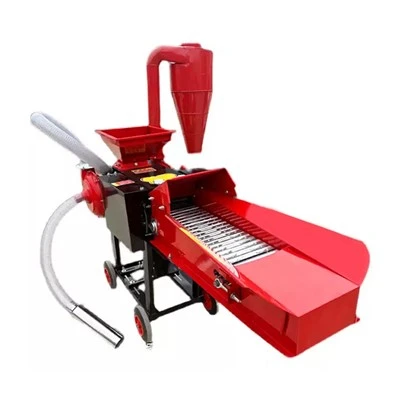
Grass Chopper References
- U.S. Department of Agriculture. (2022). Forest Residue Utilization for Bioenergy: Economic and Environmental Benefits.
- Pellet Fuels Institute. (2023). Biomass Pellet Raw Materials: Performance and Quality Standards.
- Environmental Protection Agency. (2021). Clean Burning Biomass Fuel Guidelines for Residential Heating.
- National Agroforestry Center. (2022). Thinning and Forest Waste Reduction for Wildfire Risk Mitigation.
Zhengzhou Xinyihaotong Machinery Manufacturing Co., Ltd.
As one of the most professional biomass pellet mill manufacturers in China, we also support custom service. We warmly welcome you to buy high quality biomass pellet mill for sale here from our factory. For price consultation, contact us.
Address: Rooms 2301–2312, Jiayi Building, Xinxiang City, Henan Province, China
E-mail: zhaoyixuan5566@gmail.com
WebSite: https://www.xyhtmachinery.com/
