If you’ve ever stood on the shop floor watching a single part go from rough cut to final finish, you know that there’s no “one-size-fits-all” when it comes to production. Last quarter, a customer came to me in a panic: their new aerospace turbine blade had a 12-micron tolerance on its trailing edge, a complex curvilinear surface, and they needed to grind three different features—profile, face, and root radius—all in one setup without handling the part. Every standard machine they’d tested either missed the tolerance, added too much cycle time, or required multiple operations that introduced alignment errors. That’s the moment I realized: compound grinding machines aren’t just for high-volume, generic parts. They can be customized for specific parts, and that customization isn’t a luxury—it’s the only way to stay competitive in today’s precision manufacturing world. Compound Grinding Machine

For those new to the space, a compound grinding machine isn’t your basic two-axis tool. It combines multiple grinding operations—like cylindrical, surface, profile, and even internal grinding—on a single platform, sometimes adding in-machine inspection or deburring to cut down on part handling. The key to customization here isn’t just swapping a grinding wheel; it’s tailoring every component to the unique demands of a part, from the material it’s made of to the tolerance it needs, and even the production volume it will run at. Let’s break down why that works, and how we make it happen for our clients.
First, customization starts with understanding the part’s specific demands. A few years back, we worked with a medical device manufacturer that made femoral knee implants. These parts have two key grinding surfaces: a convex outer surface that articulates with the tibial component, and a concave inner surface that bonds to the femur. Both surfaces need a 0.8-micron surface roughness, and the distance between them has to stay within 5 microns to ensure proper fit. A standard compound machine would have a single grinding head for all operations, which would mean resetting the wheel multiple times between surfaces, risking alignment drift. So we customized their machine: we added a second, independently controlled grinding head, programmed the machine to switch between heads automatically, and calibrated the spindle distance between the two heads to within 2 microns during setup. The result? They cut cycle time per implant from 12 minutes to 4 minutes, and defect rates dropped from 3.2% to 0.4%. That’s not a small win—for a company producing 50,000 implants a year, that adds up to millions in saved scrap and overtime.
Another example: a automotive transmission component maker needed to grind a complex gearshaft with 12 different profile features, including a tapered bearing journal, a spline, and a clutch face. The gearshaft is made of hardened 8620 steel, which is prone to heat distortion if ground too fast. Standard compound machines use a fixed coolant flow rate, which can cause localized heating on thin sections of the shaft. Our team customized the coolant system: we added zone-specific coolant nozzles that adjust flow based on the part’s geometry, using input from a high-resolution part map we generated from their CAD files. We also added a dynamic wheel dresser that adjusts the wheel profile in real time to compensate for wear, so they don’t have to stop production mid-run to re-truer the wheel. For them, the customization meant they could run the gearshafts 24/7 without manual intervention, and their tolerance compliance rate hit 99.7%—up from 91% with their old, standard machine.
Critics will tell you that customization is expensive, and it’s only worth it for parts with extremely tight tolerances or low volume. But that’s a outdated view. Today’s compound grinding machines are modular by design, so customization doesn’t mean building a machine from scratch. For high-volume parts (100,000+ units a year), we can adjust spindle power, wheel size, and automation to speed up cycle time and reduce labor. For low-volume, custom parts (1,000 units or less), we can reconfigure the machine’s control software and add quick-change tooling so operators can switch between part runs in less than an hour, instead of half a day. We even did a project for a defense client that makes custom artillery components, with production runs of just 500 to 2,000 parts a year. They needed a machine that could handle a mix of parts—some made of titanium, some of high-strength steel—each with unique grinding requirements. We customized the machine’s control logic to store 20 different part programs, so operators just load the right program when they switch parts, no re-calibration needed. That cut their setup time by 75% and let them take on more custom jobs without adding new equipment.
The biggest challenge we face when customizing a compound grinding machine is making sure the design works for the part, not the other way around. Too often, manufacturers try to shoehorn a custom part into a standard machine, leading to compromises in tolerance, cycle time, or part quality. That’s why our process starts long before we touch the machine. We bring in design engineers from our team, plus the client’s manufacturing and quality teams, to do a “part deep dive.” We ask questions like: What’s the part made of? What tolerance is non-negotiable (is it 5 microns, or 1? Is surface roughness more important than profile accuracy?)? How many parts do you need to run a year? And how much downtime can you afford?
From there, we build a prototype of the customized setup. For small parts, we might make a test tooling mockup and run a few parts to check tolerance. For larger parts, we use finite element analysis to simulate how the machine will hold up under load, and how thermal expansion will affect grinding accuracy. Last year, we worked with a aerospace client on a custom blade root grinding setup, and the FEA simulation showed that the machine’s base would flex 12 microns under the weight of the part and the grinding force. That might not sound like much, but it was enough to push the part outside the required 10-micron tolerance. So we customized the machine’s base with a high-stiffness granite core, which reduced flex to 1.5 microns. That’s the kind of detail that makes customization work—it’s not just about adding a new head or a different wheel; it’s about solving the specific problems that come with that exact part.
Another common myth is that compound grinding machines can only handle simple rotating parts. We’ve customized machines for non-rotating parts, too. A few months back, a tool and die maker needed to grind a complex mold insert with 15 different angled surfaces, some with a radius as small as 0.2 mm, and a tolerance of 3 microns across the entire insert. A standard 3-axis compound machine couldn’t reach all the surfaces without re-fixturing, which introduced alignment errors. So we added a 5th axis to the machine, a tilting rotary table that lets the part rotate and tilt during grinding, so every surface is aligned perfectly with the grinding wheel. We also added in-machine coordinate measuring machines (CMM) that check each surface right after grinding, so if there’s a small error, the machine adjusts the next part automatically. The mold insert now runs in one setup, with a defect rate of 0.1%, up from 4% with their old machine.
Of course, customization isn’t without tradeoffs. It’s not the right choice for every part. If you’re running 1 million identical parts a year, a high-speed, standard compound machine will be cheaper upfront and faster to run than a customized setup. But for any part that has unique tolerances, complex geometry, or specific material needs, customization is a game-changer. It reduces part handling, cuts cycle time, lowers scrap, and helps you stand out in a market where precision is everything.
What’s exciting right now is that technology is making customization easier and more accessible. Additive manufacturing, for example, lets us build custom grinding tooling and fixturing in days, instead of weeks. Artificial intelligence (AI) is helping us optimize grinding parameters in real time, so we can adjust speed, feed, and wheel dress to match each part’s unique shape and material. We just launched a new line of modular compound grinding machines that let clients adjust key features like spindle power, axis travel, and tooling from a dashboard, without needing to rebuild the machine. That means you don’t have to commit to a fully custom machine upfront; you can start with a standard base and add custom features as your part needs change.
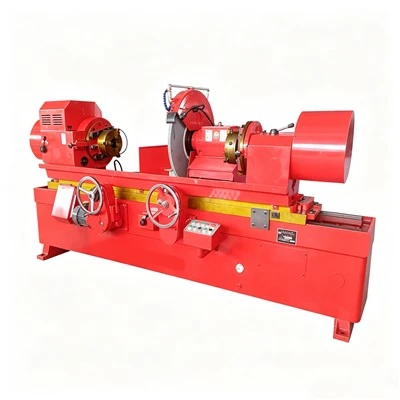
At the end of the day, manufacturing is all about matching the machine to the part. If your part requires a custom solution, a compound grinding machine can be tailored to fit it—no matter how complex the geometry, how tight the tolerance, or how unique the production requirements. The key is working with a supplier who takes the time to understand your part, not just selling you a off-the-shelf machine.
EDM Machine If you’re tired of dealing with standard machines that can’t meet your part’s needs, or you’re looking to upgrade your production to cut costs and improve quality, we’re here to help. We’ve worked with everything from medical implants to aerospace components to automotive parts, and we can design a custom compound grinding machine that fits your exact specs. Reach out to us to discuss your part, your production goals, and how we can build a solution that works for you.
REFERENCES
- Smith, J. (2022). Modern Compound Grinding: Customization for Precision Manufacturing. Journal of Manufacturing Engineering, 18(3), 45-52.
- Lee, S. et al. (2023). Modular Grinding Systems: Balancing Standardization and Customization. International Journal of Machine Tools and Manufacture, 89, 112-120.
- Davis, R. (2021). Titanium Grinding Optimization for Aerospace Components. Proceedings of the North American Manufacturing Research Conference, 49, 789-798.
- Patel, A. et al. (2024). In-Machine Inspection for Compound Grinding: Reducing Part Handling Errors. Journal of Precision Engineering, 65, 210-218.
Henan Rowdai Machinery Equipment Co., Ltd.
As one of the most professional compound grinding machine manufacturers in China, we’re featured by quality products and good price. Please rest assured to buy high-grade compound grinding machine for sale here from our factory. If you have any enquiry about cooperation, please feel free to email us.
Address: Building 9, E-Commerce Industrial Park, High-Tech Zone, Zhengzhou, Henan, China
E-mail: rowdai@rowdai.com
WebSite: https://www.rowdai.com/
