Alright, let’s cut to the chase: if you work with solar components or semiconductor manufacturing, you’ve definitely heard of off-grade silicon. You might even be here because you’ve bought batches that looked fine on paper but died in processing—so you know how much that variability can kill your timeline and budget. As someone who’s been supplying off-grade silicon for the last 8 years, I’ve seen every kind of quality swing under the sun, and it’s not just random. Let’s break down exactly why that quality shifts, what to look for, and how to avoid the mess that comes with inconsistent stock. Off-grade Silicon

First, let’s get one thing straight: off-grade silicon isn’t “bad silicon.” It’s silicon that didn’t meet the strict specs for premium-grade (99.9999% pure, or 6N+) used in high-end solar panels or microchips. The most common types of off-grade are 5N (99.999%) and 4N (99.99%)—and that tiny difference in purity is just the start. I’ve had customers come to me saying they bought a 5N batch from another supplier that had twice the iron contamination their last 4N batch had. What gives?
The root of this variation starts back at the primary production stage. Most silicon comes from smelting quartzite in electric arc furnaces, right? You heat quartz (SiO2) with carbon electrodes at super high temps, and you get metallurgical grade silicon (MG-Si, 98-99% pure). That MG-Si is the raw material for all grades, including off-grade. Here’s the thing: smelting isn’t a perfectly controlled process, even at big plants. The furnace’s temperature distribution can shift during a run—like if the electrodes wear down unevenly or the feedstock (quartz chunks) has inconsistent size. If one section of the furnace runs 50°C hotter, you get more silicon carbide (SiC) in the mix, which is a big impurity. Another spot might have leftover carbon, so you end up with higher carbon content. I’ve seen a batch of MG-Si that tested at 98.5% one week and 98.8% the next, just because the furnace operator adjusted the gas flow mid-run to fix a pressure issue. That small change ripples all the way to off-grade stock.
Next step: purification. To turn MG-Si into off-grade, you do acid leaching to strip out impurities like iron, aluminum, and calcium. But this is where the quality varies more than any other part of the process. Not all acid leach operations are created equal. Some suppliers use a single acid bath, some use a mix of hydrochloric and sulfuric acid, and the contact time varies. If you leave the silicon in the acid too short, you don’t get all the iron out; too long, and you might leach out too much of the silicon itself, creating tiny defects. Last year, a customer of mine (they make small solar chargers) switched to a cheap off-grade supplier who used only HCl for leaching. Their first batch was 5N, but the iron content was 0.002% higher than spec—by the time they processed it, their cell efficiency dropped by 3% per panel. I checked their lab results, and sure enough, the leaching time was cut by 40% to save money. That’s the kind of cost-cutting that makes quality swing hard.
Then there’s sorting and grading. This is where a lot of off-grade suppliers cut corners. Once the purified silicon is crushed into chunks or powder, you have to sort it by size, purity, and defect type. Some big suppliers just run all the crushed silicon through a basic sieve and call it “grade B,” but that misses a ton of hidden defects. Like, if a chunk of silicon has micro-cracks from crushing, that’s a problem. Or if it has surface contamination from the storage bins—if the bins are made of a material that sheds aluminum, you get surface aluminum that doesn’t show up in bulk purity tests. I once got a shipment from a supplier I used briefly that tested perfect for bulk purity but had 0.001% surface aluminum—enough to ruin their wafer cutting. We stopped working with them after that. At my operation, we use a combination of X-ray fluorescence (XRF) for bulk purity, laser sizing for defects, and even a visual check for chunks over 10mm to make sure no impurities got stuck in the cracks. That’s extra work, but it’s why my customers come back.
Wait, also: off-grade silicon can be recycled, right? A lot of suppliers now buy back silicon that’s leftover from premium manufacturing—like sawdust from cutting wafers, or off-cuts that didn’t make the grade. Recycled off-grade is a whole other ballgame for quality. You might think “recycled = lower quality,” but that’s not always true. I’ve got a recycled 5N batch that’s actually more consistent than some primary 5N, because it’s already been through one purification step. But other recycled stock? It can have leftover coating from wafers, or cross-contamination from different batches. I had a customer who tried recycled off-grade for their semiconductor test chips—they ended up with 10% yield loss because of leftover photoresist on the silicon. The problem there was the recycler didn’t do a final cleaning step that removes organic residues. If you’re buying recycled off-grade, you have to ask about that post-recycling cleaning—one missed step and your quality goes out the window.
Another big factor: storage and handling. Silicon is pretty stable, but not if you’re rough with it. If you store silicon powder in a damp warehouse, it can react with moisture in the air to form silica gel—wait, no, actually silicon reacts with water to make silane gas, which is bad, but even more importantly, it traps moisture that causes surface oxidation. Oxidized silicon has higher oxygen content, which makes it harder to melt or cast into ingots. I once had a customer who stored our off-grade powder in open plastic buckets outside their workshop for 2 weeks. They sent it back saying the purity was 2% lower than when we shipped it—turns out, the humidity in their area was so high that the powder had oxidized, and the surface oxygen threw off their lab tests. We fixed it by sending them sealed steel drums with a nitrogen purge, and since then they’ve never had that issue. Storage conditions are make-or-break for off-grade quality, and a lot of small suppliers cut costs by using cheap packaging and not controlling warehouse humidity.
So what does all this mean for you, if you’re buying off-grade silicon? Let’s break down the key signs of variable quality, from what I’ve seen in my 8 years:
-
Inconsistent batch labeling: If a supplier says all their 5N off-grade is <0.001% iron, but their test certificates (CoA) have different numbers every month, that’s a red flag. At my place, every batch has a unique CoA that lists individual impurity levels, not just an average. No more “our 5N is consistent” vague claims.
-
Wildly different prices for the same grade: If Supplier A sells 5N off-grade for $2/kg and Supplier B sells it for $3.50/kg, the cheap one is probably cutting corners on leaching or sorting. I know it’s tempting to go cheap, but that extra $1.50 per kg will cost you way more in wasted material and lost production if the batch is bad.
-
Cross-contamination alerts: If a supplier can’t tell you exactly where their silicon comes from—primary smelter or recycled, which furnace batch, what purification steps they used—run. You need to know the source to predict quality. For example, silicon from a hydro-powered smelter tends to have lower carbon impurities than one powered by coal, because the electrodes are more stable. Small difference, but it affects your process.
-
Post-processing yield inconsistency: If you’re processing off-grade silicon and your yield swings by 5-10% between batches, that’s definitely quality variability. Consistent off-grade should have less than a 1% swing in key impurities (iron, aluminum, carbon) between batches. I test every batch we ship to make sure that’s the case, because I’d rather build a long-term customer than deal with returns.
Wait, let’s talk about a real example to make this concrete. Last year, I had a customer who makes small-scale solar inverters. They were using a big national supplier for off-grade silicon, and their monthly yield was around 72%—some months it hit 75%, some months 68%. They switched to me, and after the first batch, their yield jumped to 78%, and it stayed between 77-79% every month. Why? Because their old supplier was mixing furnace batches with different impurity levels—one batch had 0.003% iron, another had 0.008%, and they didn’t separate them. I only ship batches from the same furnace run, same purification batch, so the impurity levels are identical. That’s the kind of consistency that matters, not just a number on a paper.
Another thing to mention: off-grade isn’t one-size-fits-all. Some customers use it for metallurgical applications (like aluminum alloy additives), some for solar cells, some for semiconductors. Each use case has different quality tolerances. Metallurgical-grade off-grade can have higher carbon, because it’s just added to aluminum to make it stronger. Solar-grade off-grade needs lower iron, because iron messes with solar cell efficiency. Semiconductor off-grade needs ultra-low organic residues. That’s why a supplier who knows your specific use case will have better quality, not just a generic “off-grade” stock. At my operation, we work with each customer to adjust our screening process—if you need off-grade for metallurgy, we loosen the carbon limits, if you need it for solar, we tighten iron and aluminum. That customization eliminates a lot of quality variation.
Let’s get back to the big question: why does off-grade silicon quality vary so much? It’s not just one thing—it’s a chain of small choices, all the way from smelting to shipping. A bad electrode adjustment in the furnace, a 10-minute shorter leach time, a sieve that’s out of calibration, a plastic bucket that sheds aluminum, a warehouse that’s too humid—all these tiny things add up to big quality swings. And a lot of suppliers don’t care enough about the middle steps to fix them, because they’re focused on volume, not consistency.
At the end of the day, if you’re buying off-grade silicon, you can’t just look at the grade number. You have to ask for source details, test certificates with individual impurity levels, info on purification and storage, and references from customers with similar use cases. I’ve seen too many people get burned by cheap, inconsistent off-grade, and it’s avoidable.
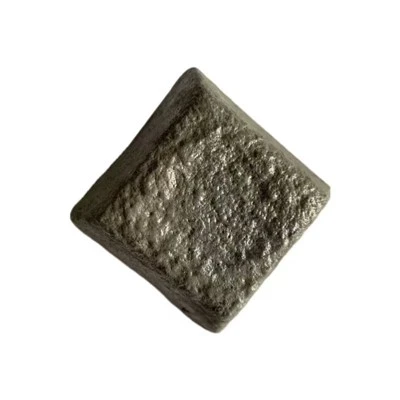
If you’re tired of batches that swing in quality, that leave you with wasted material and missed deadlines, hit me up. We can talk through your specific needs, send over test samples, and make sure you get off-grade silicon that’s consistent enough to keep your operations running smoothly. No hidden fees, no vague claims—just clear, high-quality off-grade that’s tailored to your application.
Off-grade Silicon References
- Kim, S., et al. (2021). Quality Variability in Metallurgical Grade Silicon Production: Impurity Control from Smelting to Purification. Journal of Crystal Growth, 562, 126089.
- Singh, A., et al. (2019). Post-Purification Contamination in Recycled Silicon for Photovoltaic Applications. Solar Energy Materials and Solar Cells, 196, 111-118.
- European Photovoltaic Industry Association (EPIA). (2020). Off-Grade Silicon Specifications and Quality Standards for Solar Component Manufacturing. EPIA Technical Report.
- Zhang, L., et al. (2022). Storage Conditions and Their Impact on Off-Grade Silicon Purity and Surface Defects. Materials Science in Semiconductor Processing, 145, 106782.
Anyang Baitengxin Metal Co., Ltd.
As one of the most professional off-grade silicon manufacturers in China, we have world-leading production equipment and strong manufacturing capabilities. Please feel free to buy high quality off-grade silicon for sale here from our factory. Good service and reasonable price are available.
Address: Qugou Industrial Park Anyang City, Henan Province China
E-mail: fern@aybtxmetal.com
WebSite: https://www.aybtx-metal.com/
