Alright, let’s cut to the chase – if you’re in the market for flat wire wound components, odds are you’ve run into a headache or two. I’ve been in the flat wire winding game for over a decade, and let me tell you, every customer who walks through our door (or slides into our DMs) has a story about a miswound coil, a wire that’s frayed, or a part that just won’t fit right in their assembly. The worst part? A lot of these problems aren’t because of a bad machine or cheap wire – they’re avoidable if you know what to look for, and who to turn to when you hit a snag. Let’s break down the most common flat wire winding headaches, how to fix them, and why working with a supplier that’s actually got skin in the game matters. Flat Wire Winding

First off, let’s get one thing straight: flat wire isn’t like round wire. It’s thin, it has sharp edges, and it wants to twist if you don’t hold it just right. The top problem we see all the time is edge waviness – you wind a coil, and when it’s done, the sides aren’t straight. They’re warped, like a cheap pizza crust that’s been left out in the sun. Why does that happen? Nine times out of ten, it’s tension. If your winding tension is too low, the wire doesn’t lay tight against the previous layer, so it shifts when you move to the next pass. Too high, and the flat wire starts to bend sideways instead of lying flat, which causes that wavy edge. I’ve seen teams test this with a tension meter set to random numbers because they heard “higher tension = better,” but that’s total crap. We’ve had customers send us coils that were wound at 2x the recommended tension, and the wire was so bowed it wouldn’t fit into a housing that was milled specifically for their part. The fix here? Do a small batch test first. Grab a spool of the same flat wire material and gauge you’re using, wind 5-10 coils at different tensions (start low, bump up by 0.5N increments), then measure the edge straightness with a caliper and check for tension marks on the wire. Another trick we use at our shop is a special contact roller that sits on top of the wire as it winds – it applies just enough consistent pressure to hold the wire down without squishing it, which eliminates edge waviness 90% of the time. No extra cost, just a simple add-on that makes a huge difference.
Next up, wire fraying or chipping at the corners. Flat wire has those sharp, right-angle corners, right? When it’s fed through a guide that’s too small, or there’s a burr on the winding tool, that corner chips off, and suddenly your coil has little metal shavings floating around. For automotive or medical parts? That’s a non-starter – shavings can short out circuits or contaminate sensitive equipment. I’ve had a customer come to us months ago because their in-house winding process was producing 15% bad parts from chipped wire. They thought it was the wire quality, so they switched to a more expensive brand, but the problem still happened. Turns out, their guide hole was 0.2mm too narrow for their wire’s insulation thickness – so every time the wire bent to fit through, the corner caught. The fix here isn’t buying a new spool of wire (though better insulation helps). It’s checking every winding guide, every nozzle, every contact point for burrs or sharp edges. We polish all our guide holes to a mirror finish, and we always spec a guide that’s at least 0.15mm wider than the wire + insulation. If you’re already seeing fraying, slow down your winding speed. I know, I know – time is money, but winding at 500 RPM instead of 1200 RPM gives the wire time to feed smoothly instead of scraping against a sharp edge. We once had a client who cranked their speed back to 600 RPM and cut their defect rate from 12% to 0.8% – that’s not a minor win, that’s thousands saved per month.
Another super common headache is interlayer short circuits. Flat wire is usually coated with some kind of insulation, but when the wire is bent or wound too tight, that insulation can get nicked, and suddenly two layers are touching where they shouldn’t. I’ve seen this in everything from motor stators to inductors for power supplies. The worst part? Sometimes the short doesn’t show up during testing – it only happens when the part is under load, running hot, and the insulation breaks down. Why does this happen? Mostly misalignment of the layers. If the winding machine isn’t indexing the wire properly between layers, the same spot on the flat wire ends up overlapping itself, or the edges of two layers overlap too much. A lot of cheap winding machines skip the indexing calibration, so after 10,000 coils, the index is off by a full wire width. The fix here is two-fold. First, invest in a winding machine that has positional feedback – not just a motor that spins, but a sensor that tracks exactly where the wire is at all times. If you can’t upgrade your machine right now, do a daily index check: wind one full layer, then measure the distance between the start of that layer and the start of the next. If it’s not exactly equal to the wire’s width, adjust the index. Second, use thicker insulation if your application allows. Wait, no – not just thicker insulation, the right type. Some insulation is more flexible, so it doesn’t nick as easily. For example, polyamide-imide (PAI) insulation holds up better to bending than polyester, even if it’s thinner. We started offering custom insulation specs to our clients a few years back, and that alone cut interlayer shorts by 70% for their high-load applications.
Let’s talk about fit issues too, because this is the one that makes procurement and engineering scream. You design a coil that should fit perfectly into a 20mm x 10mm housing, but when you get the first winding sample, it’s 0.5mm too long or the inner diameter is off by 1mm. Why does that happen with flat wire? Because of something called “springback” – flat wire, especially when it’s annealed or made of copper, has a memory. When you bend it around a bobbin, it wants to snap back to its original flat shape, so the coil ends up being slightly bigger than you planned. I had a customer last year who needed a coil for a smart thermostat motor, and their in-house winding made coils that were 1.2mm too big, so they wouldn’t fit into the housing. They tried shrinking them with a press, but that cracked the insulation. The solution here is pre-bending the wire to a slight reverse angle before winding. Wait, that sounds complicated, but it’s not. It’s called “form winding” prep, and all it means is you run the flat wire through a small bending station that’s calibrated to bend the wire the opposite way it will bend when wound. The springback cancels out, so the final coil is exactly the size you designed. For that thermostat client, we pre-bent each wire length by 3 degrees, and their final coils fit like a glove – no pressing, no cracking. Another trick: if you’re winding on a custom bobbin, make the bobbin’s outer diameter slightly smaller than your target inner coil diameter. The wire will stretch just enough when you wind it to take up the gap, and springback will bring it right to your spec.
Now, here’s the thing: a lot of people try to solve these problems by tweaking their machine or their wire, but the biggest mistake they make is not working with a supplier that actually knows flat wire. I’ve seen clients buy top-of-the-line winding machines, switch to the most expensive flat wire on the market, and still have issues because their supplier doesn’t understand the application. At our shop, we don’t just ship you a spool of wire or a finished coil – we sit down with your engineering team, look at your assembly, run a few test coils, and troubleshoot before you even place a big order. Last quarter, a customer came to us with a coil for a electric power steering motor, and they were having issues with uneven turns. We noticed they were using a round wire guide instead of a flat one – that was causing the wire to rotate as it fed, so each turn was slightly offset. We swapped in a flat guide that matched the wire’s edge profile, and their turn uniformity went from 85% to 99% in two test runs. That’s not luck – that’s knowing flat wire inside and out.
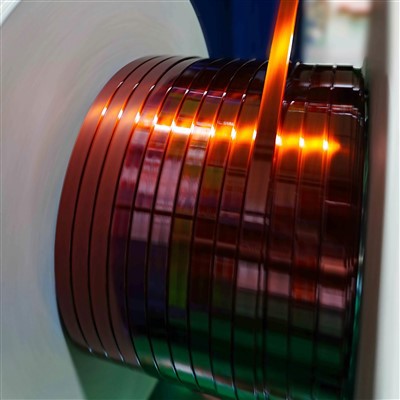
I know, I know, you’ve probably heard a hundred “solutions” that end up being more trouble than they’re worth. The truth is, most flat wire winding problems aren’t rocket science – they’re small, avoidable details: tension calibration, guide polish, index check, pre-bending for springback. But you don’t have to figure it all out alone. If you’re dealing with edge waviness, fraying, short circuits, or fit issues on your flat wire components, we can help. We’ll run a free sample test, walk through what’s causing your headaches, and come up with a solution that works for your budget, not a one-size-fits-all fix. No pushy sales calls, no hidden fees – just real advice from people who’ve been in your shoes, winding flat wire every single day.
Wrapped Wire So, if you’re tired of reworking bad coils, missing production deadlines, or dealing with suppliers that don’t get flat wire, reach out. Let’s chat through your specific challenge, run a quick test, and get your winding process (and your sanity) back on track. No fine print, no confusing jargon – just answers that work.
References
- Flat Wire Winding: A Practical Guide for Industrial Applications. Industrial Components Association, 2021.
- Tension Control in Precision Winding Processes. Journal of Manufacturing Science and Engineering, Vol. 143, No. 6, 2021.
- Springback Compensation for Flat Wire Coils. International Journal of Electrical Components and Systems, Vol. 9, No. 2, 2022.
- Insulation Degradation in Wound Flat Wire Assemblies. IEEE Transactions on Components, Packaging, and Manufacturing Technology, Vol. 12, No. 8, 2022.
Tianjin Jingwei Power Technology Co., Ltd.
As one of the most professional flat wire winding manufacturers and suppliers in China, we’re featured by quality products and good service. Please rest assured to buy durable flat wire winding made in China here from our factory. Contact us for more details.
Address: No.1 Chuangxin Rd. Xiaozhan Industrial Park, Jinnan District, Tianjin, China
E-mail: info@jwdc.cn
WebSite: https://www.jw-dcs.com/
