If you’re in the market for EPDM O rings, chances are you already know they’re the go-to seal for tons of industries — automotive, plumbing, HVAC, even food and beverage. But what separates a ring that lasts 6 months from one that holds up for years? As a supplier who’s shipped these parts to shops, engineers, and maintenance crews for over a decade, I’ve seen firsthand that performance isn’t just about the rubber itself. It’s a mix of small, often overlooked factors that can make or break your seal. EPDM O Ring
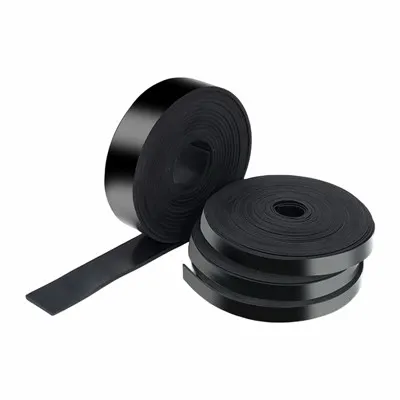
First off, let’s cut through the jargon. EPDM stands for Ethylene Propylene Diene Monomer, right? It’s a synthetic rubber that’s basically built to resist moisture, temperature swings, and mild chemicals. But even the best EPDM formula won’t perform if you mess up the basics. I’ve had a customer call last year panicking because his O rings were cracking after 2 months of use. Turns out, he bought cheap rings from a guy on eBay and skipped checking the durometer — that’s the rubber’s hardness, measured on a Shore A scale. Most standard EPDM O rings are Shore A 70, which is a solid middle ground: soft enough to squeeze into a groove and form a tight seal, but firm enough not to deform under pressure. Go too soft (Shore A 50 or lower), and you’ll get a ring that squishes out of place under even moderate line pressure. Go too hard (Shore A 90+), and you won’t get that tight seal, especially on uneven surfaces. That customer switched to our Shore A 70 EPDM rings, and he hasn’t had a failure since. It’s a tiny detail, but it’s one of the biggest factors.
Next up: temperature exposure. EPDM is great, but it has limits. We regularly get questions like, “Can this seal handle -40°F?” or “What about 250°F?” The truth is, EPDM’s sweet spot is between -50°F and 220°F. If you push it beyond those numbers, the rubber starts to break down. Too cold, and it gets brittle — snap, like a dry pencil. Too hot, and it softens, swells, or loses elasticity. I once supplied rings for a truck’s cooling system, and the engineer there used standard EPDM instead of high-temperature EPDM. The cooling system ran a little hotter than spec, and after a few months, the rings swelled enough to cause leaks. We fixed it by switching to our high-temperature EPDM formula, which can handle up to 300°F for short bursts. It’s not a one-size-fits-all thing — you have to match the EPDM grade to the temp your seal will actually see, not just the spec on paper.
Chemical compatibility is another big one, and it’s where a lot of people mess up. EPDM is resistant to water, steam, and things like mild acids or brake fluid, but it’s garbage when it comes to oils, fuels, strong solvents, or ketones. I’ve had a mechanic bring in O rings from a hydraulic system that failed after a week. He said, “I used EPDM, that should work!” Nope. Hydraulic fluid has petroleum-based oils, which eat away at EPDM. The rubber swells, the seal loses tension, and poof — leak. That’s when we show him our HNBR or FKM rings for that application, but for anyone sticking with EPDM, you have to double-check what chemicals it’ll be touching. Even something like a mild soap or fertilizer can cause issues if it’s in continuous contact. We always tell customers to ask us for a chemical compatibility sheet before ordering — it’s free, and it saves a lot of headaches down the line.
Then there’s installation. Even a perfect EPDM O ring will fail if you install it wrong. I’ve seen guys stretch the ring way too far to fit it onto a shaft, or pry it open with a screwdriver, which nicks the rubber. Those small nicks are hidden at first, but once pressure builds, they turn into big tears. Another common mistake: not lubricating the ring before installation. Dry rubber scraping against a metal shaft causes friction, which wears down the seal over time. We recommend a compatible lubricant — not just any grease, either. Silicone-based or EPDM-specific lube works best; petroleum-based lube will again break down the EPDM. I always advise taking your time, using a installation tool if you’re working with tight grooves, and avoiding any sharp tools that could damage the rubber. Half the failures I see aren’t from a bad ring — they’re from a rushed install.
Groove design also matters a lot, and it’s something most people don’t think about. O rings are supposed to sit in a specific groove, right? If the groove is too shallow, the ring can move around and get pinched. Too deep, and there’s not enough compression to make a seal. The groove width and depth have to match the O ring’s cross-section. For example, a standard 3mm cross-section O ring needs a groove width of around 3.2mm to 3.5mm, and a depth of roughly 2.2mm. I’ve had a customer design his own grooves in a metal part, and they were 0.5mm too deep. The rings sat loose, and leaked within a week. We helped him adjust the groove specs, and the problem went away. It’s not just the ring itself — it’s the space it’s living in.
Another factor: pressure. EPDM O rings can handle static pressure, but dynamic pressure (pressure that’s changing, like in a pump or hydraulic system) is a different story. If pressure jumps up and down a lot, the ring can extrude into the gap between the two mating surfaces. That causes deformation, and the seal fails. To prevent that, you need to use a backup ring, usually made of Teflon or another hard material. I’ve seen customers skip backup rings because they think it’s unnecessary, and after a few months, the O ring is all deformed. It’s a small add-on, but it’s worth it for high-pressure dynamic applications. We include backup ring recommendations in all our order notes, so customers don’t have to guess.
Environmental factors, too. If the O ring is exposed to UV light or ozone, that will break down EPDM over time. A lot of outdoor applications — like plumbing pipes exposed to sunlight, or equipment on a construction site — deal with this. Standard EPDM will get brittle and crack after a few years in direct sunlight. The fix here is UV-stabilized EPDM, which has additives to resist sun damage. I once supplied rings for a pool pump that sat outside all summer. The customer used standard EPDM, and the rings cracked in 3 months. Switched to UV-stabilized EPDM, and they’re still going strong two years later. It’s another spec that’s easy to overlook, but makes a huge difference in outdoor or high-exposure jobs.
Wait, let’s talk about manufacturing quality, too. Not all EPDM O rings are made the same. Some suppliers cut corners on the molding process — using cheap rubber, not curing it properly, or trimming the rings poorly. Those imperfections might not show up right away, but they’ll lead to early failure. As a supplier, we use precise molding processes, cure the rubber to the right hardness, and inspect every ring for trim marks or defects. I’ve had customers switch from a cheaper supplier, and the quality jump is obvious. One customer told me, “Your rings look thicker, and they don’t have those little flash marks along the edge.” That’s manufacturing quality right there — the small details that add up to a better seal.
So putting it all together: EPDM O ring performance isn’t a single factor — it’s a mix of the right durometer, matching the EPDM grade to temperature and chemicals, proper installation, correct groove design, handling pressure with backups, accounting for environmental exposure, and good manufacturing quality.
Polyurethane Shock Absorber If you’re tired of dealing with O rings that fail too soon, or you’re not sure which spec is right for your application, reach out to us. We’ve got the expertise to help you pick the right EPDM O rings for your needs, no confusing jargon, no hidden fees. Whether you’re ordering a custom batch for a manufacturing line, or just need replacement seals for a repair, we can hook you up with high-quality parts that perform. Don’t waste money on cheap rings that will cause more problems down the line — let’s find the right seal for you.
References
- EPDM Rubber Properties and Applications. Rubber Manufacturers Association.
- O-Ring Performance Guide: Selection, Installation, and Failure Analysis. Parker Hannifin Corporation.
- Chemical Compatibility for Elastomers. DuPont Performance Elastomers.
Haining Chaoyue Seals Co., Ltd.
As one of the most professional epdm o ring manufacturers and suppliers in China, we offer a wide range of products with superior quality. Please feel free to wholesale high quality epdm o ring made in China here from our factory. Also, custom service is available.
Address: Building 9, 158 Lianhong Road, Yuanhua Town, Jiaxing, Zhejiang, China.
E-mail: chaoyue@cyseals.com
WebSite: https://www.hncyseal.com/
