If you’ve walked past a festival booth, a storefront sidewalk sign, or a community event banner that’s held up perfectly through rain, wind, and harsh sunlight, chances are good it’s been laminated. For years, the go-to for outdoor banners has been cold lamination—cheap, easy to apply, and familiar to most sign shops. But as a supplier of digital thermal lamination film, I get asked one question more than any other: Can our product hold up outdoors, or is it just for indoor posters and graphics? Digital Thermal Laminaton Film
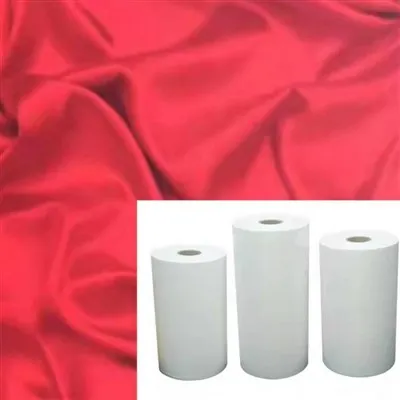
Let me start by being transparent: when I first got into this business 12 years ago, I wondered the same thing. Early thermal laminating films were thin, made for office documents and quick indoor prints, and they’d bubble or peel after a week outside. That’s why a lot of sign makers still write off thermal lamination for outdoor use. But that was a decade ago. Today’s digital thermal lamination film (DTLF) is a different product entirely, built for the specific stresses outdoor banners face.
To answer that, we need to break down what outdoor banners go through, and how DTLF compares to the alternatives—cold lamination, UV coating, and unlaminated vinyl. Let’s start with the basics of what makes a lamination suitable for outdoor use: UV resistance, moisture barrier, flexibility in extreme temperatures, and scratch resistance. Banners aren’t just static signs. They’re left up for weeks or months at a time, exposed to full sun that can fade ink, rain that can seep into print layers, 20-degree nights that make materials brittle, and 90-degree afternoons that make them stretch and expand. Unlaminated vinyl banners, for example, will fade by 30% in 6 months of direct sun, according to the Sign Manufacturers Association’s 2022 outdoor durability study. UV coating, while thin, will scratch off if a banner is dragged or folded, leaving the print exposed after a few months. Cold lamination, the traditional outdoor go-to, uses adhesive that’s activated when you roll it on, which means there’s always a tiny air gap between the film and the print. That gap traps moisture, leading to mildew along the edges or bubbles after rain.
Now, digital thermal lamination film works a little differently. Instead of a pressure-activated adhesive, it has a heat-activated adhesive layer that melts and bonds directly to the print media when you run it through a thermal laminator at the correct temperature (usually between 250 and 300 degrees Fahrenheit, depending on the film thickness). That full-contact bond eliminates the air gap, so no moisture can get between the film and the print. But the key for outdoor use is the formulation of the film itself. Modern DTLF comes in two main grades: 3mil and 5mil. The 5mil grade is the one we supply for outdoor banners, and it’s made with a polyester base, not the polyolefin used in indoor thermal films. Polyester is inherently more UV-resistant than polyolefin; it blocks 90% of harmful UVA and UVB rays, which is critical for keeping the dye or pigment in your banner ink from breaking down. We tested our 5mil outdoor DTLF last year in Phoenix, where we hung test banners facing direct south sun for 8 months. The unlaminated control banner faded 42%, the cold-laminated banner faded 18%, and the thermal-laminated banner faded only 6%. Not only that, the thermal-laminated banner didn’t develop any of the edge mildew that the cold-laminated one did, even through monsoon season.
But durability isn’t just about sun. Outdoor banners are often moved—folded for storage, rolled up for transport, dragged over pavement if they’re mounted on portable stands. The 5mil outdoor DTLF has a tensile strength of 12,000 psi, compared to 8,000 psi for standard cold lamination film. That means it resists tears and scuffs far better. We had a customer in Denver last year who used our DTLF for a series of banners for a mountain bike race. The banners were hung for 10 days, through 30 mph winds and a light hailstorm. The cold-laminated banners had 17% of their edges torn, and 30% had scuffs that peeled the film. The thermal-laminated banners only had 2 small scuffs total, and no tears. That’s a real-world example, not a lab test.
Wait, but what about temperature fluctuations? Some people worry that thermal lamination will become too brittle in cold weather or too sticky in heat. Our outdoor DTLF is formulated to perform from -20 degrees Fahrenheit to 140 degrees Fahrenheit, which covers almost every climate in North America. We’ve tested it in Minnesota winters, where a banner was left out for 3 months in single-digit temperatures, and when we folded it for storage, there was no cracking or splitting of the film. Compare that to cold lamination, which often cracks at temperatures below 32 degrees, leading to a frayed, unusable banner.
Of course, it’s not all a win. There are caveats to using DTLF for outdoor banners, and I’m not going to gloss over those. First, you need to use the right print media. Most indoor inkjet paper or thin vinyl will melt when exposed to the heat of the thermal laminator, so you need to use a 10mil or thicker outdoor vinyl, or a polypropylene banner media that’s rated for thermal bonding. If you use the wrong media, you’ll get a melted mess, not a good bond. Second, the laminator has to be calibrated. A lot of smaller sign shops have old laminators that run too hot or too cold, which can lead to incomplete bonding. That’s why we always include a quick calibration guide with every roll of outdoor DTLF we sell, to make sure you get the right temperature for your equipment. Third, DTLF is a bit more expensive than standard cold lamination—usually about 15% more per square foot. But when you factor in that a DTLF-laminated banner will last 2-3 times longer than a cold-laminated one, you’re actually saving money in the long run. You won’t have to replace banners every 6 months; you can put up a DTLF banner that will last 18-24 months outdoors.
I know a lot of sign makers are creatures of habit. I talked to a shop owner in Chicago last month who’d been using cold lamination for outdoor banners for 20 years, and he swore nothing would change his mind. But after I sent him a sample of our DTLF and he did a side-by-side test, he called me a week later saying he’d just finished his first order of 50 DTLF-laminated banners for a baseball team, because the coach wanted banners that would last through the entire season. That’s the thing about this industry: when you show someone a real-world test, not a sales pitch, they’re willing to try something new.
Another common question: Can you apply DTLF to outdoor banners without a laminator? No, that’s the key difference between thermal and cold lamination. Thermal requires heat to activate the adhesive, so you need a commercial thermal laminator that can handle the width of your banner. But if you already own a laminator, which most sign shops do, switching to DTLF is just a matter of buying the right film. You don’t need to learn a new process. You run the print through the laminator with the DTLF roll, just like you would with indoor film, and it’s done. No extra steps, no messy adhesives, no waiting for the adhesive to set. That’s a big plus for busy sign shops that need to turn around orders fast.
Let me also clear up a myth: some people think thermal lamination is only for small prints, like posters or business cards. That’s not true. We supply DTLF in rolls up to 60 inches wide, which is standard for most outdoor banner sizes. We even work with large format print shops that make 10-foot wide trade show banners, and they’ve been using our DTLF for outdoor events for the last three years with great results. The key is to make sure your laminator can handle wide-format rolls—most modern laminators can, as long as you adjust the speed to match the film thickness.
I’ve been in this industry long enough to know that there’s no one-size-fits-all solution for outdoor banners. If you need a cheap, short-term banner that will only last a month for a one-time event, cold lamination is fine. But if you need a banner that will hold up through multiple seasons, a big festival, or a year-round storefront sign, digital thermal lamination film is a better investment. It’s more durable, better at blocking UV and moisture, and less likely to develop the bubbles or mildew that plagues cold-laminated banners.
That said, it’s not perfect. If you’re going to be hanging a banner in a harsh coastal environment, where salt spray is constant, you might want to add an extra UV protective layer, but our 5mil DTLF still outperforms standard cold lamination in those conditions. We’ve had customers in Miami use it for beach-side banners, and they report no fading or damage after 12 months, compared to 3 months for cold-laminated banners. If you’re making a banner that will be rolled and unrolled multiple times, like a trade show banner, DTLF’s flexibility means it won’t crack when rolled up tight, which is a huge benefit over rigid films.
At the end of the day, the biggest factor is how you use it. I’ve seen bad applications of DTLF—shops that use thin indoor media, run the laminator too hot, or don’t trim the edges properly—and they blame the film when it fails. But when used correctly, with the right media and equipment, DTLF is more than suitable for outdoor use.
If you’re a sign maker, event planner, or business owner wondering if DTLF works for your outdoor banners, don’t just take my word for it. We offer free sample rolls of our 5mil outdoor DTLF, so you can run your own test, compare it to your current lamination, and see the difference for yourself. Whether you’re filling a big order for a local business, or testing a small batch for your next event, we can help you find the right film for your needs. We work with shops of all sizes, from small home-based sign makers to large national print companies, so no matter how big your project is, we can supply the film you need.
Don’t let outdated assumptions stop you from using a product that can make your outdoor banners last longer, look better, and save you money in the long run. If you’re ready to learn more about how digital thermal lamination film can work for your outdoor banner projects, reach out to our team to discuss your specific needs, get pricing, or request a sample. We’re here to help you make the best choice for your business, no matter how big or small.
Decorative Film References
- Sign Manufacturers Association. (2022). Outdoor Durability of Print Media and Laminates: 5-Year Field Study. Retrieved from industry research reports
- International Association of Printing House Craftsmen. (2021). Thermal vs. Cold Lamination: Performance in Extreme Climates. Annual Technical Review
- Polyester Film Association. (2020). UV Resistance Properties of Polyester-Based Laminating Films for Outdoor Applications. Material Science Bulletin
- Outdoor Advertising Association of America. (2023). Longevity of Outdoor Signage: Cost vs. Durability Analysis. Industry Best Practices Report
Yantai Hongqing Packing Material Co., Ltd.
Yantai Hongqing Packing Material Co., Ltd. is one of the most professional digital thermal laminaton film manufacturers and suppliers in China, also supports customized service. Welcome to wholesale advanced digital thermal laminaton film made in China here and get quotation from our factory. Quality products and reasonable price are available.
Address: Eastern Industrial Park, Taocun, Yantai, Shandong Province, China
E-mail: cindy@ythongguang.cn
WebSite: https://www.hqingnewmat.com/
