Hey everyone, thanks for swinging by my corner of the blog—if you’re here, you’re probably in the plant ops, process automation, or energy management space, and you’ve likely heard two terms thrown around a lot: ultrasonic flow meters (UFMs) and SCADA. A question I get nonstop as a UFM supplier is, “Can these two even play nice together?” Short answer: Hell yeah, but there’s a lot more to it than just plugging in a cable. Let’s break this down like we’re grabbing a coffee in the break room, no stuffy textbook jargon. Ultrasonic Flow Meter

First, let’s get on the same page about what each thing does, ‘cause I’ve seen folks mix this up before. Ultrasonic flow meters don’t have those wobbly turbine parts or pressure taps that get gunked up with sludge in a water pipe—they bounce sound waves off moving fluid to measure volume, right? No moving parts means less maintenance, which is a huge win for busy teams that can’t shut down lines every other week to clean sensors. I’ve sold these to everything from food and beverage plants handling fruit juice slurry to oil & gas pipelines with crude, and the kicker is they work on any conductive or non-conductive fluid—even the weird stuff like chemical solvents.
Now SCADA: that’s Supervisory Control and Data Acquisition, basically the nerve center of a facility. It grabs real-time data from sensors, displays it on a dashboard, lets you adjust valves or pumps remotely, and logs everything for compliance, maintenance, or billing. If your SCADA system is the brain, your flow meters are the eyes telling the brain what’s going on with the fluid moving through your pipes. So integrating them isn’t just “possible”—it’s become table stakes for modern operations, not some fancy add-on.
But let’s talk about how this actually works, ‘cause I’ve heard horror stories from customers who tried a half-baked integration and ended up with garbage data. The core here is protocols—you can’t just string a wire between a UFM and SCADA and call it a day. Your UFM needs to speak the same language as your SCADA. The most common protocols we see used here are Modbus RTU/TCP, Profibus, and Ethernet/IP. Modbus is the old reliable, works with almost every SCADA out there, especially if you’re on a legacy system that’s been around for 10+ years. We make our UFMs pre-programmed with Modbus registers right out the box, so customers don’t have to mess with custom code to hook ‘em up. That’s a big selling point for us, honestly—no one wants to hire a tech guy just to get two devices talking.
Wait, there’s also wireless options now, which is a game-changer for hard-to-reach spots. I’ve got a customer in a water treatment plant that needed to install flow meters on pipes running 50 feet up a concrete tower—drilling new cable trenches would’ve cost them a fortune and shut down a critical line for a week. We paired their clamp-on UFMs (no pipe cutting needed, another win) with wireless LoRa modules that talk straight to their existing SCADA router. No cables, no downtime, and they get real-time flow data right on their main dashboard. That’s the kind of solution that makes you go, “Why didn’t we do this years ago?”
But here’s the catch—you can’t just assume any UFM will integrate with your SCADA. A lot of cheap, no-name UFMs on Alibaba (don’t get me started on those) only output analog signals, like 4-20mA. That works for basic stuff, but analog can get finicky over long distances—you get signal noise from nearby pumps or power lines, and your SCADA might get a wonky reading. Our UFMs output digital signals straight via those protocols I mentioned earlier, so the data is way cleaner, no noise, and you can go way longer without losing signal. Plus, digital lets you send way more than just flow rate—you get temperature, pressure (if you have integrated sensors), diagnostic data, even alerts if the UFM is getting gunked up or a transducer is going bad. That’s the stuff that turns “just flow measurement” into a predictive maintenance tool.
Let me share a real customer story ‘cause this isn’t just theory. A regional chemical manufacturer came to us last year, they had 12 old mechanical flow meters that were always breaking, and their SCADA system was only pulling data once a shift—so by the time they saw a leak in a process line, it was already costing them thousands in wasted product and downtime. We swapped out the old meters for our ultrasonic clamp-on models, integrated ‘em with their SCADA using Modbus TCP, and set up custom alerts: if flow dropped more than 10% in 5 minutes, the SCADA would shoot a text to their maintenance team. Now they get real-time data, no more meter failures, and their downtime on that line dropped by 75% in the first 6 months. That’s integration working for the bottom line, not just a buzzword.
Now, what are the common pitfalls I see people run into? First, not checking SCADA compatibility upfront. A lot of teams come to us saying, “We have a SCADA from X company, will your UFM work?” The answer is almost always yes, but we double-check—some niche SCADA systems use super proprietary protocols, and in that case, we can program a custom driver, but that adds a small cost and a little time. Better to ask that question before you buy than end up with a meter sitting on a shelf.
Another one: forgetting about power supply, especially with wireless UFMs. If your UFM is battery-powered, you need to make sure the battery life lines up with how often your SCADA polls the data. We have some customers who poll every minute, so their battery lasts 2 years; if you’re polling once an hour, it lasts 5. Easy tweak, but I’ve had customers miss that and end up with a dead meter after 6 months, no data for a week.
And don’t sleep on transducer placement for UFMs—if you mess up where you mount the transducers, even the best integration won’t give you accurate data. Most of our customers get our tech team to walk them through placement, even over a quick Zoom call, ‘cause you need a straight run of pipe (10 diameters upstream, 5 downstream) to get solid readings. If the pipe has elbows or valves right before the UFM, the flow is turbulent, and the ultrasonic signals get messed up—so even if it’s integrated with SCADA, the data’s useless. That’s why we always include a free quick-start guide with placement tips, no extra charge.
Wait, what about industry-specific use cases? Let’s say you’re in oil & gas—you need flow data for custody transfer, so accuracy is non-negotiable. Our UFMs have a ±0.5% accuracy rating, which meets most custody transfer standards, and we can integrate that data straight to your SCADA so your billing team doesn’t have to manually log numbers. For food and beverage, you need to comply with FDA standards, so our clamp-on UFMs don’t have any wetted parts (since they mount outside the pipe) which makes them easy to clean, and the SCADA logs all that for audits. For wastewater, you’re dealing with thick, sludgy water that clogs mechanical meters—UFMs handle that no problem, and integration lets you track how much water is going in and out, which is key for compliance with local environmental regulations.
I’ve also seen people ask, “Do I need a fancy new SCADA system to integrate with UFMs?” Nope—we’ve hooked our UFMs up to systems that are 15 years old, as long as they support Modbus or another standard protocol. That’s one of the biggest reasons customers love our meters: you don’t have to rip out your existing system, which saves tens of thousands of dollars in capital costs.
Let’s talk about the technical side a little more, for the folks who like the nitty gritty. When you integrate a UFM with SCADA, the UFM acts as a Modbus server, right? It stores all the data in registers, and the SCADA (the Modbus client) reads those registers at whatever poll rate you set. You can map specific registers to specific SCADA tags—like register 40001 is flow rate, 40002 is fluid temperature, 40003 is diagnostic status. We have pre-built SCADA templates for most popular systems (Wonderware, Ignition, Citect) so you can just import the template and start mapping, no need to build it from scratch. That cuts down setup time from days to hours.
Another thing: if you’re looking to do remote monitoring, integrating UFMs with SCADA is the foundation for that. A lot of our customers use cloud SCADA now, so the data from the UFM goes straight to the cloud, and they can check flow rates from their phone or laptop when they’re offsite. That’s perfect for facilities with multiple locations—you can monitor all your flow meters from one place, no matter if you’re at the main plant or a remote well pad.
But let’s be real, it’s not all perfect. There are situations where integration is trickier. If you have very high-pressure pipes (above 1500 PSI), some clamp-on UFMs might not work, but we have inline UFMs that can handle that, and we can integrate those too. Or if your fluid is super viscous (like heavy oil with 100,000 cP viscosity), you might need a specialized transducer, but again, we’ve got those, and they play nice with SCADA. The key is to tell your supplier exactly what your application is—don’t just say “I need a flow meter” and expect it to work with your system.
So, to circle back to the original question: Can ultrasonic flow meters be integrated with SCADA? Absolutely, it’s not only possible, it’s one of the most valuable integrations you can do for your facility. It cuts maintenance costs, gives you real-time data, enables alerts to prevent downtime, and makes compliance way easier. But the success of that integration depends on picking the right UFM (one that supports standard protocols, has clean digital output, and is suited for your fluid and pipe specs), checking SCADA compatibility upfront, and getting the placement right.
If you’re currently dealing with old flow meters that keep breaking, or your SCADA isn’t giving you the data you need, I’d encourage you to reach out. We’ve helped dozens of facilities integrate our UFMs with all kinds of SCADA systems, legacy and new, and we can walk you through the whole process—from picking the right meter to setting up the integration. No sales pitch, just honest advice, ‘cause I’ve been in this game long enough to know that the best solutions are the ones that make your job easier, not just sell a product.
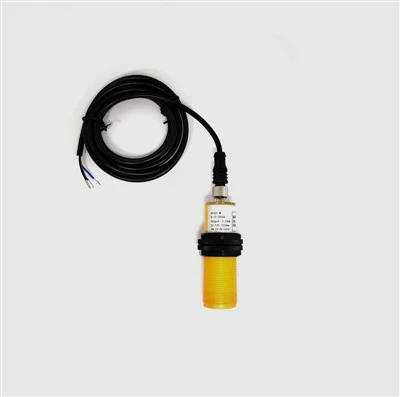
So if you’ve got questions about protocols, transducer placement, compatibility, or anything else related to UFMs and SCADA, don’t hesitate to get in touch. I’m here to help you make the right call for your operation, not just make a sale.
Ultrasonic BTU Meter References
- International Society of Automation (ISA). “Integration of Smart Sensors with SCADA Systems.” ISA 101 Standard, 2021.
- Miller, J. “Ultrasonic Flow Meters: Principles and Industrial Applications.” Flow Measurement and Instrumentation, vol. 72, 2020, pp. 101852.
- American Water Works Association (AWWA). “SCADA Integration for Water Distribution Flow Measurement.” AWWA Manual M23, 2019.
- Modbus Organization. “Modbus Protocol Specification for Industrial Sensor Integration.” Modbus-IDA, 2022.
Dalian Yheng Technology Co., Ltd.
Dalian Yheng Technology Co., Ltd. is one of the leading ultrasonic flow meter manufacturers and suppliers in China, also supports customized service. We warmly welcome you to buy high quality ultrasonic flow meter in stock here from our factory. Contact us for more details.
Address: F1605, NO.10 Huoju road, High-tech Industrial Zone, Dalian, China
E-mail: contact@dlyheng.com
WebSite: https://www.yhengphmeter.com/
