If you’ve ever worked with lasers—whether in industrial cutting, medical procedures, research labs, or even specialized manufacturing—you’ve probably stared at a laser power supply datasheet at some point and thought, “Wait, what exactly do all these numbers mean?” As someone who’s been a laser power supply supplier for over 12 years, I can tell you this is one of the most common questions I get from both new engineers testing their first laser setup and seasoned technicians troubleshooting a underperforming system. Getting the power supply requirements right isn’t just about picking any unit that fits your laser—it’s about ensuring consistent output, extending the life of your laser tube or diode, and avoiding costly downtime from premature failures. Let’s break this down step by step, with real-world examples that I’ve walked customers through hundreds of times. Laser Power Supply

First, let’s start with the core component: your laser itself. Almost every laser type has a set of critical electrical specs that are non-negotiable, and skipping these will lead to problems fast. The two big ones are operating voltage and operating current—these aren’t guesses, they’re published by the laser manufacturer, and you’ll find them right on the laser’s datasheet or nameplate. For example, a common 40W CO2 laser tube I supply specs at 18kV DC and 22mA DC; a 10W near-infrared diode laser might run at 2.8V DC and 3.5A. A mistake I see all the time is mixing up AC vs DC ratings. Most laser diodes require DC power, while some older CO2 or excimer lasers use high-voltage DC, so your power supply has to match that current type first. If you give a DC power supply to a diode that needs AC, or vice versa, it won’t turn on at all—or worse, it will destroy the laser instantly. I had a customer last year who tried to save $50 by using an old AC power supply for their diode laser; it took out the laser in 10 minutes, and they ended up paying 10x that to replace both the laser and the power supply. So rule number one: get the exact operating voltage, current, and current type (AC/DC) from your laser’s specs before you even look at a power supply.
Next up, we need to account for tolerance and margin. Let’s be real: no component is perfect. The laser’s published specs are a nominal value, meaning that due to manufacturing variations, a batch of 22mA CO2 tubes might actually draw between 20mA and 24mA when operating at full power. If you pick a power supply that only outputs exactly 22mA with no headroom, you’re setting yourself up for issues—if the tube drifts to 23mA, the power supply can’t deliver enough current, so the laser will run dimly or shut off prematurely. That’s where “margin” comes in. As a supplier, I always recommend adding a 20-30% margin for both voltage and current when sizing your power supply. For that 22mA CO2 tube, that means the power supply should be rated for at least 27.5mA (22mA * 1.25) up to, say, 30mA. For the voltage, if the laser runs at 18kV, a margin of 20% brings you to 21.6kV, so a power supply rated for 0-25kV would be perfect. Why not more than 30%? Too much margin is a waste of money, and it can also cause issues if the power supply is over-specced for your laser’s needs. I had a researcher in a university lab once order a 50kV power supply for their 18kV CO2 laser because they thought “more is better”—it works, but it was 3x more expensive than necessary, and the extra voltage actually added unnecessary wear to the laser tube’s electrodes over time. Margin is about balancing safety and cost, not just cranking up the numbers.
Then there’s power calculation, which is where many people get confused. Power for lasers is measured in watts, right? So how do you convert voltage and current to watts? Ohm’s Law is your friend here, but wait—lasers are not simple resistive loads, so we have to adjust for that. Ohm’s Law for DC is P (watts) = V (volts) * I (amps). For our 40W CO2 example: 18,000V * 0.022A = 396W of power drawn from the supply, which aligns with the 40W laser output (the rest is lost as heat in the tube). That checks out. For a diode laser: 2.8V * 3.5A = 9.8W, which is almost exactly the 10W output the diode is rated for. But here’s the catch: that’s the power required to run the laser at full power. But what if your application only needs the laser to run at 70% power? The power supply still needs to handle the full operating current and voltage, because even at lower power, the laser’s current draw doesn’t drop linearly the way a lightbulb’s does. Wait, no—actually, let’s clarify: when a laser is modulated (turned on and off rapidly, which is common for cutting or engraving), the power supply has to be able to handle both the peak current and the continuous current. For modulated systems, we add an extra 10-15% to the power requirement to account for those peak loads. I worked with a packaging company that used a laser for marking cereal boxes; their system ran at 50Hz modulation, and they kept having power supply failures until we adjusted their sizing to include peak current—once they did that, their downtime dropped by 80%.
Now, AC input requirements are another part that’s easy to overlook, especially in industrial settings. Your power supply needs to run on the AC voltage provided by your facility—most are 110V AC for small lab systems or 220V/240V AC for larger industrial lasers. But you also have to account for inrush current. Inrush current is the spike of electricity that the power supply draws when it first turns on, to charge its internal capacitors. For high-voltage power supplies (like the CO2 ones), inrush current can be 5-10x the continuous operating current. If your facility’s electrical circuit can’t handle that spike, you’ll get voltage drops, tripped breakers, or even damage to other equipment plugged into the same circuit. That’s why I always ask customers about their available circuit power when they’re ordering power supplies for industrial use. For example, if your power supply has a continuous input of 500W, the inrush current might draw 2500W for a split second—so your circuit needs to be rated for at least 1000W continuous to avoid issues. I once had a factory customer who tried to run a 800W laser power supply on a standard 15A 110V circuit; the inrush current tripped their breaker every time they turned the system on. We swapped it for a unit rated for 220V, which ran on a 10A circuit and eliminated the problem entirely.
Another factor that’s often ignored is duty cycle. Duty cycle is the percentage of time your laser is actually running, versus idling. If your laser runs 24/7 in a manufacturing environment, that’s a 100% duty cycle requirement—meaning your power supply has to be rated for continuous operation at full load. If you have a lab laser that only runs a few hours a day, you can use a power supply rated for 100% duty cycle too, but it might be overkill—wait, no, actually, it’s never a good idea to use a power supply rated for lower duty cycle than your application. A power supply rated for 50% duty cycle can overheat and fail if you run it 24/7, even if the power is within its voltage and current specs. Duty cycle directly ties to the power supply’s thermal design—higher duty cycle means the unit needs better cooling (either fan-cooled or liquid-cooled) to dissipate heat. For our 24/7 industrial customers, we always spec liquid-cooled power supplies, while lab customers often opt for smaller, fan-cooled units that are sufficient for their low-duty-cycle needs. I’ve seen power supplies fail because of overheating more times than I can count, and 9 out of 10 times it’s because someone didn’t match the duty cycle to the application.
Let’s put this all together with a real example from a customer I worked with last quarter. They were building a custom laser engraving system for wood and acrylic, using a 60W CO2 laser tube. First, we got the laser’s specs: 19kV DC operating voltage, 32mA DC operating current, rated for 100% duty cycle. Next, we calculated margin: 25% for voltage and current, so 19kV * 1.25 = 23.75kV, 32mA * 1.25 = 40mA. Then we calculated power: continuous power needed is 19kV * 0.032A = 608W, plus 10% for peak modulation, so ~670W. Their facility had 240V AC 15A circuits, which could handle the inrush current for a 700W power supply. We also confirmed they needed 100% duty cycle, so we spec’d a fan-cooled power supply rated for 0-25kV, 0-40mA, 1000W continuous, with built-in over-current and over-voltage protection. The customer ordered it, installed it, and called a week later to say their engraving system was running better than expected, with no issues. That’s the kind of outcome we aim for as suppliers—getting the sizing right the first time, so our customers don’t have to deal with headaches.
Wait, one last thing: protection features. It’s not just about the numbers, it’s about the safety features built into the power supply that protect both the laser and the system. Over-current protection (OCP) will shut off the power supply if the current exceeds the set limit, preventing damage to the laser. Over-voltage protection (OVP) does the same for voltage. Short-circuit protection (SCP) stops the power supply from outputting power if the laser circuit is shorted, which is common if a wire comes loose or a laser tube fails. And for industrial systems, remote control interfaces (like 0-5V analog or RS-485) let you adjust the laser power from a control panel, which is essential for automated systems. I always advise customers to prioritize these features, even if they cost a little more—they save you from replacing expensive lasers and power supplies down the line. The customer I mentioned earlier, the university that bought an over-specced power supply, ended up coming back to us a year later for a correctly sized unit with built-in OCP, because their old power supply had no protection and they had a laser failure that cost them $2,000. It’s a lesson that’s stuck with me: specs are important, but practical features matter too.
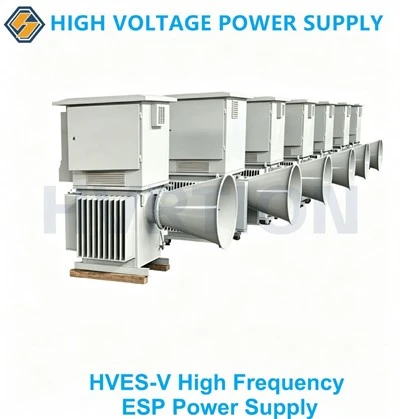
At the end of the day, calculating laser power supply requirements is a mix of science and experience. There’s no one-size-fits-all formula, but if you follow these steps: get your laser’s exact operating voltage, current, and current type, add 20-30% margin for tolerance, account for modulation peak loads and inrush current, match duty cycle to your application, and prioritize protection features—you’ll get it right. As a laser power supply supplier, I’ve helped thousands of customers get this right, and helped even more fix systems that were incorrectly sized. If you’re in the market for a new power supply, or you’re troubleshooting a setup that’s not performing, don’t guess at the specs. Reach out to our team to discuss your needs, and we’ll help you find the perfect unit that fits your laser, your application, and your budget. We’re here to make sure your laser runs reliably, every time.
N4700 Series HV Disc Capacitor References
- Laser Power Supplies: Design and Application Guidelines, International Society for Optics and Photonics (SPIE)
- CO2 Laser Tube Electrical Specifications, Laser Institute of America (LIA)
- Power Supply Sizing for Industrial Laser Systems, Industrial Laser User Association (ILUA)
- Electrical Safety for Laser Equipment, National Fire Protection Association (NFPA) 70B
Anshan HVRTION Electronic Technology Co., Ltd.
As one of the most professional laser power supply manufacturers and suppliers in China, we’re featured by quality products and good price. Please rest assured to buy discount laser power supply for sale here and get quotation from our factory. We also accept customized orders.
Address: 17 East Jiefang RD., Tiedong District, Anshan, Liaoning, China.
E-mail: hvrtion@hotmail.com
WebSite: https://www.hvrtion.com/
