Hey there, fellow marine operators and folks who depend on their boat’s power to keep things running smooth — let’s talk about something that’s been a total headache for everyone I’ve worked with over the years: marine generators overheating. As a marine generator supplier who’s been in this game for almost a decade, I’ve seen way too many generators die slow, painful deaths from overheating, and more often than not, it’s totally preventable. Most of the time, people either miss small warning signs or don’t realize how much their boat’s setup can mess with the generator’s cooling system. I’m gonna break down the real, common causes that aren’t just textbook stuff — the kind of stuff I’ve actually dealt with on job sites and had customers come to me panicking about at 2 a.m. in a foreign port. Let’s dive in. Marine Generator
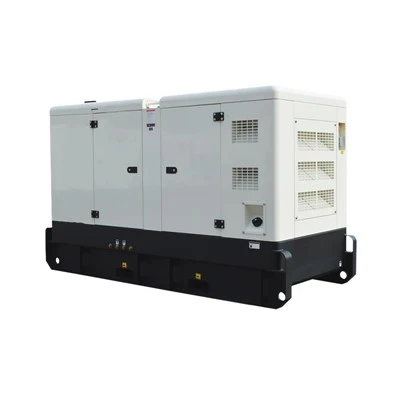
First off, let’s get one thing straight: marine generators don’t cool like your car’s engine. Your car’s engine uses a closed cooling system that runs on antifreeze, right? But marine generators are usually set up for “raw water cooling” — they suck in water straight from the ocean, bay, or lake to chill the engine, then dump it overboard. That’s where so many problems start. I had a customer out in the Gulf Coast last year who thought a clogged raw water strainer was no big deal. Turns out, the strainer was full of seaweed and barnacle gunk, so no water could get through to the generator’s heat exchanger. By the time he called me, the generator had already seized up, and we had to replace the whole cooling module. That’s not a rare case — raw water intakes get clogged super easily with debris, and most folks only check ‘em during scheduled maintenance, not when they’re crusing at full power. Even tiny clogs, like a plastic bag fragment or a bunch of sand, can restrict water flow enough to make the generator run 20-30 degrees hotter than normal, which over time will wear down the pistons and seals way faster.
Wait, and it’s not just intake clogs. The heat exchanger itself is a big culprit here. Over months and years, mineral deposits from hard water — salt, magnesium, calcium — build up on the tubes inside the heat exchanger. That’s called scaling, and it acts like an insulating blanket. I’ve seen heat exchangers where the scale was so thick, it looked like coral growing inside. The worst part? Most maintenance guys forget to clean the heat exchanger unless the generator is already overheating, and by then the scale is stuck on there good. Even using harsh chemicals to flush it too often can damage the thin metal tubes, so you gotta get that balance right. Another thing with heat exchangers: if the zinc anodes (those little metal bars that prevent corrosion) are worn down completely, the exchanger will corrode, create tiny leaks, and mix saltwater with the engine oil. That messes up both the cooling and the lubrication, leading to overheating and engine failure. I can’t tell you how many customers I’ve had to warn about those zinc anodes — they think they’re just random parts, but they’re actually the first line of defense.
Next, let’s talk about cooling fans and belts, or if your generator is fan-cooled, the fan clutch. A lot of smaller marine gensets use belt-driven fans, and over time those belts stretch, crack, or slip. I had a customer up in the Pacific Northwest a while back who ignored a squealing fan belt for weeks, and one day at sea, the belt snapped. The generator’s fan stopped turning, no airflow over the cooling system, and within 15 minutes the generator was screaming hot. We had to tow him to the nearest marina, and replacing the belt would’ve been easy if he’d just fixed it early. Even if the belt isn’t fully broken, if it’s too loose, it won’t spin the fan fast enough to move air when the generator is under load. And for fan-clutch systems, the clutch can go bad — sometimes it won’t engage at all when the generator heats up, so you get zero airflow. It’s a small part, but it’s such a common, easy-to-miss cause of overheating.
Then there’s load-related overheating, which is way more common than people think. Marine generators are sized for a specific load, right? But a lot of guys cram extra stuff onto their boats — new air conditioners, a bigger fridge, extra lighting — without upgrading the generator. Or they run it at 100% load nonstop, which is a no-no. Most marine generators run best at 50-70% of their rated load. If you’re pushing ‘em too hard, they can’t dissipate heat fast enough, especially in hot climates. I had a guy who added three 15,000 BTU AC units to his 10kW generator — that generator was only rated for 8kW continuous, so he was running it almost 100% all day, every day. After a month, the head temperature spiked, and the generator started shutting down on its own. We had to rebalance the load and even upgrade the heat exchanger to handle the extra stress. Also, running a generator at no load for too long? That’s bad too. When there’s no load, the engine runs slower, so the cooling water pump doesn’t circulate as much, and the engine doesn’t get hot enough to burn off moisture. That leads to condensation in the engine, which causes rust, and over time, the engine can run hotter because of increased friction from rusted parts. It’s a balancing act, and most owners don’t realize that neither overloading nor underloading is good.
Oh, and let’s not forget about coolant issues — wait, no, I was talking about raw water, but some gensets are closed-loop, using freshwater with antifreeze. Those have their own problems. If the freshwater level is low, air gets into the system, creating pockets that block water flow. I had a customer in the Caribbean who was losing coolant through a tiny, hidden leak in a hose, and he didn’t notice it for months. By the time he checked, the coolant level was so low that the generator was running dry, and the cylinder head warped. Warped heads are a nightmare — you can’t just fix that easily. Also, using the wrong type of antifreeze is a big one. Some guys use car antifreeze, but marine-specific antifreeze is formulated to handle salt air and higher operating temperatures. Car antifreeze can break down faster in a marine environment, leading to sludge buildup in the cooling system. Sludge is another insulator, just like scale, so it restricts flow and makes the engine run hot.
Wait, another thing that’s super specific to marine environments: ambient conditions. If you’re running your generator in a hot, humid place — like the Middle East or the Caribbean — the air is already thick, so the radiator or heat exchanger can’t dissipate heat as well. I’ve had customers run their generators in 100-degree weather, no wind, and wonder why it’s overheating, even if everything is working right. It’s not that their generator is broken, it’s that they’re pushing it beyond its cooling capacity in extreme heat. And if the generator’s exhaust system is blocked? Oh man, that’s a big one. Exhaust back pressure — if the muffler is clogged with carbon buildup, or the exhaust hose is crimped, the generator has to work harder to push out exhaust gases, which makes the engine run hotter. I had a fisherman come to me last year whose exhaust hose was kinked because he’d just refit his boat. The kink was so bad that exhaust was backing up into the engine, and within a couple hours, the generator overheated and shut down. Fixing the hose was easy, but if he’d kept running it like that, he would’ve ruined the engine.
And let’s talk about maintenance habits, or lack thereof. A lot of boat owners think, “I check the oil every few months, that’s enough.” But cooling system maintenance is way more frequent. The raw water strainer needs to be checked before every long trip, or at least once a month when the boat is in use. The heat exchanger needs to be flushed every 1-2 years, depending on how hard you run it and the salinity of the water. The zinc anodes should be checked every six months. If you skip these steps, you’re setting yourself up for overheating. I had a customer who only did maintenance once a year, and he was shocked when his generator overheated. I told him, “Marine environments are way harsher than land. Salt, humidity, debris — all that stuff builds up way faster. You can’t just do annual maintenance and expect everything to be fine.”
Wait, is there anything I’m missing? Oh, electrical issues! Sometimes overheating isn’t a cooling problem at all — it’s electrical. The generator’s alternator or voltage regulator can go bad, making the engine work harder than it should to produce power. That extra load makes the engine run hotter, even if the cooling system is perfect. I had a case last year where a customer’s generator was overheating, and we checked the cooling system, the belts, the load — everything was fine. Finally, we tested the electricals and found the voltage regulator was stuck, overcharging the alternator. Fixing that regulator fixed the overheating issue entirely. It’s easy to blame the cooling system, but you gotta check the other stuff too.
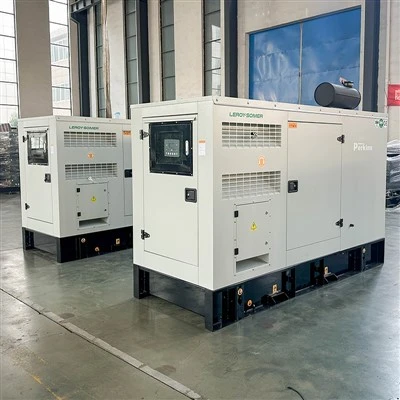
Now, I know this all sounds like a lot, but the good news is that 90% of marine generator overheating issues are totally preventable with regular checks and common sense. If you’re noticing your generator running hotter than usual, or it’s shutting down on its own when under load, don’t wait until it’s too late. I’ve been in this business long enough to know that a little proactive care saves way more money than a full engine replacement. If you’re a boat owner, captain, or yard manager dealing with generator issues, or you’re looking to upgrade to a more reliable marine genset that’s built to handle harsh marine conditions, hit me up to talk through what you need. I can walk you through checking your cooling system, sizing the right generator for your load, or answering any questions you have about keeping your power running steady, no matter where your boat takes you. We don’t do one-size-fits-all here — every boat’s needs are different, and I’m happy to help you find the right solution.
Marine Generator References
- Marine Diesel Engine Cooling Systems: Operation and Maintenance, National Marine Manufacturers Association
- Guidelines for Preventing Overheating in Marine Power Systems, American Boat and Yacht Council (ABYC)
- Raw Water Cooling System Troubleshooting, U.S. Coast Guard Auxiliary Marine Safety Program
- Generator Load Management for Marine Applications, National Fire Protection Association (NFPA) 302 Code
Taizhou Jinte Electromechanical Technology Co., Ltd.
We are one of the most professional marine generator manufacturers and suppliers in China. With abundant experience, we offer a wide range of generators with superior quality. Please rest assured to buy advanced marine generator for sale here from our factory. Customized orders are welcome.
Address: Room 207-214, Eurasia International Garden Commercial Center, Hailing District, Taizhou City
E-mail: Sales@generatorschina.com
WebSite: https://www.jintepower.com/
