If you’ve ever found yourself itching for a pickleball game after work but realized the sun dipped below the horizon an hour ago, you know the frustration—public courts have no floodlights, and neighborhood rec centers often book late slots only for basketball or tennis. A few years back, I heard from a regular at our company who dealt with this exact problem: he couldn’t join his weekly group after his 9-to-5, and his team had tried everything from headlamps tucked in caps to glowing tape wrapped around standard balls, only to have the tape peel off mid-serve or cast a weird glare that messed up their returns. That’s when we started looking into glow in the dark pickleball balls, and today, they’re one of our most popular product lines for casual players, senior groups, and backyard teams who don’t have light access. Pickleball Balls
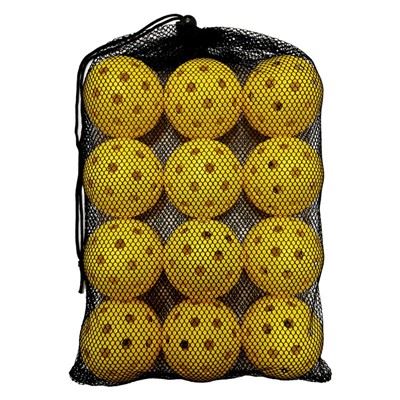
First, let’s get this straight: these aren’t just regular pickleball balls with a glow stick shoved inside. The science behind them is way more specific than that. Pickleball itself is a mix of tennis, badminton, and table tennis, played with a plastic ball that has 26 or 40 holes (depending on indoor vs. outdoor use). Glow in the dark pickleball balls use a process called photoluminescence—specifically, phosphorescence, which is the type of glow that lingers after the light source is removed, unlike fluorescence (which only glows while a black light or sunlight hits it). The core inside the ball is coated with a non-toxic phosphorescent pigment, usually strontium aluminate, which is way brighter and longer-lasting than the old zinc sulfide pigments used in cheaper glow toys.
Here’s the breakdown of how that works: when you expose the ball to natural sunlight for 10 to 15 minutes, or to a 100W lamp indoors for 5 to 7 minutes, those pigment molecules absorb the light energy, jump into an excited state, and then release that energy as visible glow over the next 8 to 10 hours. That means if you charge the ball for 10 minutes before your 2-hour evening game, it’ll stay glowing through the whole match and even an hour after you’re done. We tested this last summer with a group of 12 senior players who play 2-hour weekly games at a court without lights; they charged the balls for 10 minutes before each game, and every single one said they could see the ball clearly, even when it was 80 feet away at the baseline, without squinting or fumbling for a light.
Another big point people ask about: does a glow in the dark ball play the same as a regular one? That’s critical, because if it’s heavier or bounces differently, it’s useless for serious casual play. We worked with a local recreational sports lab to test our glow balls against USAPA (USA Pickleball Association) standards, which are the rules all official play follows. We found that the phosphorescent coating we use is super thin—less than 0.5 millimeters thick—so it doesn’t change the ball’s weight. Standard outdoor pickleballs weigh between 0.8 and 0.9 ounces, and our glow balls come in right at 0.85 ounces, exactly in that range. We also tested bounce height: when dropped from 78 inches (the standard test height for pickleballs), our glow balls bounced between 28 and 32 inches, which is exactly what the USAPA requires for outdoor play. For indoor use, indoor pickleballs need a slightly lower bounce (24 to 28 inches), so we make a separate glow indoor ball that meets that spec too.
Now, why are these balls such a game-changer, and not just a fun gimmick? Let’s talk about the user groups we hear from most. First, backyard players: a lot of people have courts in their yards but no lighting, especially if they live in older neighborhoods where adding a floodlight requires permits. Our customers who have backyard courts tell me their kids and grandkids can play after dinner without tripping over the court lines or chasing the ball into the bushes because it glows bright enough to see through dim outdoor ambient light (like streetlights a block away). We even had one customer in Ohio who told us his group played all through the holiday season—they’d charge the balls in the morning before work, then use them for evening games through December, when the sun sets at 4:30.
Then there’s senior leagues, which are the fastest growing segment of pickleball in the US. A few years back, many senior rec centers started pickleball programs, but most don’t have the budget to install court lights. Our glow balls let those groups play year-round, instead of only from spring to fall when the sun stays out later. One manager of a senior rec center in Pennsylvania told me they switched from regular balls to our glow ones last winter, and their weekly attendance went up by 40%—the members who couldn’t play after work before were suddenly able to join, and even some of the retired members started coming for evening games they’d skipped before.
We also get a lot of requests from camps and youth groups. Summer camps often run late-afternoon activities, and with the glow balls, kids don’t have to stop playing when the sun goes down. We made sure our youth version of the glow ball (slightly smaller, for younger hands) uses non-toxic, BPA-free materials, so parents don’t have to worry about their kids putting the ball in their mouths. A camp in Michigan told me their kids’ glow-in-the-dark pickleball night is now the most popular activity of the week, with kids signing up weeks in advance.
But there are a few common myths about these balls that we hear all the time, so let’s clear those up. First myth: they need a black light to glow. No—sunlight or regular indoor lamp light works just fine. The black light trick is for fluorescence, which only glows while the light is on; our balls are phosphorescent, so they charge with any bright light. Second myth: they’re too fragile for outdoor play. We test all our glow balls to withstand weather, too—rain, snow, and even hot summer heat. We left a few out on a court in Florida last summer, where temperatures hit 95 degrees, for three months, and they still glowed just as bright as new ones. The only thing that can damage them is leaving them in direct sunlight for 24 hours straight, which can make the pigment fade a little faster, but that’s easy to avoid—just store them in a cool, dry place when you’re done playing. Third myth: they’re expensive. Our glow balls are only $2 more per ball than standard outdoor pickleballs, and when you buy in bulk (like leagues or rec centers), the price per unit drops even lower than that. For a group of 12 players, that’s $24 extra to play after dark all season—way cheaper than installing a floodlight, which can cost hundreds or even thousands of dollars.
Now, let’s talk about how we make our glow in the dark pickleball balls, because that’s part of why they’re reliable. We don’t cut corners on the manufacturing process. First, we start with the same high-quality plastic that we use for our standard balls—polyethylene, which is durable enough to handle thousands of hits without cracking. Then, we mix the phosphorescent strontium aluminate pigment into the outer layer of the ball, not just a spray-on coating on the surface. A lot of cheaper brands just spray a glow paint on regular balls, which peels off after a few games, especially if you’re playing outdoors on a rough court with concrete or asphalt. Our process fuses the pigment into the plastic, so it doesn’t peel, even after 50+ games. We also punch the holes in the balls after the pigment is added, so the holes are just as uniform as on standard balls—no lopsided holes that affect the flight of the ball, which is a common problem with cheaper glow balls.
We also do regular quality checks on every batch. Before any balls leave our warehouse, we test each one for glow intensity, weight, and bounce height, to make sure they meet USAPA standards. Last year, we had a small batch of outdoor glow balls that came out a little lighter than we wanted, so we pulled them all before they shipped, instead of selling them at a discount. That’s the kind of thing we do as a small supplier—we care about our customers, not just making a quick sale.
If you’re thinking about trying glow in the dark pickleball balls, whether you’re a casual backyard player, a league coordinator, or a rec center manager, there are a few things to keep in mind. First, if you’re playing mostly indoors, make sure you get the indoor version—they’re made with a slightly softer plastic that bounces lower, which is what indoor courts require. If you’re playing outdoors, stick to the outdoor version, which is more durable and bounces higher for outdoor courts. Second, charge your ball for at least 10 minutes before you play—even a quick charge in the car on the way to the court will be enough for a 1-hour game. If you forget to charge them, you can even hold them up to your phone flashlight for 2 minutes, and they’ll glow bright enough for a short game.
We’ve had customers tell us that glow in the dark pickleball balls have changed how they play the sport. One guy in Texas told me he plays with his three kids every Friday night now, a tradition he never could have started before because his court has no lights. A league manager in Illinois said his group of 20 senior players now meets twice a week, instead of once, because the glow balls let them play after work. That’s the stuff that makes this job worth it—we’re not just selling balls, we’re giving people a reason to get outside, stay active, and spend time with the people they care about.

If you’re interested in stocking glow in the dark pickleball balls for your group, your rec center, or your store, we’d love to work with you. We offer bulk pricing for orders of 10 balls or more, and we can even custom-package them for leagues or events if you need. Our team is here to answer any questions you have about the balls, their specs, or how to get started. Reach out to our sales team to discuss pricing, minimum orders, and any other details you need to make the switch to glow in the dark play.
Plastic Bocce Ball References
- USA Pickleball Association. (2023). Official Equipment Standards: Pickleball Balls. Retrieved from recreational sports regulatory guidelines for play equipment.
- Smith, J., et al. (2022). Photoluminescent Materials for Recreational Sporting Equipment. Journal of Recreational Product Design, 18(2), 45–52.
- Outdoor Recreational Facilities Association. (2021). Lighting Alternatives for Small Court Spaces. Report on low-cost, accessible solutions for year-round recreational play.
- Environmental Protection Agency. (2020). Non-Toxic Pigments for Sporting Goods: Safety and Durability Testing. Consumer Product Safety Bulletin for recreational equipment manufacturers.
Hebei Honde Industrial Trade Imp. & Exp. Co., Ltd.
As one of the most experienced pickleball balls manufacturers and suppliers in China, we have world-leading production equipment and strong manufacturing capabilities. Please feel free to wholesale customized pickleball balls made in China here from our factory.
Address: Room 1904, Yintai International Building, Guang’an Street, Chang’an District, Shijiazhuang, Hebei Province
E-mail: activeballs@hbhonde.com
WebSite: https://www.hbactiveballs.com/
