Hey there, it’s Jake from your go-to guardrail post supplier—you know, the one who’s spent the last 12 years talking to road crews, civil engineers, and even small-town public works folks who’ve stared at a pile of galvanized steel posts and wondered, “How the heck far apart do these things actually go?” If you’ve ever found yourself Googling that exact question at 8 PM on a Tuesday after a long day at the jobsite, this one’s for you. I’ve fielded so many panicked calls from clients over the years: “Jake, we put posts 10 feet apart and the state inspector just flagged it!” or “We thought 12 feet was fine, but now there’s a dent in the rail from a deer hit that should’ve stopped.” The truth is, there’s no one-size-fits-all number here—but that also means skipping the wrong spacing can lead to everything from failed inspections to worse: crashes that don’t meet crashworthiness standards. Let’s break this down like I would with a crew at a jobsite, no stuffy engineering jargon (well, maybe a little, but I’ll explain it like it’s for my cousin who fixes tractors in Iowa). Guardrail Posts
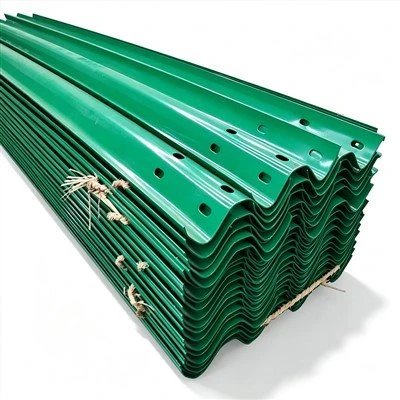
First off, let’s get one thing straight: guardrail post spacing isn’t a random number some engineer pulled out of a notebook. It’s rooted in crash tests, the same ones you see on TV for car safety—except these tests use actual cars, pickup trucks, even semi-trucks slamming into guardrails to see what breaks. Back in the day, post spacing was way more flexible, right? Guys would eyeball it, maybe go 15 feet apart because that’s how it was done “back in ‘98.” But after a string of crashes in the 70s and 80s where guardrails failed because posts were too far apart, the Federal Highway Administration (FHWA) stepped in to set hard rules for roadways in the U.S.—and those rules are still the backbone for most countries that follow U.S. road safety guidelines. That doesn’t mean every job is a cookie-cutter, though. The spacing you need depends on three big factors: what kind of road it is, the guardrail system you’re using, and the “hazard level” of the area the guardrail’s protecting.
Let’s start with the guardrail system, because that’s the foundation. If you’re using the most common W-beam guardrail (that curved steel rail you see along rural highways, county roads, and even some residential collector roads), FHWA’s Manual for Assessing Safety Hardware (MASH) is the bible here. For standard W-beam, the spacing is usually between 6 feet and 12 feet—wait, hold on, that’s a range, not a single number. Why? Let’s talk about road type. For high-speed, high-volume interstates and freeways (the ones where people are going 65, 70 mph), FHWA mandates post spacing at 12 feet on center. That’s because the crash tests for these roads use heavier, faster vehicles. A semi-truck going 70 mph needs more support to keep the guardrail from folding like a tin can, right? If you put posts 15 feet apart on an interstate, when a truck hits that rail, the middle section between two posts will flex too much, and the rail could pull loose or let the vehicle veer off. I remember a job in Ohio a few years back where a small town tried to save a couple bucks by putting interstate-grade posts 10 feet apart—no, wait, they put them 16 feet apart. The inspector showed up, measured, and shut down the section until they re-did all the post holes. That mistake cost them 3 extra days of labor and a whole lot of stress. Lesson learned: interstates = 12 feet, no exceptions for FHWA-approved W-beam.
Now, what about those smaller roads—county highways, low-volume residential roads, or even back roads where the speed limit is 45 to 55 mph? Here, you’ve got a little flexibility. For these roads, W-beam spacing can drop to 6 feet up to 10 feet on center. Why the lower number? Because these roads have lighter traffic—fewer semi-trucks, more cars and pickup trucks. A smaller vehicle hitting a guardrail at a lower speed doesn’t need the same support as a highway. But wait, don’t get that twisted—6 feet spacing is for really specific areas, like sharp curves or spots where the road is close to a drop-off, right? I had a client in western Pennsylvania last year who was putting guardrail along a stretch of road where the shoulder was only 2 feet wide, dropping 15 feet into a creek. We recommended 8 feet spacing instead of the 10 they were planning, because on a sharp curve, cars tend to drift a little further than they would on a straightaway, and you don’t want that rail to give way at the exact worst spot. Also, let’s not forget about the three-beam guardrail, the newer, stronger stuff you see on some interstates and high-traffic urban roads. Three-beam uses the same 12 feet spacing as W-beam on high-speed roads, but it’s built to handle even heavier impacts, like those big construction vehicles that sometimes drift onto roadways.
Okay, but here’s the part most guys don’t talk about: the ground the posts are going into. That’s the secret sauce that turns a number on a spec sheet into a guardrail that actually works. I’ve seen posts installed in solid bedrock with 12 feet spacing that held up in a crash, and posts installed in soft, sandy soil with 10 feet spacing that would’ve pulled out if a car hit them. Soil type is a huge factor—something FHWA calls “soil bearing capacity.” Let’s break that down: if you’re putting posts in clay, that’s great—clay is dense, so posts hold tight, so you can stick to the 12 feet spacing even on rural roads. But if you’re in sand, gravel, or loose topsoil? That’s weak. The post’s job isn’t just to hold the rail in place—it’s to resist the force of a crash. If the post can’t stay in the ground because the soil is too soft, you need to put them closer together to compensate. I always tell clients: if the soil feels like loose dirt when you dig a test hole, cut your spacing by 2 feet. So instead of 10 feet, go 8 feet. I had a job in Florida a few years back—everyone knows Florida has that super soft, sandy soil near the coast. A local contractor tried to use standard 10 feet spacing for a road near Tampa, and about a month after installation, a pickup hit the rail and two posts pulled straight out of the sand, sending the truck into a ditch. They had to replace all the posts with longer ones (we had 8-foot and 10-foot posts back then, but no, they used the same size) and re-spacing at 8 feet. That’s a $10,000 mistake that could’ve been avoided by just checking the dirt before you order posts.
Then there’s the hazard level, which is basically what you’re protecting the road from. FHWA classifies hazard levels from “low” to “severe.” A low hazard would be a guardrail protecting a road from a shallow ditch that’s only 3 feet deep—here, you can stick to the maximum spacing. But a severe hazard? That’s a road with a 50-foot drop, a bridge over a river, or a curve where cars have a history of crashing. For severe hazard sites, you go smaller spacing—sometimes as low as 4 feet for really high-risk spots. I worked on a project for a state park up in Maine a couple years ago, where the road was along a cliff dropping 80 feet to a lake. The MASH guidelines said severe hazard, so we specified posts at 6 feet apart. The client was mad at first—said that would mean way more posts, higher cost. But a month after installation, a SUV hit the rail at 40 mph, and the guardrail held perfectly, keeping the driver from going over the cliff. They called me a week later, apologetic. That’s when I knew I was doing this right—spending a little extra on closer spacing saved a life, and saved them from a lawsuit that would’ve been way more expensive.
Wait, but what about older guardrail systems? I know a lot of small towns still have the old thrie-beam or even wood post guardrails. A lot of people ask me, “Can I use the same spacing for old posts?” The short answer is no. Wood posts, for example, are weaker than steel ones. For wood post W-beam, the spacing is usually 8 feet max, even on low-speed roads. I still get calls from folks who want to reuse old wood posts for a small project—let me tell you, those old posts might look solid, but they’re rotted on the inside, and spacing them 10 feet apart is a disaster waiting to happen. That’s why most places are switching to steel posts now—they’re stronger, last longer, and the spacing guidelines are standardized for them, so less guesswork.
I’ve also got to mention the mistakes I see all the time that people don’t realize are from bad spacing. One common mistake is mixing and matching post sizes. You can’t have a 4-inch diameter steel post spaced 10 feet apart next to a 6-inch diameter post spaced 12 feet apart— that creates a weak point where the rail will twist when a car hits it. Another mistake is not accounting for snow load or ice. If you’re installing guardrail in an area that gets heavy snow or ice, the weight of the snow can pull the rail down, so you might need to space posts a little closer, or use heavier posts. I had a job in Colorado last winter where a guardrail section collapsed because the posts were spaced 12 feet apart and 3 feet of snow built up on the rail. We re-spaced at 10 feet and used thicker posts, and it held up all season.
Now, I know a lot of you are looking at this and thinking, “This is a lot of stuff to keep track of. I just need a number I can plug into my spec sheet.” That’s where I come in. As a guardrail post supplier, my job isn’t just to sell you posts—it’s to make sure they work, too. I’ve been doing this long enough to know that the wrong spacing doesn’t just lead to failed inspections—it leads to preventable crashes. I keep a cheat sheet on my desk that I give every client: interstate/high-speed = 12 feet on center, rural low-speed = 8-10 feet, severe hazard = 6-8 feet, soft soil = drop spacing by 2 feet from your baseline. But I also tell them: if you’re not sure, send me a photo of the jobsite, tell me the road type and hazard level, and I’ll help you figure out the right spacing. No guesswork, no pushy sales talk, just straight answers from someone who’s been in the trenches.
Let me circle back to that Florida beach job I mentioned earlier. The contractor ordered 100 posts, spaced them 10 feet apart, had a bad crash, had to order another 80 posts, re-dig holes, re-install. All because they skipped checking the soil and didn’t ask someone who knew guardrail posts. I’ve seen that same mistake made dozens of times—guys trying to cut corners on spacing, not realizing that guardrail isn’t just a barrier, it’s a safety device that can mean the difference between a fender bender and a fatal crash. That’s why I take every call seriously, whether you’re a small town public works crew ordering 50 posts or a big construction company ordering 5,000.
At the end of the day, the question “How far apart should guardrail posts be placed?” doesn’t have one answer, but it does have a correct answer for your specific jobsite. It’s not a number you pull off the internet at random, and it’s not a number you use because that’s how it was done 20 years ago. It’s a number based on national safety standards, road speed, soil type, and how much hazard you’re protecting against. I’ve spent 12 years refining that, and that’s the service I provide—not just high-quality galvanized steel guardrail posts that last 50 years, but the expertise to make sure they’re placed correctly, the first time.
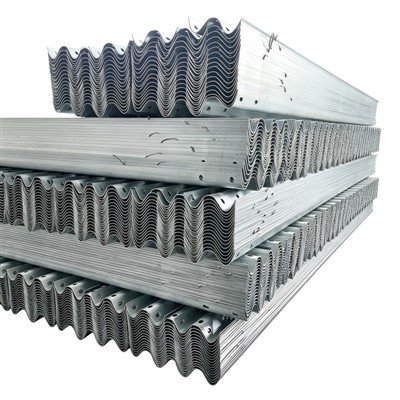
If you’re planning a guardrail project, big or small, and you’re not sure what spacing you need, don’t take the risk of guessing. Reach out to my team, we’ll walk you through the steps, answer your questions, and make sure you get the right posts for your jobsite. No hidden fees, no jargon, just real advice from someone who cares as much about road safety as you do.
Bridge Guardrails References
American Association of State Highway and Transportation Officials. (2020). Manual for Assessing Safety Hardware (MASH).
Federal Highway Administration. (2018). Guardrail Design Manual.
National Cooperative Highway Research Program. (2015). Guide to Guardrail Post Spacing and Installation for Low-Volume Roads.
Guanxian Hongrong Traffic Facilities Co., Ltd.
As one of the most professional guardrail posts manufacturers and suppliers in China, we also support customized service. Please feel free to wholesale bulk durable guardrail posts in stock here from our factory. Welcome to contact us for quotation.
Address: South side of the road, 100 meters west of the intersection of Baiyang Road and Donghuan Road, Chongwen Subdistrict, Guan County, Liaocheng City, Shandong Province
E-mail: hongrongli568@163.com
WebSite: https://www.hongrongguardrail.com/
