Hey everyone, if you’ve ever worked with industrial piping systems—whether you’re in oil & gas, chemical processing, power generation, or even municipal water treatment—you’ve probably crossed paths with a gate valve. These things are the unsung workhorses of fluid control, right? They’re designed to fully open or fully close a line (not throttle flow, that’s a different valve’s job) to shut off media when you need to. But if you’re actually in the market for one, there’s one question I get asked constantly that trips a lot of people up: What’s the actual temperature range a gate valve can handle? Gate Valve
As a gate valve supplier, I see this come up with new engineers, plant managers who’ve swapped old valves before, and even small business owners putting together a new process line. A lot of folks just assume “it works for hot stuff” or “it’s for cold things,” but that’s such a vague call—get it wrong, and you’re looking at a valve that leaks, seizes, or even fails catastrophically mid-run, which is a nightmare no one wants to deal with. Let’s break this down like we’re chatting over a coffee, no stuffy engineering jargon overload.
First off, let’s get one thing straight: there’s no one-size-fits-all number. That’s the biggest myth I run into. A gate valve’s temperature range isn’t a random number stamped on a box—it’s tied directly to three core things: the material it’s made from, the pressure rating it’s built for, and the specific design tweaks for its intended use. Let’s start with materials because that’s the foundation here.
Carbon steel gate valves are the most common ones you’ll see in heavy industry, right? They’re tough, affordable, and work great for a ton of applications. But what’s their temp sweet spot? Most standard carbon steel gate valves are rated for roughly -20°F to 800°F (-29°C to 427°C). Wait, but hold on—don’t get excited that you can crank it all the way to 800°F. Once you get past like 700°F (371°C), carbon steel starts to lose its strength. I’ve seen guys push a carbon steel valve to 750°F just to “get the job done,” but that’s a ticking time bomb. The metal softens, so when you get pressure spikes (and let’s be real, every piping system has them), the valve body or stem can warp, leading to leaks. On the cold side, that -20°F isn’t a hard stop, but if you go below that, you need low-temperature carbon steel (like ASTM A352 LCC) which handles down to -50°F (-46°C) even for cold service—think liquefied natural gas (LNG) lines, not your backyard sprinkler.
Then there’s stainless steel gate valves. These are the go-to when corrosion is a problem—like in chemical plants or food & beverage processing. 304 stainless is the standard here, and its temp range is a little different: usually -40°F to 1500°F (-40°C to 816°C). Wait, that way higher hot end? Yeah, stainless handles heat better than carbon steel, but don’t push it past 1500°F either—above that, it starts to oxidize rapidly and lose structural integrity. If you need even more heat resistance, 316 stainless can go a little higher, up to ~1600°F, and it’s better for corrosive media like saltwater or acidic chemicals. One thing to note with stainless: at cryogenic temps (way below -40°F, like for liquid oxygen or liquid nitrogen), you need austenitic stainless steels (304L or 316L) because regular stainless can get brittle at ultra-cold temps. I’ve had a customer test a regular 304 valve for LNG service and it cracked during commissioning—lesson learned there, always match the material to the temp.
Wait, what about the lower temp stuff? Like, we often get asked about gate valves for cryogenic service (below -150°F/-101°C). Those aren’t your standard carbon or stainless steel valves—we use specialized materials here, like aluminum alloys, brass, or even polymer-bodied valves for super low temps. Aluminum gate valves can handle down to -450°F (-268°C), which is perfect for liquid hydrogen or liquid helium, but they’re not great for high pressure, so you only see them in low-pressure cryo lines. Brass is another one—good for cold water or natural gas, handles down to -50°F, but melts at around 1700°F, so don’t use it for high-heat applications.
Now, here’s the thing that most people miss: pressure also plays a huge role in the temp range. It’s not just “what material is it” but also “what PSI is it rated for.” Let’s take a standard 150-class carbon steel gate valve. At room temp, it’s rated for 150 PSI. But if you crank the temp up to 500°F (260°C), that same valve is only rated for like 100 PSI. Go up to 750°F, and that rating drops to 50 PSI. The reverse is true too—if you’re working at a lower pressure, you can sometimes push the temp a little outside the standard range, but you have to check the manufacturer’s pressure-temperature (P-T) chart, not just guess. I can’t tell you how many times a customer has come to me with a spec that says “we need a gate valve for 600°F at 200 PSI” and I have to pull up the P-T chart to show them a standard valve won’t cut it—they need a higher class rating, like 300-class, to handle both the temp and pressure without failing.
Design features matter too, not just material and P-T ratings. For example, gate valves used in high-heat applications have a different stem design—often a bolted bonnet instead of a threaded one, and sometimes a stem with a heat-resistant coating to prevent galling (seizing up from friction) when the valve expands as it heats. We also do special treatments like cryogenic tempering for valves going below -100°F to make sure the metal doesn’t get brittle. One project we did last year was for a solar thermal plant—they needed gate valves that could handle 900°F (482°C) and high pressure, so we used forged carbon steel with a high-temperature bonnet gasket, and adjusted the stem length to account for thermal expansion at that temp. Without that adjustment, the stem would’ve stuck up too much when heated, and the valve wouldn’t fully close.
Wait, let’s talk about common mistakes I see. A lot of DIYers or small plant operators will grab a gate valve from a hardware store and stick it in a high-temp line. Those are usually brass or cast iron, right? Cast iron gate valves—most are rated for up to ~450°F (232°C), and that’s it. I’ve seen a hardware store cast iron valve in a steam line at 500°F start leaking through the stem in a week. Don’t do that. Hardware store valves are for residential or low-pressure, low-temp commercial use, not industrial processes. Another mistake: assuming a gate valve can throttle flow. You shouldn’t use them for that, but even if you did, throttling would cause heat buildup in the valve trim (the internal parts) which would lower the temp range the valve can handle. Stick to on/off for gate valves.
So let’s summarize what you should actually know before picking a gate valve for your application. First, write down your operating temperature (not just the max, but the min too—if it’s a winterized outdoor line, you need to account for the lowest expected temp) and your operating pressure. Then, match that to the material and class rating of the valve, using the manufacturer’s P-T chart. If you’re dealing with extreme temps—like over 800°F or below -40°F—you need specialized materials, not standard ones. And always, always get a valve rated for the full range, not just one end of it.
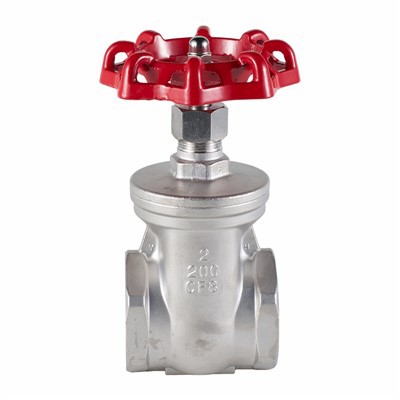
As a gate valve supplier, I’ve spent years working with different materials and designs to make sure our valves perform in all kinds of conditions. Whether you’re handling hot oil, corrosive chemicals, cryogenic gases, or municipal water, we can help you pick the right valve that fits your exact temp and pressure needs. No generic recommendations, no guesswork—just specs that match your application, so you don’t have to deal with leaks, downtime, or failed valves.
Globe Valve If you’re currently working on a project and figuring out the right gate valve, or you’ve had a bad experience with a valve that didn’t hold up to the temp range, hit us up to chat through your needs. We can walk you through the P-T charts, explain material differences, and make sure you get a valve that works reliably for your process. No salesy jargon, no pressure—just honest advice from people who deal with gate valves every day.
References
- American Water Works Association (AWWA). (2020). Steel Gate Valves for Water and Wastewater Service. AWWA C500.
- Manufacturers Standardization Society (MSS). (2018). Standard Practice for Valves—Table of Pressure-Temperature Ratings for Ferrous Valves. MSS SP-55.
- ASME International. (2021). Pipe Flanges and Flanged Fittings: NPS 1/2 Through NPS 24. ASME B16.5.
- API (American Petroleum Institute). (2019). Gate Valves for Petroleum and Natural Gas Industries. API 600.
Xiongxiang Valve Group Co., Ltd.
As one of the most professional gate valve manufacturers and suppliers in China, we’re featured by quality products and good price. Please rest assured to wholesale cheap gate valve for sale here from our factory. Contact us for more details.
Address: Building 1, No.306, 12th Binhai Road, Jinkai District, Wenzhou City, Zhejiang Province, China
E-mail: info@xiongxiangvalve.com.cn
WebSite: https://www.steelvalvegroup.com/
