Hey there, if you’ve ever stood in a manufacturing plant’s utility room listening to engineers argue over water treatment tech, odds are the convo circled RO vs. EDI. I’m the guy who’s been selling industrial RO equipment for 12 years—seen so many teams mix these two up like they’re the same “clear water” product, and that’s a mistake that’ll cost you time, cash, and output quality. Let’s break this down like I’d chat with a plant manager at a coffee shop, no stuffy textbook jargon, just what actually matters for your shop. Industrial RO Equipment
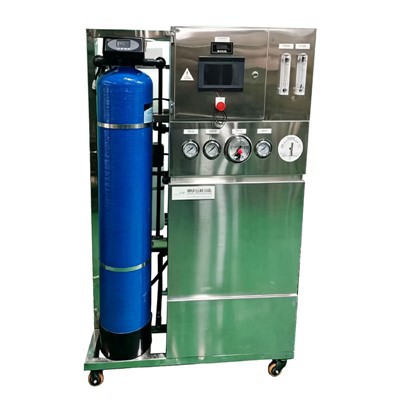
First, let’s cut to the basics that everyone gets wrong: RO and EDI aren’t competitors. They’re more like the first and second baseman on a baseball team—they work together way more often than they go head to head. But yeah, they do totally different jobs, and picking the wrong one for your process will tank your results. Let’s start with RO, since that’s my lane. Reverse Osmosis is the workhorse of industrial water treatment. You push raw water (tap, well, whatever) through a super tight semipermeable membrane—like a kitchen water filter on steroids that can catch particles as small as ions. That means it yanks out 95-99% of total dissolved solids (TDS), plus bacteria, heavy metals, even that weird gunk that makes scale build up in pipes. For most industrial setups, RO gives you permeate that’s around 10-20 TDS, right? That’s good for a lot of stuff—boiler feed, metal finishing, even some pharmaceutical prep. But here’s the catch: RO’s permeate still has tiny leftover ions, like sodium or chloride, that slipped through. If you need water that’s “ultrapure”—think <1 TDS for things like microelectronics manufacturing, injectable drugs, or lab reagents? RO alone won’t cut it. That’s where EDI comes in.
EDI stands for Electrodeionization, and it’s the post-treatment guy. It uses electricity and ion-exchange resin (the same stuff in water softeners, but way fancier) to suck those last leftover ions out of the RO permeate. No chemicals, no downtime for resin replacement, unlike old-school mixed-bed deionization that uses acid and caustic to regenerate. EDI cranks that RO water from “pretty good” to “ultrapure,” so it’s often paired with RO. But you don’t need EDI for every single industrial job. Let’s get specific with use cases, because that’s where people mess up. If you run a car parts factory needing water for paint coating? RO alone works—paint sticks way better with low TDS water, and you don’t need ultrapure for that. If you’re a PCB manufacturer etching tiny circuits on silicon? You need EDI to get water so pure it won’t leave a spot that ruins the chip.
Now let’s talk about the nitty gritty details that actually affect your bottom line, not just textbook specs. First, water quality input. RO can handle raw water with TDS up to like 20,000 ppm—perfect for well water, brackish water, even some wastewater reclamation. EDI? It can’t process raw water straight up. It feeds only on RO permeate, usually 5-50 ppm TDS. Feed it anything higher, and it’ll clog, burn out, or stop producing clean water. That’s why 90% of industrial ultrapure systems are RO → EDI, not EDI alone.
Next, maintenance and costs. Let’s be real, no one wants surprise downtime or $10k chemical bills. RO membranes need occasional replacement (usually every 2-5 years, depending on water quality) and regular cleaning if they get scaled or fouled. EDI has way lower maintenance: it’s moving parts are just a power supply, no filter changes more than once a year, and no chemicals for regeneration. But wait—upfront cost? EDI is way pricier than a standard RO system. A 100 GPM RO might run you $15k, while that same flow EDI unit is $30k+. And you need to pair it with RO, so if you don’t already have RO, that’s extra. So if you’re only needing low TDS water, spending the cash on EDI is like buying a Ferrari to go get groceries—overkill.
Performance: purity and consistency. RO’s purity is solid, but it can vary a bit if raw water quality changes. Like, if your well water gets more salty after a rainstorm, RO permeate TDS might jump from 15 to 30 ppm. EDI is all about steady purity—you can count on it being <1 TDS 24/7, even if feed water shifts. But EDI does have a max flow rate, so if you need super high volumes of ultrapure water, you might need multiple EDI units, which adds cost. RO can handle higher flows easier, which is why it’s the go-to for big-volume, lower-purity needs.
Wait, let’s clear up a common myth: EDI isn’t just “more RO.” Some sales guys will try to tell you EDI is better than RO, but that’s like saying a dishwasher is better than a sponge—they do different things. I’ve had customers come to me saying they installed EDI instead of RO, and now their unit’s breaking down because their well water had 1,000 ppm TDS, way too high for EDI’s feed limit. Fixing that mistake cost them $8k in a new RO pre-treatment before they could even use their EDI. That’s the stuff I see every day, so let’s call that out.
Another difference: footprint. RO systems are compact—you can mount them in a small utility closet or a skid for easy moving. EDI units are bigger because they have those resin chambers and power supplies, so if you have limited space, RO is way more flexible. That’s a big one for smaller manufacturing shops that don’t have a huge dedicated water treatment room.
Let’s run through a couple real-world examples to make this concrete. First example: a food and beverage plant making bottled water. They need water with low TDS to make sure the taste is consistent, no mineral buildup in their bottling lines. RO is perfect here—their permeate is around 10 TDS, they don’t need ultrapure, and EDI would just add unnecessary cost. I’ve installed 12 RO systems for beverage clients in the last 3 years, no EDI needed, they save $25k+ a year on upfront and operational costs.
Second example: a biotech company making injectable drugs. FDA requires ultrapure water that’s <0.5 TDS, no trace of contaminants. RO alone can’t hit that number, so they need EDI. They pair an RO system with an EDI unit, and that combo checks all the purity boxes for regulators. That’s where I recommend the pair—if you need ultrapure, you need both, no way around it.
Third example: a semiconductor plant etching microchips. A single tiny mineral spot on a silicon wafer can ruin a $10k chip, so they need water so pure it has almost nothing in it. Again, RO → EDI, and they might even add a polishing step after EDI, but the core is RO for bulk removal, EDI for final polishing. Here, the upfront cost is worth it because even a single bad batch of chips costs way more than the system.
Now, what about when you might want one over the other? If your process doesn’t need ultrapure (most industrial processes don’t—think textile manufacturing, power plant boiler feed, metal plating), RO is the clear pick. It’s cheaper upfront, lower operational costs, handles higher raw water TDS, and fits in smaller spaces. If you need ultrapure (pharmaceuticals, microelectronics, high-grade labs), you need both, because EDI can’t work without that RO pre-treatment.
Wait, I should also mention something about scalability. If you’re a small shop now but planning to expand, RO is way easier to scale. You can add extra membrane elements to your RO system as you grow, no need to rip out and replace the whole unit. EDI is more fixed—you have to buy a bigger unit or add extra modules if you need more flow, which is less flexible.
Let me get real for a second, since I’m on the ground talking to clients every week. I’ve had people ask me, “Why not just use EDI for everything?” and the answer is simple: it’s a waste of money. I once had a metal finishing shop owner call me panicking because their EDI unit they bought from another vendor was costing them $1,200 a month in power, while an RO system for their needs would have cost $300 a month. He didn’t need ultrapure—he was just told EDI was “the best tech.” That’s the mistake people make when they don’t clarify their actual water needs first.
Also, let’s talk about waste. RO systems have a concentrate stream—water they can’t use, usually 15-30% of the raw water that goes through. That’s a downside, but it’s manageable—you can treat the concentrate to discharge or reuse it for non-process stuff like cleaning floors. EDI has way less waste, almost all of it turns to usable ultrapure water, but that’s only when it’s running on RO permeate, so the waste from RO still exists. If water conservation is a big priority for your plant, that’s a factor, but again—only if you need EDI.
So to wrap this up, let’s make a cheat sheet you can take to your next planning meeting:
- RO = bulk TDS removal, works on raw water, low cost, for non-ultrapure needs
- EDI = final polishing to ultrapure, only works on RO permeate, higher cost, for strict purity needs
- You don’t pick one over the other as competitors—they’re often a team, but only if you need the ultrapure that EDI provides.
If you’re still not sure which is right for your industrial process, don’t guess. I’ve walked through 100+ plant setups, tested their raw water, and helped them pick the right system without wasting money on overkill or underpowered gear. I don’t sell snake oil—if EDI isn’t needed, I’ll tell you, because a happy client comes back when they need more RO or EDI down the line.

If you’re looking to upgrade your water treatment, scale up, or just stop dealing with bad water ruining your production, hit me up for a no-obligation chat. We can talk through your needs, run numbers, and make sure you get a system that works for your budget and your output. No sales pitch, no pressure, just real advice from someone who’s been in this industry longer than most.
Industrial RO Equipment References:
- American Water Works Association. (2022). Reverse Osmosis and Electrodeionization for Industrial Water Treatment. AWWA Press.
- Water Quality Association. (2021). Industrial Water Treatment Technologies: A Guide for Plant Managers. WQA Publications.
- International Society of Pharmaceutical Engineers. (2020). Ultrapure Water Systems for Biopharmaceutical Manufacturing. ISPE Books.
- semiconductor Industry Association. (2019). Water Purification Standards for Microelectronics Fabrication. SEMI Standards.
- McCutcheon, J.R., & Elimelech, M. (2017). Reverse Osmosis: Principles and Applications. Journal of Membrane Science, 541, 2-18.
Shandong Yanuo Environmental Protection Equipment Co., Ltd.
We’re well-known as one of the leading industrial ro equipment manufacturers and suppliers in China, featured by quality products and good price. Please rest assured to buy bulk industrial ro equipment made in China here from our factory. Customized orders are welcome.
Address: North Side of the Road, 1,000 Meters West of the Intersection of Fenghuangshan West Road and Provincial Highway S102, Wangfu Subdistrict, Qingzhou City, Weifang City, Shandong Province.
E-mail: ynhb.499973983@gmail.com
WebSite: https://www.zkyaruo.com/
