Hey everyone, if you’ve ever worked with construction, manufacturing, or even custom metal fabrication, you’ve probably heard of cold-rolled steel sections. As someone who’s been in the cold-rolled sections supply game for over a decade, I get that most folks on the buy side don’t have time to dig through dense industry jargon—they just need to know “what’s the standard spec I should be asking for?” Cold-rolled Sections
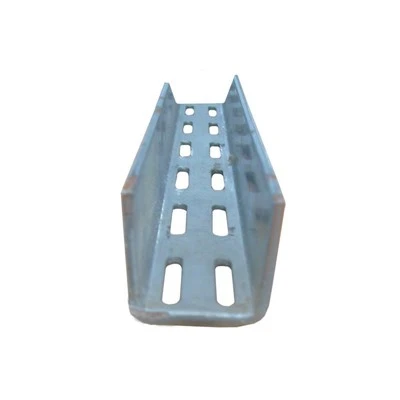
First off, let’s get one thing straight: cold-rolled isn’t the same as hot-rolled. Hot-rolled is formed at super high temps (way above steel’s recrystallization point) and left to cool naturally, which makes it affordable but a bit rough around the edges—thicker, less precise dimensions, more surface scale. Cold-rolled? We roll steel at room temp, after it’s been hot-rolled and pickled (to remove that scale) in the first step. That process gives way tighter tolerances, a smoother surface, and stronger, more consistent material properties. But none of that matters if you’re ordering without following the right standard specs. Let’s break this down like I would for a new client who just sent over a “can you make this?” email.
The big ones here are two sets of global standards, depending on where you’re based: ASTM (for North America) and EN (for Europe and most of the rest of the world). I’ll lean into what I deal with day-to-day, since that’s where most of our clients are, but I’ll make it clear where the lines shift.
Starting with ASTM A1008—this is the go-to for cold-rolled carbon steel sheet and strip, which is the base for 90% of the sections we supply (like C-channels, Z-sections, U-channels, even custom hollow sections). Wait, “sections” not just sheet? Yeah, when we form that sheet into profiles, we still tie back to A1008 for the material itself, plus there’s an add-on for structural sections: ASTM A36 is the structural steel base, but cold-rolled versions use A1008 as the raw material, not A36 hot-rolled. Let’s get into the specifics of A1008 because that’s non-negotiable for us.
First, grade designations. A1008 splits into grades based on yield strength (that’s the point where the steel stops bending back and stays deformed) and tensile strength. The most common ones we stock are CS Type B, DS, and SS. CS Type B is your workhorse—yield strength of 30,000 psi, tensile strength 45,000 to 60,000 psi. That’s for stuff like metal stud framing, trailer panels, or general fabrications where you don’t need heavy structural load. DS stands for Drawing Steel, which has a higher ductility (it stretches more without breaking) so we use that for deep-drawn parts, like automotive body panels or custom enclosures. SS is Structural Steel, which bumps yield up to 33,000 psi and tensile to 49,000–62,000 psi—we specify this any time clients are building load-bearing cold-rolled sections, like roof purlins or wall girts. No cutting corners here: if a client orders SS without confirming, I flag it because that grade has to meet stricter chemistry limits, less carbon, so it welds better.
Then there’s dimensional tolerance—this is where cold-rolled really shines, but it’s also where bad orders go wrong. For sheet, A1008 specifies tolerance on thickness first: for gauges between 0.014” (super thin, like tin can metal) and 0.1875” (thick enough for structural work), it’s ±0.001” for the first 12” of width, and only slightly looser for wider sheets. Compare that to hot-rolled A36, which has ±0.010” tolerance for the same range—huge difference. When we form that into sections, like a C-channel with 3” flanges and 6” webs, the standard spec (still under A1008, plus add-on practices from ASTM A6/A6M for structural shapes) says the flange width can’t vary more than ±0.005” from the nominal, and the web height ±0.006”. Wait, don’t mix this up with custom fabricators that claim “custom tolerances”—if a job calls for code compliance (like building codes for residential framing), you can’t just go rogue. Building departments will reject sections that don’t hit these ASTM numbers because they’re designed to account for consistent material performance across thousands of units.
Surface finish is another part of the spec that people overlook. Cold-rolled steel isn’t shiny out of the mill—wait, sometimes it is, but the standard finishes are R (rough, for painting or welding without prep) and S (smooth, for bare applications like cabinets or ornamental metal). A1008 defines these by roughness: R finish has a Ra (average roughness) of 125 microinches, S is 50. If a client needs a galvanized or powder-coated finish later, we usually stock R finish because it has tiny ridges that help the coating adhere way better—S finish might be too smooth and peel. We’ve had clients come to us before with raw hot-rolled, thinking it’s the same, and their powder coating flaked off because they skipped the surface spec. Oops.
Now, the EN side for our EU and UK clients. The main standard here is EN 10149, which covers cold-formed steel sections (cold-rolled base material, formed into profiles). The key grades here are S235JR and S355JR, similar to ASTM’s CS Type B and SS. But the big difference is dimensional tolerances: EN 10149 has three tolerance classes, depending on the application—Class A for precision parts (like automotive brackets), Class B for general fabrication, Class C for structural sections. If you’re a builder in Berlin working on a commercial structure, you’ll want Class B, because Class A is way tighter and more expensive, but Class C is too loose for wind load calculations. We make sure to flag this for EU clients because some don’t know the tolerance classes change with use case—we once had a client order Class A for a warehouse frame, which added 15% to their cost for no reason.
Wait, let’s talk about structural load specifically, because that’s where cold-rolled sections differ from hot-rolled. The standard spec for cold-formed structural sections (for roof purlins, wall girts, even stud walls) is actually ASTM A568—wait, I mentioned A1008, but A568 is the sheet steel spec for structural cold-formed sections, right? Yeah, I confused that earlier. A568 is for when you’re using the steel for load-bearing members, not just panels. A568 has a higher minimum yield strength for structural grades—33,000 psi, same as A1008 SS, but it adds requirements for yield strength consistency across the coil, which is critical for engineering. If you’re calculating a roof’s load capacity, you can’t have some sections with 30k psi and others with 35k—A568’s spec ensures that variation is less than 5% across an entire shipment. That’s non-negotiable for architects and structural engineers.
Another thing: chemistry specs, which are hidden in the standard but super important for weldability and corrosion resistance. For ASTM A1008, carbon content is max 0.25% for all grades, which makes it easy to weld without cracking—if carbon was higher, you’d need pre-heating, which adds time and cost. For cold-rolled sections, that’s a big deal because most of them are welded on-site. If a client orders a non-standard grade, I always check the chemistry first because I’ve seen fabricators mess up welds by using steel with too much carbon. For EN 10149, carbon is capped at 0.21% for S235, which is why it’s the go-to for general structural work in Europe.
Wait, what about custom sections? A lot of our clients don’t want off-the-shelf C-channels—they need something weird, like a 12” Z-section with a folded edge for a greenhouse frame. Does the standard spec still apply? Hell yeah. The same dimensional tolerance rules, same grade requirements, same surface finish—just the profile geometry changes. We use a CNC roll-forming process that’s calibrated to A1008’s tolerance limits, so even custom stuff hits the mark. I’ve had a client ask for a 2” hollow section with a 0.040” wall, and we had to confirm with them that the spec would be A1008 CS Type B, ±0.001” wall tolerance, otherwise the section would be too weak for their agricultural equipment. They said they had a bad experience with another supplier that cut corners on the tolerance, so we flagged every detail upfront to avoid that headache.
Now, let’s address the confusion people have between cold-rolled “sections” and cold-rolled “sheet/strip.” A lot of folks use the terms interchangeably, but sections are formed into profiles, so their spec ties two standards together: the material spec (A1008 or EN 10149) and the section dimension spec (ASTM A6/A6M for structural shapes, or EN 10279 for cold-formed sections). That’s a key point—if you only reference A1008, you’re missing the dimensional requirements for the actual section you need. We always send clients a spec sheet that lists both: material grade, chemistry limits, dimensional tolerance for the specific profile, surface finish, and any testing requirements (like tensile strength tests for structural jobs).
Testing is another part of the standard that’s often skipped. The standard specs require that each coil has a mill test report (MTR) that proves it meets all the requirements. For structural sections, some jobs might even require third-party testing, like a tensile test coupon taken from the finished section. We provide MTRs for every shipment, no extra charge—we’ve had clients choose other suppliers that didn’t include MTRs, and then their building inspection failed because they couldn’t prove the steel was to spec. That’s a costly mistake, so we make it a point to include that upfront.
Wait, let’s talk about common mistakes people make when ordering. I see this all the time: someone says “I want cold-rolled C-channels, 6” wide, 0.100” thick.” But they don’t specify the grade or tolerance. That’s a red flag. 0.100” thick in CS Type B has a yield strength of 30k psi, but in SS it’s 33k, so their load calculation might be off. Or they say “±0.010” tolerance”—that’s hot-rolled. For cold-rolled, you need ±0.005” max for structural. Another mistake: specifying a surface finish that doesn’t match their next step. If they’re going to powder coat, R finish is a must, not S. We walk clients through this every time, because saving a minute on the phone now saves us both a week of reworking bad sections later.
Let’s wrap this up for anyone who’s still confused. The core standard specs break down like this:
- For North America: Use ASTM A1008 for the material, ASTM A6/A6M for section dimensions, and A568 if it’s structural load-bearing. Pick your grade: CS Type B for general, SS for structural, DS for deep-drawn.
- For Europe/Global: Use EN 10149 for cold-formed sections, EN 10279 for dimensional tolerances, S235JR for general, S355JR for heavy structural. Pick your tolerance class based on use case.
- Always ask for a mill test report, never skip grade or surface finish specs, and confirm tolerance matches your application (building code, manufacturing, etc.).

As a supplier, my job isn’t just to sell you cold-rolled sections—it’s to make sure you get the right ones that fit your project, no surprises. If you’re working on a build, a fabrication run, or a custom part and you’re not sure which spec fits, hit us up to walk through your needs. We’ll break down the grade, tolerance, and requirements so you don’t end up with sections that don’t pass inspection or break under load. No jargon, no hidden fees, just straight talk about what you need.
Ratchet Tie Down References:
ASTM A1008/A1008M – Standard Specification for Steel, Sheet and Strip, Cold-Rolled, Carbon, Structural, High-Strength Low-Alloy, and High-Strength Low-Alloy with Improved Formability
ASTM A6/A6M – Standard Specification for General Requirements for Rolled Structural Steel Bars, Shapes, Plates, and Sheets
EN 10149-2:1995 – Hot-rolled flat products made of high yield strength steels for cold forming – Part 2: Delivery conditions for normalized/normalized rolled steels
EN 10279:2000 – Cold formed steel sections – Tolerances on shapes and dimensions
Shengkun Precision Roll Forming Profiles (Shanghai) Co., Ltd.
As one of the most professional cold-rolled sections manufacturers and suppliers in China, we’re featured by quality products and low price. Please rest assured to buy high-grade cold-rolled sections made in China here from our factory. Contact us for pricelist and quotation.
Address: No.3 Workshop Building Lane2665 Yexin Highway Yexie Town Songjiang District Shanghai China
E-mail: sk@shengkun-rollforming.com
WebSite: https://www.sk-rollforming.com/
