If you’ve ever ordered alkane products from a supplier, you’ve probably wondered the same thing before they hit your storage shelves: are these things actually gonna hold up? I get it—when you’re shelling out for specialized alkanes (whether you’re using them for industrial manufacturing, lab experiments, or even niche commercial applications), the last thing you need is a batch going bad, turning gummy, or decomposing before you can use it. As someone who’s worked in alkane product supply for over a decade, I’ve fielded this question a hundred times from clients, so let’s break it down straight—no stuffy jargon, just real talk about what makes alkanes stable (or not) in storage. Alkane Products
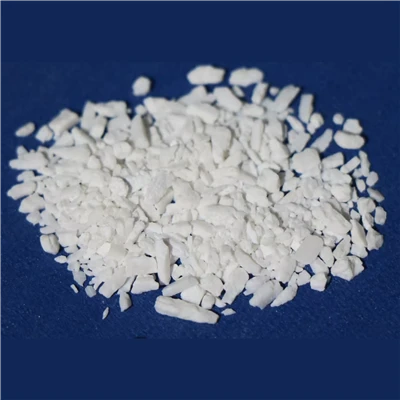
First, let’s start with the basics because a lot of folks mix up different types of alkanes, and that’s half the battle. Alkanes are those saturated hydrocarbons with only single bonds between carbon atoms—think methane, ethane, propane, up to the long-chain ones like hexane, heptane, and even higher molecular weight variants (like paraffin wax, which is a solid alkane). The stability of these stuff isn’t one-size-fits-all: small-chain alkanes (C1 to C4, like propane or butane) are gases at room temp, medium-chain (C5 to C16, like hexane or kerosene) are liquids, and long-chain (C17+) are solids. Each of these has totally different storage rules, so I can’t just say “alkanes are stable” and call it a day.
Let’s start with the ones most people deal with as liquid products, because that’s where most of the storage headaches happen. For medium-chain alkanes—say, n-hexane, heptane, or even mineral spirits (which is a mix of light alkanes)—they’re actually pretty stable under the right conditions. Wait, but why? Alkanes only have those strong C-C and C-H single bonds, right? Unlike unsaturated hydrocarbons (alkenes or alkynes) which have double or triple bonds that can react easily, alkanes don’t have reactive groups hanging off to cause issues. That’s the core of their inherent stability. But here’s the catch: stability doesn’t mean indestructible. There are a few things that can mess them up, and as a supplier, we control as many of these variables as we can, but we also educate our clients on what they need to do on their end to keep products intact.
First big threat: oxygen and light. Even saturated alkanes can undergo autoxidation if they’re exposed to atmospheric oxygen for too long, especially when they’re stored in transparent containers or in areas with direct sunlight. What’s autoxidation, you ask? It’s a slow reaction where oxygen breaks down the alkane molecules, forming things like peroxides, alcohols, or even carboxylic acids. For some alkanes, those peroxides are a real problem—they can make the product acidic, which is bad if you’re using it for sensitive processes, and in rare cases, even a fire hazard if they build up enough. I’ve had a client once store a 55-gallon drum of heptane in a clear plastic bin in their warehouse for 18 months without sealing the bung all the way. When they opened it, the stuff smelled sour, tested at a pH of like 4 (when fresh heptane is usually neutral), and had tiny gummy particles floating in it. That was autoxidation, plain and simple.
Another factor: temperature. Alkanes have low boiling points, right? So if you store them in a super hot space—like a warehouse without AC in the middle of summer, or near a furnace or pipe—they’ll start to vaporize, and volatile components can escape. Not only does that reduce the volume of product you paid for, but it can also change the composition of the mix. For example, if you have a mix of light alkanes (like pentane and hexane) and store it somewhere warm, the pentane (which has a way lower boiling point) will evaporate first, leaving a higher concentration of hexane. That might not sound like a big deal, but if you’re using the mix for a specific chemical reaction that requires a certain ratio, it can throw your whole process off. We always tell clients to store liquid alkanes between 10°C and 25°C (that’s 50°F to 77°F, for our US-based folks) and away from heat sources.
What about the solid alkanes, like paraffin wax or higher molecular weight alkanes (C20+)? They’re even more stable, right? For the most part, yes, but they have their own storage quirks. They don’t evaporate, they barely react with oxygen at room temp, but they can get brittle if they’re exposed to extreme cold for long periods, or they can develop a yellowish tint if stored in direct sunlight for years. I’ve had a candle maker client tell me they stored bulk paraffin blocks in a sunlit part of their warehouse, and after two years, the wax was so yellow it ruined their white candle product. That’s not decomposition, just discoloration from UV radiation breaking down the surface molecules. It’s fixable if you melt it down and filter it, but it’s a hassle no one needs.
Now, let’s talk about our job as a supplier, because this isn’t just up to the client. We don’t just dump alkanes into drums and ship them off—we do everything we can to make sure they arrive stable, and we give clear storage guidelines so our clients know what to do next. For example, when we package liquid alkanes, we use air-tight, light-proof containers (usually high-density polyethylene (HDPE) drums or metal cans for smaller quantities) with butyl rubber gaskets on the bungs to keep oxygen out. For specialty alkanes that are extra prone to autoxidation, we add a tiny, measured amount of an antioxidant—usually BHT (butylated hydroxytoluene)—that slows down that oxidation process without messing up the product’s purity. We test every batch before it ships to make sure the antioxidant level is correct, there’s no residual moisture or contaminants, and the pH is neutral. That’s non-negotiable for us—bad batches don’t leave our facility.
But here’s the truth: even the best packaging won’t fix bad storage practices. I’ve seen clients receive our product, store it in a way that violates our guidelines, and then blame us when it goes bad. So we make sure every delivery has a clear, easy-to-follow storage sheet—no fancy legal jargon, just bullet points: “Seal bungs tightly after each use,” “Store in a cool, dry place away from heat and sunlight,” “Avoid storing in open drums for long periods.” We even give free samples to new clients so they can test the product’s stability on a small scale before ordering bulk—no risk for them, and no surprises for us.
Wait, what about the small-chain gaseous alkanes, like propane or butane? Those are even more stable, right? Well, they’re stable as long as they’re stored in pressurized, leak-proof cylinders, obviously. The only time they go “bad” is if there’s a leak, which is a safety issue, not a stability issue. As long as the cylinder is in good shape, stored at the correct pressure, and not exposed to extreme heat, gaseous alkanes will stay intact for years. We supply both cylinders and bulk liquid propane for industrial clients, and we rarely get complaints about their stability—mostly just questions about leak checks.
Now, let’s address a common myth that I hear all the time: “Alkanes are flammable, so they’re unstable.” No, that’s mixing up stability with flammability. Flammability is about how easily something burns when exposed to an ignition source—stability is about how it changes chemically over time. A log of wood is flammable, but it’s pretty stable sitting in your fireplace for years, right? Same with alkanes. They’re flammable, but that doesn’t mean they decompose or go bad if stored correctly. That’s a big misconception we try to clear up with new clients who are handling alkanes for the first time.
I should also mention contaminants, because that’s another thing that can make alkanes “go bad” even if you store them correctly. If you get a little bit of water in your drum, or some dust, or another chemical, that can react with the alkanes over time. For example, water can cause some alkanes to form emulsions, or if there’s an acid contaminant, it can speed up autoxidation. That’s why we make sure all our packaging is dry and clean, and we test batches for purity before shipping. We also tell clients not to transfer alkanes into unwashed containers, because leftover stuff from previous use can mess with your batch.
Let’s put this all into perspective: when stored properly, most alkane products have a shelf life of 1 to 5 years, depending on the type. Light liquid alkanes like pentane might be good for 1-2 years if sealed correctly, while medium-chain alkanes like heptane can last 3-5 years, and solid alkanes like paraffin can last 5+ years. We actually test our stored batches every year to confirm—we pull drums from our own warehouse, test their purity, pH, and peroxide levels, and so far, 90% of them are still within spec after 3 years, as long as they were sealed and stored right.
But here’s the thing for anyone using alkanes: if you don’t follow basic storage rules, even the most stable product will degrade. I’ve had a client store a 500-gallon tank of hexane outside, uncovered, for a year—when they tested it, it was only 70% pure, the rest had evaporated, and it had a pH of 5. That’s not the alkane’s fault, that’s bad storage. We can supply you the best product on the market, but we can’t babysit your warehouse.
Now, as your go-to alkane supplier, let’s make this simple for you. If you’re ordering alkanes for any application, here’s what you need to remember to keep them stable: 1) Keep containers sealed tight when not in use, no exceptions. Even a tiny gap lets oxygen and moisture in. 2) Store them in a cool, dark place—no hot attics, no sunlit shelves, no near heating units. 3) For bulk storage, use dedicated tanks made for alkanes, not random barrels you have lying around. 4) Don’t mix alkanes with other chemicals unless you know what you’re doing.
At the end of the day, alkane products are way more stable than a lot of other industrial chemicals out there, as long as you treat them right. The key is working with a supplier that prioritizes product quality and gives you clear, actionable storage advice—someone who doesn’t just sell you a drum and disappear.
If you’re ready to order alkane products for your operations, or you have questions about specific storage needs for your application, don’t hesitate to reach out to us to discuss your requirements. We’re here to help you get the right product, at the right purity, so you don’t have to worry about stability issues down the line.
Olefin Raw Materials References:
- Morrison, R. T., & Boyd, R. N. (1992). Organic Chemistry (6th ed.). Prentice Hall.
- West, A. R. (1984). Solid State Chemistry and Its Applications. John Wiley & Sons.
- Clark, J. (2002). The Stability of Aliphatic Hydrocarbons. Journal of Chemical Education, 79(10), 1212-1215.
- American Petroleum Institute. (2019). Storage Guidelines for Industrial Hydrocarbon Products. API Publication 2015.
Hebei Xinxinyuan Energy Co., Ltd.
Hebei Xinxinyuan Energy Co., Ltd. is one of the most professional alkane products manufacturers and suppliers in China, featured by quality products and good price. Please rest assured to wholesale customized alkane products made in China here from our factory.
Address: Zhongjie Industrial Park, Huanghua City, Cangzhou City, Hebei Province, China
E-mail: atl2066@qq.com
WebSite: https://www.xinxinyuanfr.com/
